What the 2026 Superchain Thesis Actually Means
The Superchain thesis for 2026 centers on treating Ethereum’s Layer 2 ecosystem as a single, unified liquidity layer rather than a fragmented collection of isolated chains. At its core, this model relies on the OP Stack, an open-source framework that allows developers to launch their own rollups while inheriting Ethereum’s security guarantees. Instead of competing for scarce mainnet liquidity, these chains share a common blockspace and communication protocol, enabling assets and data to move freely across the network.
This architectural shift aims to solve the liquidity fragmentation that has plagued modular blockchains. By standardizing the underlying technology, the Superchain creates a seamless experience where users interact with different chains as if they were parts of one larger Ethereum. This unity is critical for scaling, as it allows applications to tap into a deeper pool of capital without sacrificing the decentralization and security provided by the Ethereum mainnet.
However, the thesis faces significant challenges. Critics point out that shared security can create systemic risks, where a vulnerability in one chain could potentially impact others. Additionally, the governance of these shared resources remains a complex issue, with debates over who controls the upgrade path and fee structures. Despite these hurdles, the push toward a unified Superchain continues to drive innovation in the Ethereum ecosystem, offering a potential path to scalable, secure, and interconnected blockchain infrastructure.
Superchain thesis 2026 choices that change the plan
The 2026 superchain model promises unified liquidity through shared sequencers and standardized OP Stack deployments. While this architecture reduces operational overhead for layer-2 builders, it introduces specific risks around centralization vectors and cross-chain interoperability. Evaluating these tradeoffs requires looking beyond the marketing of "Ethereum scaling" to the actual mechanics of how these chains settle and communicate.
Standardization vs. Sovereignty
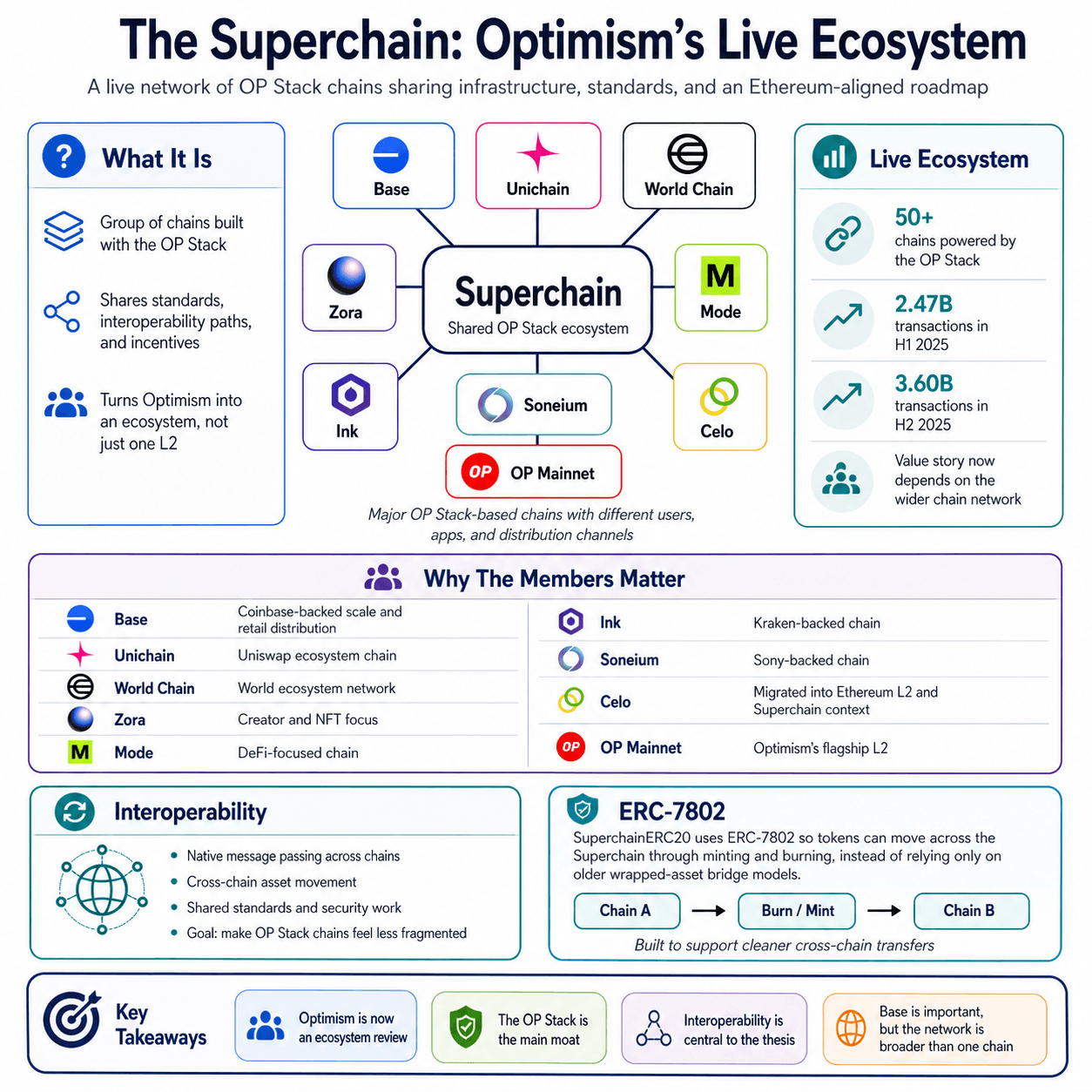
The core value proposition of the superchain is homogeneity. By sharing the same sequencer infrastructure and fault-proof mechanisms, chains like Base, Zora, and World Chain can move assets instantly without bridging fees. This creates a single liquidity pool that feels like one massive Ethereum. However, this comes at the cost of chain sovereignty. If the shared sequencer experiences downtime or censoring transactions, all dependent chains are affected simultaneously. Builders must decide if the convenience of instant finality outweighs the risk of a single point of failure in the sequencer layer.
Security and Fault Proofs
Superchains rely on Ethereum’s security model via Optimistic or ZK fraud proofs. In 2026, the tradeoff shifts from "is it secure?" to "how expensive is the dispute process?" While individual rollups benefit from Ethereum’s base layer security, the complexity of cross-chain messaging increases the attack surface. A vulnerability in the shared messaging contract could impact multiple chains. Users should verify that the specific chain they are using has undergone rigorous audits of its superchain-specific contracts, not just its base rollup implementation.
Liquidity Fragmentation
Despite the goal of unified liquidity, fragmentation remains a practical challenge. While assets move freely within the superchain ecosystem, liquidity often remains siloed within specific chains due to localized incentives and airdrop farming. A user might find deep liquidity for USDC on Base but shallow pools for niche assets on World Chain. This means the "unified" liquidity is often theoretical for less popular tokens, requiring users to navigate multiple interfaces to find the best execution prices.
| Factor | Benefit | Risk |
|---|---|---|
| Sequencer | Low latency, instant finality | Centralized point of failure |
| Liquidity | Shared pool across chains | Fragmentation for niche assets |
| Security | Ethereum settlement guarantee | Complex cross-chain messaging bugs |
| Development | Standardized OP Stack tools | Limited customization options |
Choose the next step
The Superchain Thesis works best as a clear sequence: define the constraint, compare the realistic options, test the tradeoff, and choose the path with the fewest hidden costs. That order keeps the advice usable instead of decorative. After each step, pause long enough to check whether the recommendation still fits the reader's actual situation. If it depends on perfect timing, unusual access, or a best-case budget, include a simpler fallback.
Identify Weak Options in the 2026 Superchain Thesis
The 2026 Superchain thesis promises unified liquidity across modular blockchains, but the path is littered with misleading claims and weak architectural options. As the ecosystem matures, distinguishing between genuine innovation and speculative hype becomes critical for developers and investors alike.
Many projects adopt the OP Stack without addressing core tradeoffs like data availability latency or cross-chain bridge security. Cooper Kunz of Aztec Labs has highlighted these tensions, arguing that some "superchain" implementations sacrifice decentralization for speed, creating fragile dependencies rather than robust scaling solutions.
Avoid chains that promise instant finality without sufficient validator set diversity. Verify that liquidity pools are backed by transparent, audited smart contracts rather than just marketing materials. The technical reality often diverges from the thesis, making concrete verification essential before committing resources to any specific superchain implementation.
Superchain thesis 2026: what to check next
The Superchain thesis aims to unify liquidity across modular rollups, but 2026 brings real friction. Base’s departure from Optimism’s OP Stack and the rise of independent chains like Zora and World Chain show that federation is no longer guaranteed.
Is the Superchain still viable after Base left?
Yes, but the definition of "unified" has shifted. The Superchain is no longer a single monolithic federation but a loose coalition of chains sharing core technology. While Base’s exit in early 2026 reduced the number of OP Stack chains, the remaining network still offers deep liquidity and shared security models for developers who value interoperability.
How does OP Stack differ from the Superchain?
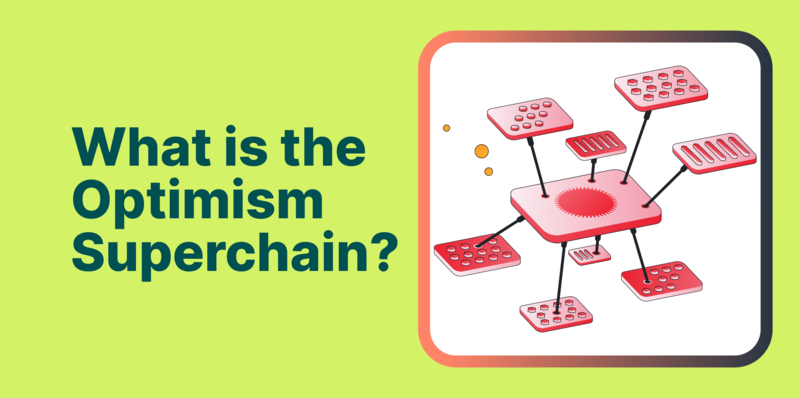
OP Stack is the modular software suite that allows anyone to launch a rollup. The Superchain is the specific network of chains that choose to connect via the OP Stack and share liquidity. Think of OP Stack as the engine and the Superchain as the fleet of cars that decided to drive on the same highway.
What are the risks of modular scaling in 2026?
Modular scaling introduces fragmentation. As chains like Base and Arbitrum diverge in their economic models, bridging assets between them becomes riskier and more complex. Users must manage cross-chain liquidity manually, which increases transaction costs and exposure to bridge vulnerabilities compared to a single-chain ecosystem.
Can I use Superchain apps without holding OP tokens?
Most applications on the Superchain do not require holding OP tokens to function. You can interact with DeFi protocols, NFT marketplaces, and gaming dApps using ETH or stablecoins. However, governance participation and certain staking rewards are reserved for OP token holders.
No comments yet. Be the first to share your thoughts!