Defining the superchain architecture
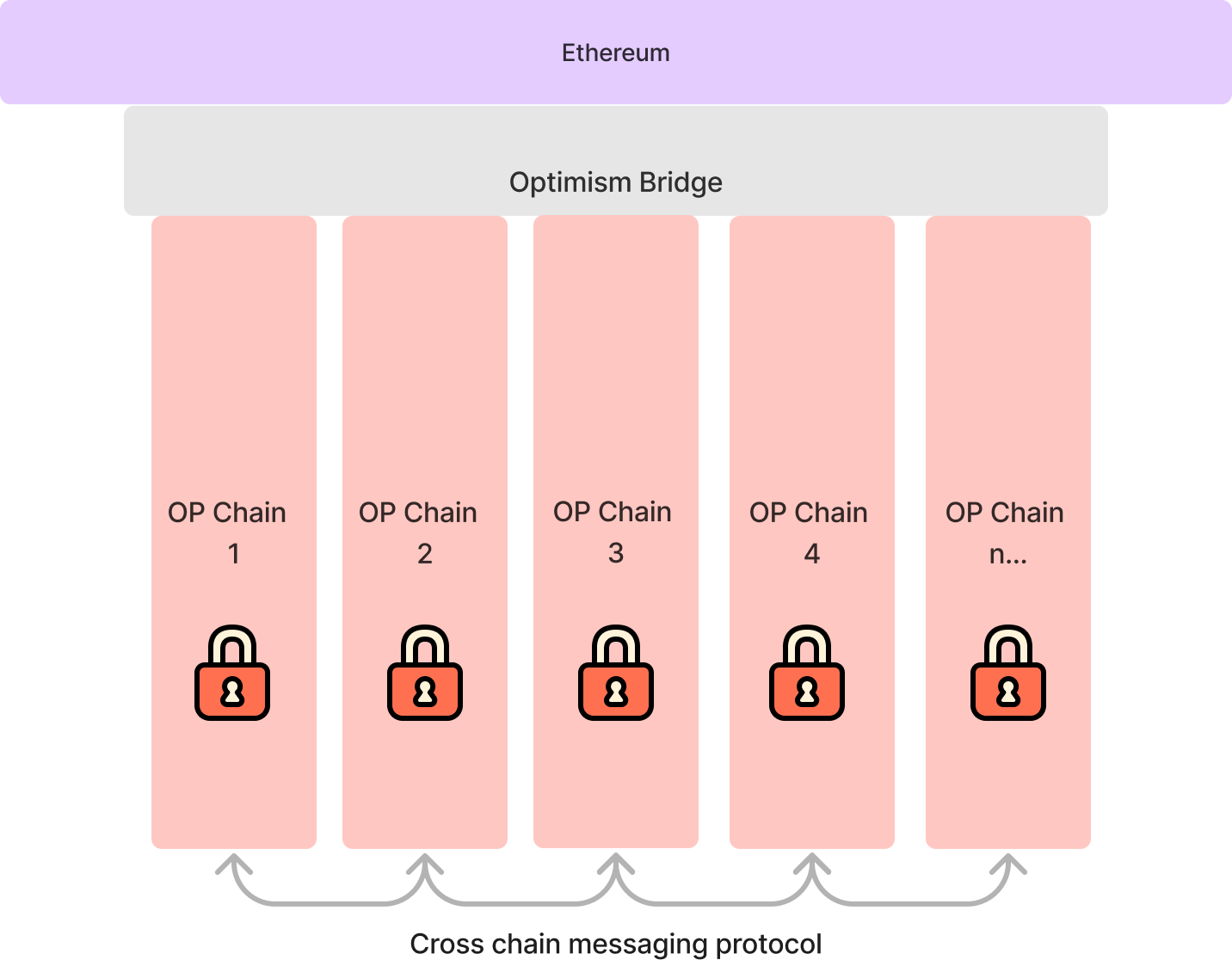
The superchain thesis represents a structural shift in Ethereum’s scaling strategy, moving beyond isolated Layer 2 networks toward a unified ecosystem of interoperable chains. At its core, this architecture relies on the OP Stack, an open-source software framework developed by Optimism. Rather than treating each Layer 2 as a siloed entity, the superchain model allows multiple rollups to share critical infrastructure, including bridging mechanisms, governance protocols, and cross-chain communication layers.
This shared infrastructure significantly reduces the technical overhead required to launch and maintain new chains. By standardizing the underlying codebase, developers can deploy new rollups that are natively compatible with one another. This interoperability ensures that assets and data can move fluidly between chains without the friction and security risks associated with traditional, fragmented bridges. The result is a cohesive network where individual chains operate as specialized nodes within a larger, coordinated system.
The OP Stack serves as the foundational layer for this architecture. It provides the modular components necessary for sequencing, execution, and data availability, allowing projects like Base and Mode to build on a proven, secure foundation. This approach not only accelerates development but also enhances security by leveraging shared upgrades and consensus mechanisms. As the ecosystem grows, the superchain model aims to deliver a seamless user experience, masking the complexity of the underlying multi-chain infrastructure.
To contextualize the market environment driving this adoption, we can observe Ethereum's price action, which often reflects broader sentiment toward Layer 2 scaling solutions.
OP Stack as the interoperability backbone
The OP Stack serves as the foundational infrastructure for the Superchain thesis, functioning as an open-source rollup framework that enables multiple blockchains to share critical components. Rather than each Layer 2 operating as an isolated silo, the OP Stack allows chains to share sequencers, governance structures, and messaging layers. This architectural approach directly addresses the fragmentation that has historically plagued the Ethereum scaling landscape.
By standardizing the underlying protocol, the OP Stack reduces the complexity of cross-chain interactions. Traditional Layer 2 solutions often require distinct bridging mechanisms and separate governance models, creating friction for users and developers. The Superchain model simplifies this by establishing a common communication layer, allowing assets and data to move more fluidly between chains that share the same stack. This shared infrastructure is what powers networks like Base and Mode, creating a cohesive ecosystem rather than a collection of disparate networks.
The following comparison illustrates the structural differences between traditional Layer 2 silos and the integrated Superchain approach.
| Feature | Traditional L2 Silos | Superchain (OP Stack) |
|---|---|---|
| Bridging | Complex, custom bridges per chain | Shared messaging layer |
| Governance | Fragmented across independent protocols | Aligned governance frameworks |
| Composability | Limited cross-chain interaction | High composability via shared stack |
| Gas Fees | Variable, often higher due to redundancy | Optimized through shared sequencers |
This integration is not merely theoretical; it is already operational. As of current market data, the OP Stack powers over 40 chains, demonstrating its viability as a scalable solution. The shared sequencer model further reduces costs and increases throughput, as the network can optimize block production across multiple chains simultaneously. This efficiency gain is critical for maintaining low gas fees, a primary concern for Ethereum users.
The move toward a shared stack represents a shift from competition to collaboration among Layer 2 providers. Instead of building redundant infrastructure, developers can leverage the OP Stack to focus on application-specific features. This specialization enhances the overall user experience by allowing for more intuitive interfaces and better tooling, all while maintaining the security guarantees of the Ethereum base layer.
Economic implications of the superchain thesis
The Superchain thesis fundamentally alters the economic incentives for participants in the Ethereum Layer 2 ecosystem by introducing shared security and coordinated governance. For token holders, this model suggests that the value of the native token is increasingly tied to the aggregate revenue and utility of the entire network rather than individual chains. This interdependence creates a powerful network effect: as more chains join the Superchain, the security and liquidity of the entire system deepen, potentially increasing the fundamental value of the governance token.
Developers benefit from reduced operational costs and access to a unified liquidity pool. However, this integration requires adherence to specific technical standards and governance frameworks. The economic model relies on revenue sharing mechanisms, where a portion of fees generated by individual chains may be redistributed to support the public goods and security infrastructure of the broader network. This creates a symbiotic relationship where the success of individual projects contributes to the stability and growth of the collective ecosystem.
Market sentiment toward the Superchain is closely monitored through the performance of the OP token. A sustained increase in token price often reflects investor confidence in the network's ability to attract and retain high-value chains. Conversely, volatility may indicate concerns about governance disputes or the potential departure of major participants. The economic health of the Superchain is therefore visible in real-time market data, providing a clear signal of the ecosystem's overall vitality and investor trust.
Navigating Fragmentation Risks and Debates
The Superchain thesis relies on a delicate balance between standardized interoperability and individual chain sovereignty. While the original vision promised a unified ecosystem where Layer 2s share sequencers and native interop, recent market dynamics suggest this cohesion is fracturing. The potential shift of major networks away from the OP Stack underscores the tension between centralized governance incentives and decentralized interoperability goals.
Critics, often referred to as the "Anti-Superchain" faction, argue that standardization stifles innovation and creates single points of failure. Cooper Kunz of Aztec Labs has highlighted these concerns, suggesting that rigid adherence to a single stack may limit the ability of chains to optimize for specific use cases. The debate centers on whether the benefits of composability outweigh the risks of homogenization and shared technical debt.
The most tangible evidence of this fragmentation is the reported movement of Base, Coinbase’s Layer 2, away from the OP Stack. If Base decouples from the Optimism ecosystem, it raises significant doubts about the Superchain’s ability to maintain its shared revenue model and technical cohesion. This shift challenges the assumption that all major players will remain anchored to the same infrastructure, potentially leading to a more fragmented, multi-stack reality.
This divergence forces a re-evaluation of the Superchain’s long-term viability. Rather than a monolithic network, the future may look like a collection of semi-autonomous zones with varying degrees of interoperability. Investors and developers must now assess the risk of protocol divergence when building on chains that may not remain aligned with the original Superchain roadmap.
Key questions on superchain interoperability
The Superchain model relies on the OP Stack to standardize execution layers, but interoperability remains a complex technical challenge. Developers must distinguish between native Superchain messaging and broader cross-chain requirements.
Does the Superchain support alternative bridge token standards?
The Superchain architecture primarily utilizes the Optimism Portal for standard token transfers between L2s. However, the ecosystem supports alternative bridge standards for interoperability with external chains. Discussions among core developers, such as those regarding LayerZero OFT standards, highlight the flexibility to integrate non-native bridge mechanisms when necessary for broader connectivity [[src-serp-8]].
How does cross-chain messaging work technically?
Interoperability is managed through the SuperchainWETH and standard messaging contracts, which facilitate asset movement within the Superchain. For connections outside this specific ecosystem, protocols often rely on decentralized messaging layers like LayerZero. This dual approach allows for efficient internal settlement while maintaining external compatibility.
Is the Superchain model viable long-term?
Long-term viability depends on the security guarantees provided by Ethereum L1 and the efficiency of the OP Stack. As the network scales, the reliance on standardized components reduces fragmentation. The model’s success is tied to its ability to maintain security while offering lower transaction costs, a balance currently being refined through ongoing protocol upgrades.
No comments yet. Be the first to share your thoughts!