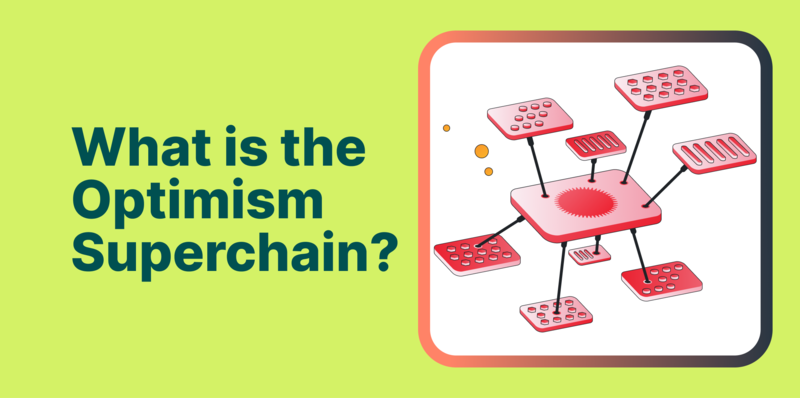
What is the superchain thesis?
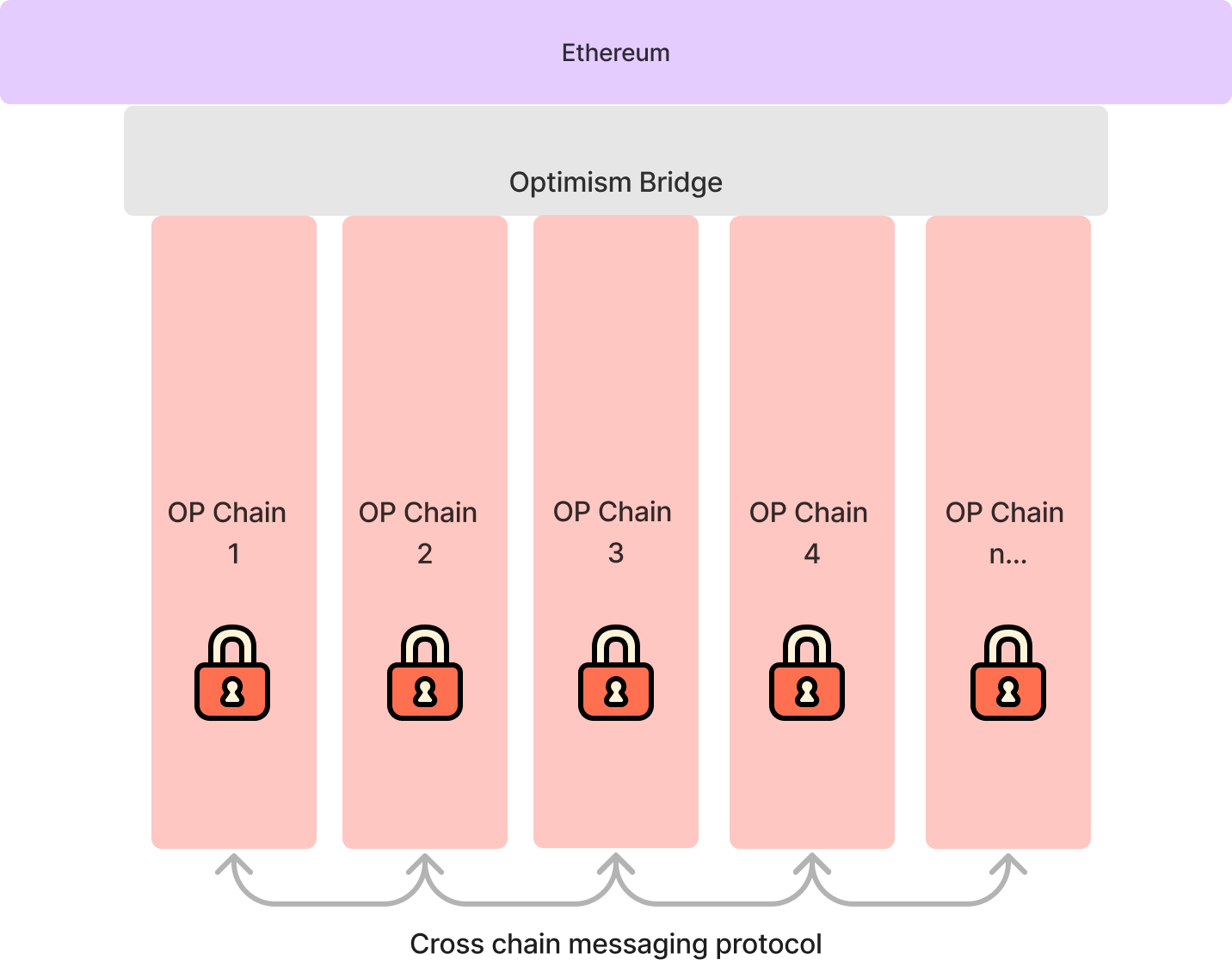
The superchain thesis proposes a modular scaling strategy for Ethereum where multiple Layer 2 networks operate as a single, unified ecosystem rather than isolated silos. Instead of each chain reinventing its own infrastructure for bridging, governance, and upgrades, they share a common technical foundation known as the OP Stack. This approach allows new chains to launch quickly while inheriting Ethereum’s security guarantees.
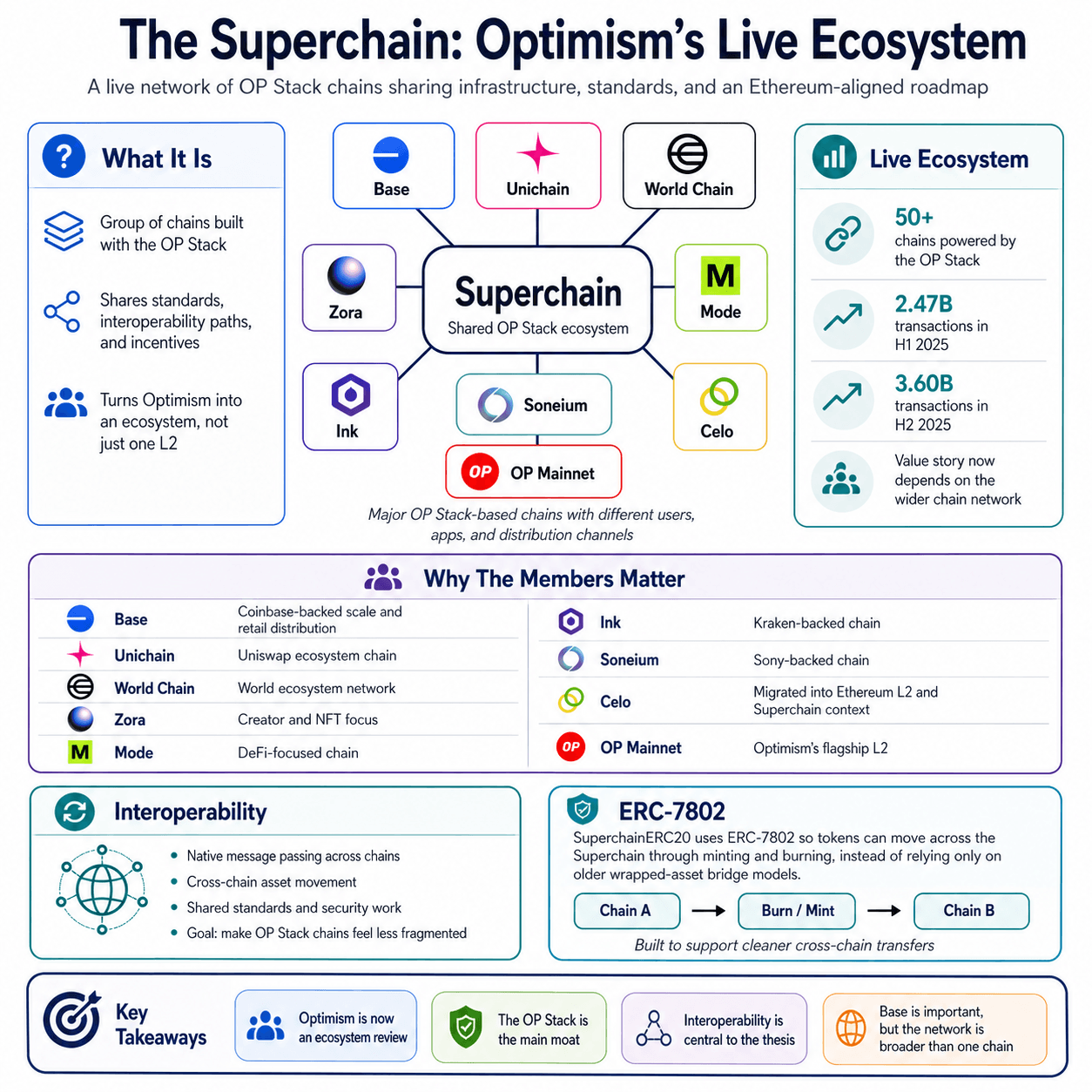
The most prominent example is Optimism, which uses this stack to connect chains like Base and Zora. These networks share a communication layer, enabling seamless asset transfers and consistent user experiences across the network. By standardizing the underlying code, the superchain model reduces the friction of cross-chain interactions, making it easier for developers to build and for users to engage with the broader Ethereum landscape.
This model contrasts with earlier scaling narratives that viewed Layer 2s as competing solutions. The superchain thesis argues that interoperability and shared security are more valuable than fragmented innovation. It aims to solve the "liquidity fragmentation" problem by creating a cohesive environment where capital and users can flow freely between chains without complex bridging risks.
| Feature | Traditional L2 | Superchain |
|---|---|---|
| Security | Independent rollup security | Shared Ethereum security model |
| Interoperability | Complex, manual bridging | Native, standardized messaging |
| Development | Custom infrastructure per chain | Shared OP Stack foundation |
Superchain thesis choices that change the plan
The Superchain thesis promises a network of Layer 2s that share infrastructure, bridging, and governance through the OP Stack. While this model reduces development friction and enables native interoperability, it introduces specific risks regarding centralization and fragmentation. Evaluating these tradeoffs requires looking beyond the marketing promise of unified scaling.
Shared Sequencing and Centralization Risks
The core benefit of the Superchain is shared sequencers, which lower costs and improve transaction ordering consistency across chains. However, this creates a single point of failure. If the sequencer network goes down or is censored, all dependent chains are affected simultaneously. This contrasts with independent L2s, which maintain their own sequencing sovereignty but face higher operational overhead.
Interoperability vs. Composability
Native interop allows messages and assets to move between chains without trusted bridges, a significant security improvement over legacy cross-chain messaging. Yet, this tight coupling means a vulnerability in one chain’s codebase can potentially impact others sharing the same stack. Developers must weigh the convenience of shared state against the systemic risk of interconnected contracts.
Fragmentation and Chain Independence
Recent moves by major projects like Base to explore alternatives highlight the tension between ecosystem alignment and independence. While the Superchain offers economies of scale, it limits a project’s ability to customize its economic model or governance structure. The thesis assumes that shared infrastructure is always superior, but some use cases require bespoke execution environments that the standard OP Stack cannot provide.
| Factor | Superchain (OP Stack) | Independent L2 |
|---|---|---|
| Sequencing | Shared, lower cost | Private, higher cost |
| Interoperability | Native, built-in | Bridges required |
| Customization | Limited by stack | Full control |
| Systemic Risk | High (shared infra) | Low (isolated) |
How to choose the next modular L2 step
Selecting the right modular L2 isn't about finding the fastest chain in a vacuum; it's about finding the one that best fits your specific scaling needs within the Ethereum ecosystem. The Superchain thesis offers a framework for this choice, prioritizing shared security, standardized infrastructure via the OP Stack, and interoperability. Before committing capital or development resources, evaluate potential L2s against these four practical criteria.
1. Verify OP Stack Compatibility
The core of the Superchain thesis is the OP Stack, an open-source software stack that allows chains to share security and upgrade mechanisms. Ensure the L2 you are considering is built on the OP Stack or is fully compatible with it. This compatibility is what enables the "superchain" effect, allowing for seamless communication and shared liquidity across different chains. Chains that deviate significantly from this standard may offer unique features but will lack the network effects and security guarantees of the broader Superchain.
2. Assess Shared Security Guarantees
One of the primary advantages of modular L2s within the Superchain is access to Ethereum's base layer security. Look for L2s that use Optimistic Rollup technology, which batches transactions and posts data to Ethereum. This approach ensures that your assets are secured by Ethereum's consensus mechanism, rather than relying on a smaller, independent validator set. Check the L2's documentation to confirm how it handles fraud proofs and dispute resolution, as these are critical for maintaining the integrity of the shared security model.
3. Evaluate Interoperability and Messaging
A true Superchain L2 should support standardized messaging protocols that allow it to communicate with other chains in the ecosystem. This interoperability reduces friction for users and developers, enabling cross-chain transactions and applications without the need for complex, custom bridges. Investigate the L2's support for protocols like the Superchain Messaging Protocol. Chains that natively support these standards offer a smoother user experience and lower risk of bridge-related exploits.
4. Compare Transaction Costs and Throughput
While security and interoperability are foundational, practical usage requires efficient transactions. Compare the L2's average transaction costs and throughput against other OP Stack-based chains. Look for consistent performance during high network congestion, as this is where the benefits of modular scaling become most apparent. Use live data from block explorers to verify these metrics, ensuring that the L2 can handle your expected volume without significant delays or cost spikes.

Start by identifying your primary need: is it low cost, high throughput, or specific application compatibility? This initial filter will narrow down the field to L2s that align with your core use case.
Verify that the L2 uses the OP Stack or is compatible with it. This ensures you are part of the shared security and interoperability network that defines the Superchain thesis.
Perform a test transaction that interacts with another chain in the Superchain. This validates the interoperability claims and helps you understand the user experience of cross-chain interactions.
Track transaction costs and speeds over a week. Real-world data under varying network conditions is more reliable than theoretical benchmarks for making your final decision.
Spotting Weak Modular L2 Options
The modular L2 narrative is crowded, but not all chains are built equal. When evaluating the 2026 superchain landscape, focus on technical depth rather than marketing hype. A strong modular architecture relies on a shared security model and efficient interoperability, not just a new token name.
The OP Stack Trap
Many projects fork the OP Stack without adding meaningful differentiation. While the OP Stack offers a fast path to launch, it often results in homogeneous chains that compete for the same liquidity. Look for chains that have customized their sequencer incentives or added unique data availability layers. If a chain’s only selling point is "EVM compatible," it likely lacks the moat needed for long-term survival.
Misleading Security Claims
Some modular L2s claim "Ethereum-level security" while relying on weak fault proof systems or centralized sequencers. True security comes from the underlying settlement layer and robust dispute mechanisms. Check if the chain uses a reputable bridge infrastructure and if its governance is truly decentralized. Chains that centralize sequencer control create single points of failure that can disrupt user access during high volatility.
Interoperability vs. Fragmentation
A common mistake is assuming that sharing a bridge equals seamless interoperability. Many "superchain" projects suffer from fragmented liquidity and poor cross-chain messaging. Evaluate the actual user experience: can users move assets without complex bridging steps? Chains that prioritize native composability over isolated silos will capture more value. Avoid options that require users to interact with multiple, disconnected interfaces to access the same ecosystem.
Superchain thesis: what to check next
The modular scaling narrative hinges on whether shared infrastructure actually delivers value. As the ecosystem matures, practical concerns about governance, fragmentation, and security take precedence over theoretical benefits. Below are the most common objections regarding the Superchain model.
Is the Superchain thesis still valid if Base leaves OP Stack?
Fragmentation is a real risk. The Superchain concept relies on shared sequencers and native interoperability between chains built on the OP Stack. If major players like Base decouple their infrastructure, the network effect weakens. Shared revenue models and cross-chain composability depend on alignment. When nodes diverge, the "super" aspect diminishes into isolated silos.
Does the Superchain improve security or just centralize it?
Security remains tied to Ethereum’s finality, but sequencer centralization is a concern. Most Superchain L2s use centralized sequencers for speed, relying on Ethereum for data availability and dispute resolution. This creates a trust assumption: users must trust the sequencer not to reorder or censor transactions. While fraud proofs offer a backup, they are rarely used. Decentralized sequencers are still experimental.
Can different L2s truly communicate natively?
Native interoperability is the goal, but implementation is uneven. The OP Stack aims for seamless value transfer without bridges, reducing bridge hacks. However, current versions require careful contract design. Developers must account for state differences across chains. Until cross-chain messaging is fully standardized and audited, friction remains. Users often still rely on third-party bridges for complex moves.
Who controls the Superchain governance?
Governance is split between protocol upgrades and economic incentives. The Optimism Collective uses on-chain voting for funding and grants, but technical upgrades follow a more traditional core-dev process. Disagreements over fee structures or upgrade timelines can stall progress. Unlike Ethereum’s broader community, Superchain governance is narrower, focusing on OP Stack maintainers and major L2 operators.
No comments yet. Be the first to share your thoughts!