
Ethereum’s Layer 2 landscape is evolving fast, and nowhere is this more evident than in the emerging Japan L2 ecosystem. As of today, Ethereum (ETH) trades at $4,003.78, a price that reflects both the network’s persistent demand and its ongoing struggle with scalability bottlenecks. Enter the Based Rollup Revolution: a new wave of rollup projects committed to returning transaction sequencing power back to Ethereum’s own validators, rather than relying on centralized actors. This shift isn’t just technical, it’s a philosophical realignment with Ethereum’s original ethos of decentralization and neutrality.
Why Based Rollups Are Changing the Game
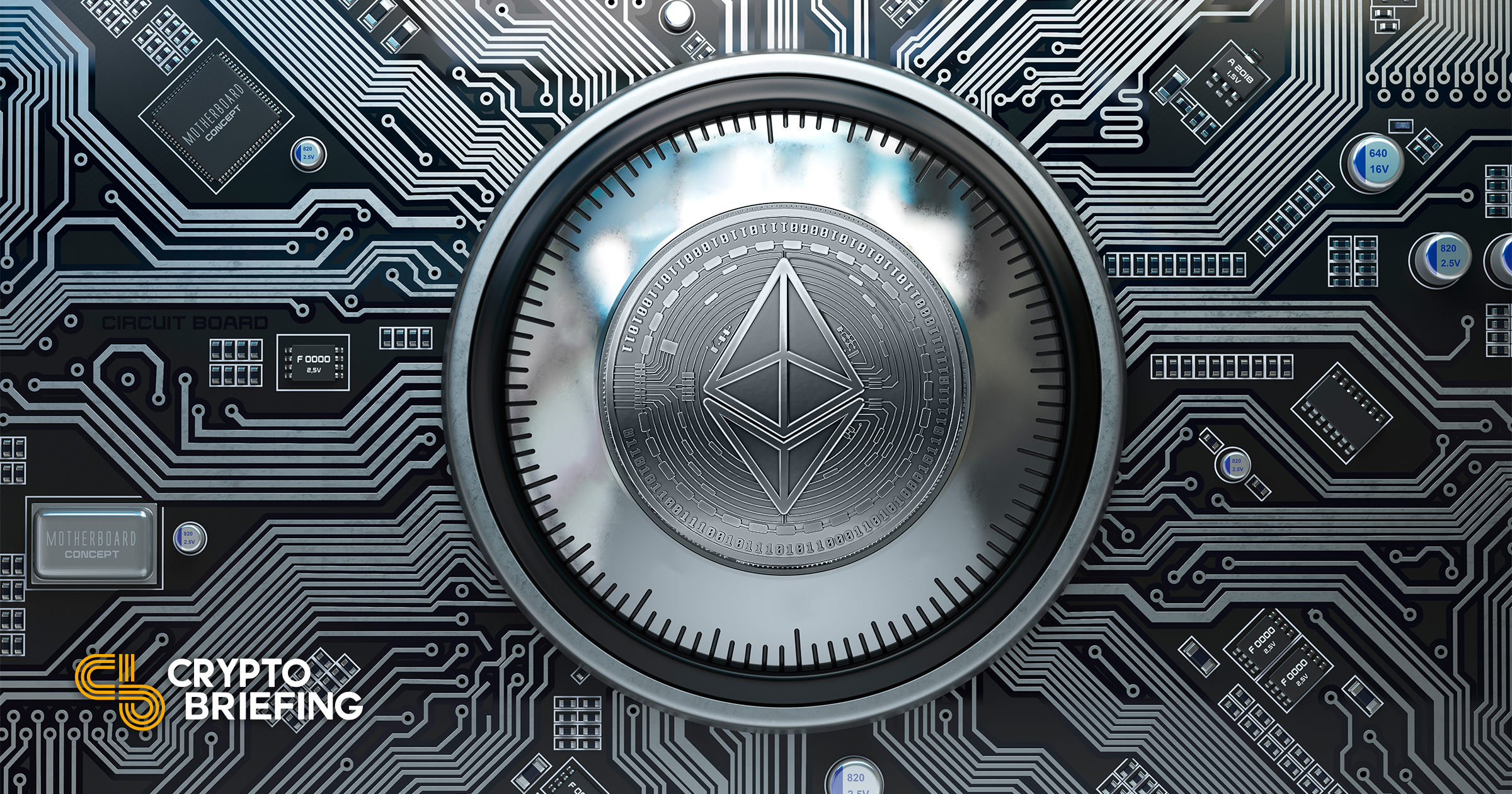
Traditional Layer 2 solutions have delivered much-needed throughput boosts, but often at the cost of relying on centralized sequencers, entities with outsized control over transaction ordering and fee capture. This introduces risks like censorship, MEV extraction by single parties, and misaligned incentives between L1 and L2. Based rollups, also called L1-sequenced rollups, flip this script by letting Ethereum’s existing validator set handle sequencing duties directly on the mainnet.
The benefits are substantial:
- Enhanced decentralization and security: Sequencing is performed by thousands of independent validators instead of a single entity (source).
- Economic alignment: Fees and MEV from rollup activity are shared with Ethereum validators, strengthening the economic bond between layers (source).
- Smoother interoperability: Shared sequencing allows for more seamless cross-rollup composability without complex bridges (source).
This isn’t just theory, 2025 is seeing these ideas move from whitepapers to production networks.
The Four Pillars: Japan’s Leading Based Rollup Projects
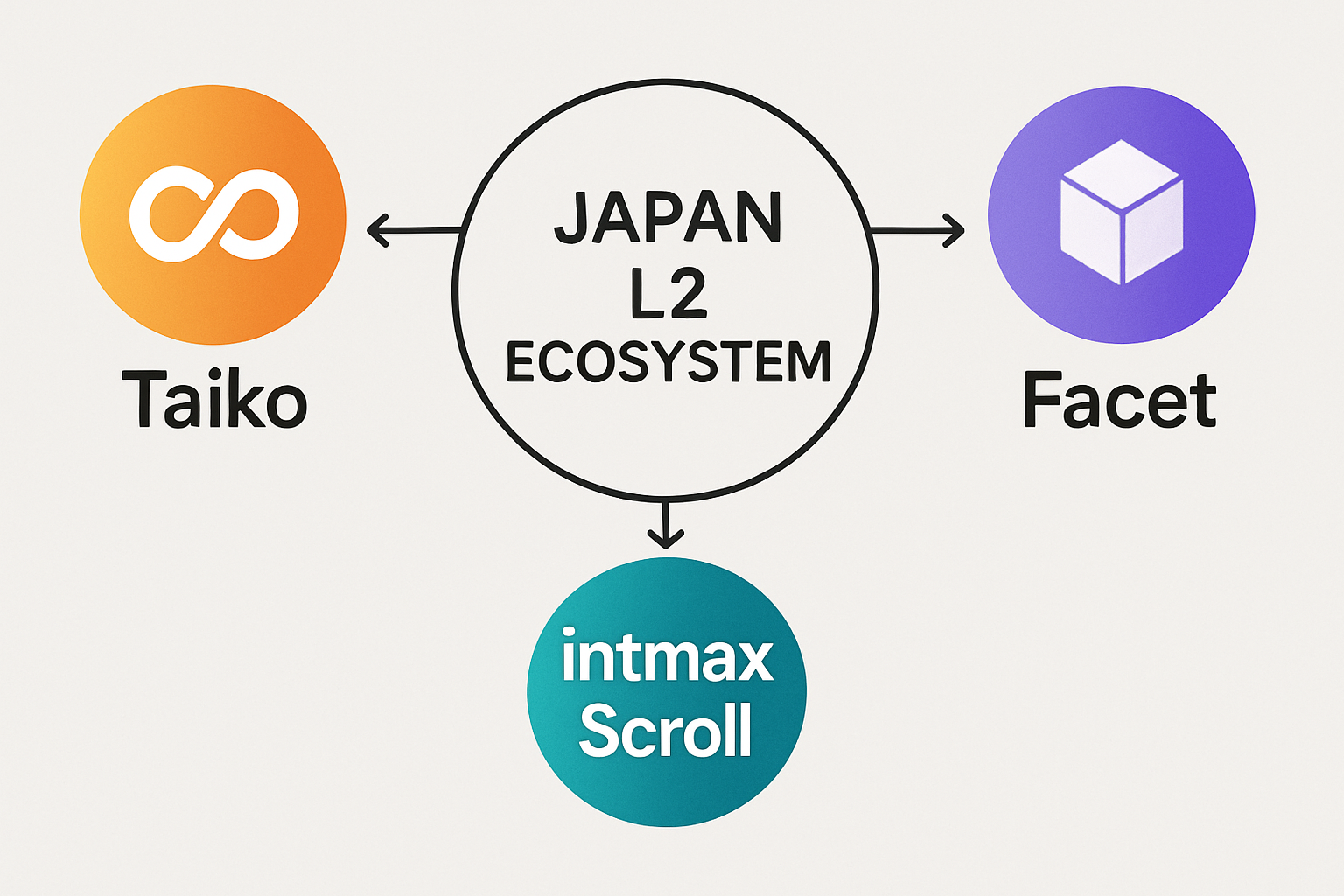
The Japanese blockchain community has long been enthusiastic about Ethereum’s multi-rollup vision. Today, four projects stand out for their commitment to admin-keyless design, decentralized sequencing, and OP Stack composability:
Leading Based Rollup Projects in Japan's L2 Ecosystem
- Taiko: A pioneering based rollup project, Taiko is designed to be fully Ethereum-equivalent and admin-keyless. By leveraging Ethereum's L1 validators for sequencing, Taiko enhances decentralization and security while ensuring seamless interoperability with the mainnet. Its open-source approach has made it a flagship example of the movement to return control to Ethereum validators.
- Facet: Facet is an innovative rollup solution focused on creating a neutral and composable Layer 2 environment. It utilizes based sequencing to align with Ethereum's validator network, reducing centralization risks and fostering a more secure and economically aligned ecosystem for developers and users alike.
- Intmax: Intmax stands out for its commitment to privacy and scalability within the based rollup paradigm. By adopting a stateless architecture and integrating decentralized sequencing, Intmax aims to deliver fast, private, and censorship-resistant transactions while maintaining strong ties to Ethereum's core security.
- Scroll: Scroll is a leading zkEVM-based rollup that has embraced based rollup principles to enhance decentralization. By distributing sequencing to Ethereum's validator set, Scroll achieves greater neutrality and composability, making it a key player in the push for admin-keyless, scalable Layer 2 solutions.
Taiko, for example, has been at the forefront of implementing based rollup designs that let any validator participate in sequencing without privileged access or admin keys. By leveraging native L1 sequencing mechanisms described in Justin Drake’s research (source), Taiko aims for true neutrality, a critical property for trustless DeFi infrastructure.
Facet, another rising star in Japan’s scene, builds on these principles but pushes further into modularity and developer experience. Its focus on plug-and-play components makes it easier for teams to launch new based rollups tailored to specific use cases while maintaining full compatibility with Ethereum validators.
Ethereum (ETH) Price Prediction 2026-2031
Forecast based on the adoption of Based Rollups, Layer 2 innovation, and evolving market trends
| Year | Minimum Price | Average Price | Maximum Price | Year-over-Year % Change (Avg) | Market Scenario Insights |
|---|---|---|---|---|---|
| 2026 | $3,500 | $4,600 | $6,200 | +15% | Potential post-rollup implementation volatility; increased L2 adoption offsets regulatory headwinds |
| 2027 | $4,200 | $5,700 | $8,100 | +24% | Wider mainstream use of based rollups; improved scalability boosts DeFi and NFT activity |
| 2028 | $4,800 | $7,100 | $10,500 | +25% | Enhanced interoperability attracts institutional investment; regulatory clarity emerges |
| 2029 | $6,000 | $8,800 | $13,500 | +24% | Layer 2 consolidation; ETH benefits from being the settlement layer for multiple L2s |
| 2030 | $7,800 | $10,300 | $16,000 | +17% | Global adoption peaks; competition from other smart contract platforms intensifies |
| 2031 | $8,500 | $12,200 | $20,000 | +18% | ETH cements its role as a multi-chain hub; macroeconomic cycles and tech innovation drive volatility |
Price Prediction Summary
Ethereum's price outlook from 2026 to 2031 is broadly bullish, underpinned by the maturation and adoption of based rollups and other Layer 2 solutions. These advances will drive increased network activity, fee revenue, and security, supporting sustainable price appreciation. However, volatility will persist due to regulatory, technical, and competitive risks. The minimum and maximum price ranges reflect both bullish scenarios (mainstream adoption, institutional inflows) and bearish risks (market corrections, regulatory crackdowns, technical delays).
Key Factors Affecting Ethereum Price
- Rollout and adoption of based rollups and L2 scaling solutions
- Regulatory clarity and global policy developments affecting crypto
- Institutional and retail adoption rates for Ethereum-based applications
- Technological advancements in interoperability, scalability, and security
- Competition from alternative smart contract platforms (e.g., Solana, Avalanche)
- Macro market cycles, including risk appetite and global economic conditions
- Evolution of Ethereum's fee model and validator incentives
Disclaimer: Cryptocurrency price predictions are speculative and based on current market analysis. Actual prices may vary significantly due to market volatility, regulatory changes, and other factors. Always do your own research before making investment decisions.
No Admin Keys: The End of Centralized Control?
The move toward admin-keyless Layer 2s isn’t just a technical upgrade, it’s a cultural shift away from opaque governance structures that have historically plagued some L2s. Intmax, known for its privacy-centric features and ZK-based approach, has taken this ethos seriously by eliminating backdoors or privileged upgradability wherever possible. This reduces attack surfaces and aligns user trust directly with Ethereum itself.
Scroll, meanwhile, exemplifies how based rollups can deliver both high throughput and neutrality by running fully open-source stacks that anyone can audit or fork. Its integration with OP Stack standards ensures composability across the superchain, an essential ingredient for the next generation of DeFi applications that demand both speed and trustlessness.
Bumps in the Road: Technical Hurdles and Ecosystem Pushback
No revolution comes without friction. While based rollups promise lower centralization risk and better economic alignment with Ethereum (especially as ETH holds steady near $4,003.78), they also face real-world implementation challenges, like achieving low-latency confirmations or optimizing proof generation at scale (source). And not every incumbent L2 is eager to give up lucrative sequencer fees; expect pushback as revenue models get disrupted (source).
Despite these hurdles, the momentum behind based rollups is unmistakable. The Japanese L2 ecosystem, with its blend of technical rigor and community-driven ethos, is uniquely positioned to lead this transition. Developers in Japan are not just importing global trends, they’re actively shaping the standards for admin-keyless, neutral rollups that could become the backbone of Ethereum’s superchain future.
Consider how Taiko and Intmax are collaborating with local universities and hackathons to foster a new generation of Layer 2 engineers. This grassroots energy is mirrored by Facet’s open grants program, which incentivizes builders to experiment with modular sequencing and privacy-preserving features. Scroll’s commitment to open-source transparency has sparked a wave of forks and integrations, with Japanese DeFi protocols now able to compose across rollups without sacrificing neutrality or security.
What’s Next for Japan’s Based Rollup Movement?
As Ethereum’s price holds at $4,003.78, the stakes for scalable, secure, and neutral L2s have never been higher. Japan’s leading rollup projects aren’t just solving local scalability issues, they’re piloting models that could be exported globally. The push toward no admin key L2 rollups is already influencing governance debates across the broader superchain and OP Stack communities.
Looking ahead, several trends are worth watching:
- Cross-rollup composability: The integration of OP Stack standards by Scroll and Facet is making it easier for DeFi protocols to move assets and liquidity seamlessly across L2s.
- Privacy innovation: Intmax’s ZK tooling is setting new benchmarks for confidential transactions on public rollups, potentially unlocking use cases in enterprise and regulated markets.
- Validator incentives: As based rollups distribute MEV and fees to Ethereum validators, expect to see new staking and re-staking products emerge, particularly from Japanese exchanges and fintech startups.
All eyes are on how these four projects provides Taiko, Facet, Intmax, and Scroll: will navigate the next wave of technical upgrades and regulatory scrutiny. Their progress will not only influence Japan’s crypto landscape but may well provide the blueprint for the next generation of decentralized sequencing worldwide.
For those tracking the superchain’s evolution, the message is clear: the era of centralized sequencers is ending. The Japan L2 ecosystem, powered by based rollup pioneers, is proving that scalability and neutrality don’t have to be at odds. If you want to see the future of Ethereum’s decentralization play out in real time, keep your eyes on these projects, and on Japan’s thriving developer community.




No comments yet. Be the first to share your thoughts!