The superchain thesis explained
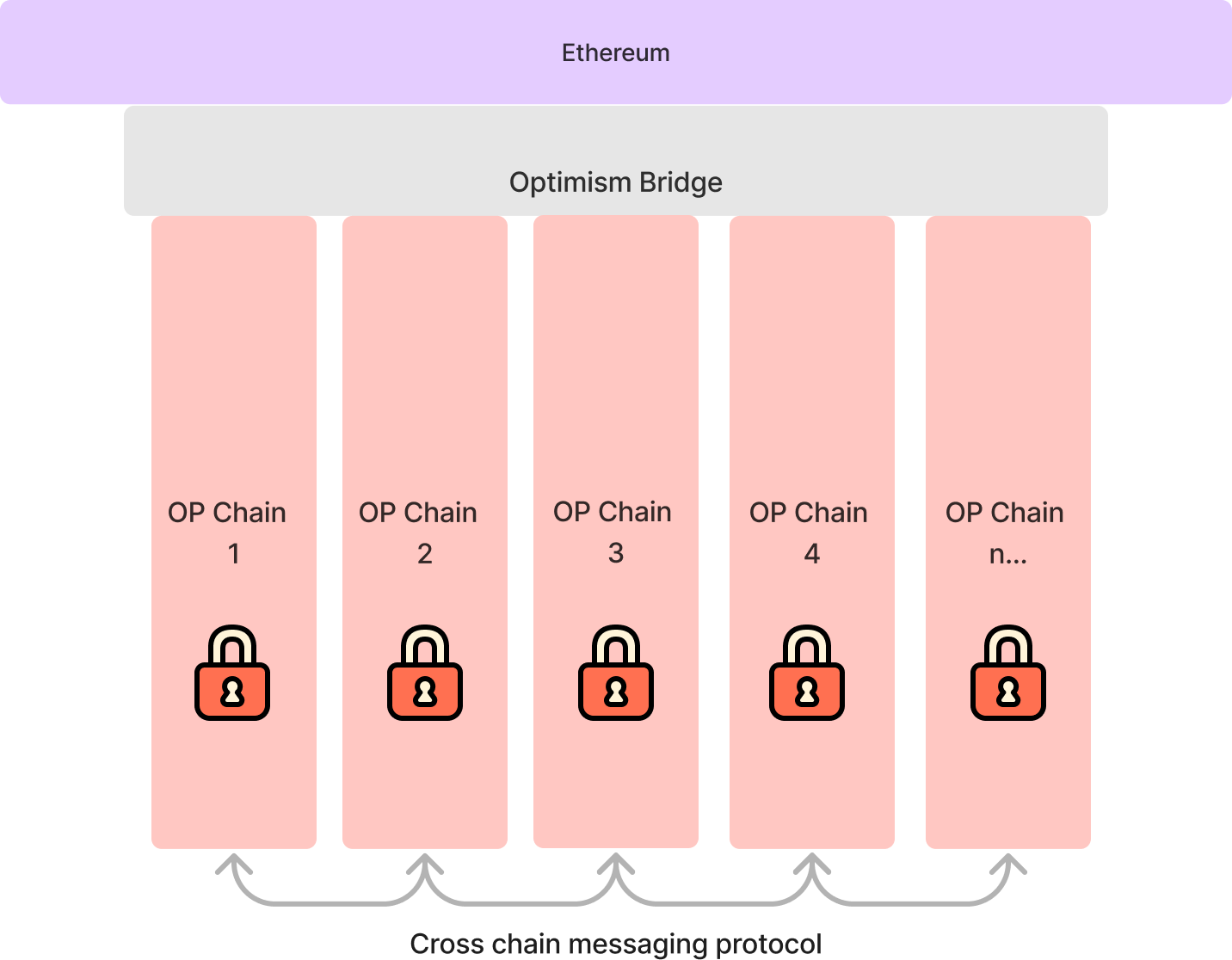
The superchain thesis proposes that Ethereum’s scaling strategy relies on a network of interconnected layer 2 (L2) blockchains rather than isolated chains. Instead of each L2 operating as a standalone silo, the superchain model treats them as a unified ecosystem. These chains share common standards, security assumptions, and messaging protocols, allowing them to function as a single logical unit while processing transactions off the main Ethereum layer. This approach aims to reduce congestion on Ethereum Mainnet while maintaining a cohesive user experience across different networks.
The core mechanism behind this thesis is standardization. By adopting shared sequencer technology and uniform OP Stack implementations, L2s like Base, Ink, and World Chain can communicate seamlessly. This interoperability enables cross-chain messaging and unified security models, meaning users do not need to navigate complex bridges or manage disparate assets manually. The result is a "network of networks" where liquidity and data flow freely between chains without sacrificing the security guarantees of the underlying Ethereum settlement layer.
A common misconception is that the superchain thesis implies a single, monolithic chain. In reality, it is a modular framework. Individual L2s retain their ability to customize transaction fees, governance, and specific features, but they plug into a shared infrastructure layer. This structure allows for collective upgrades and shared security audits, reducing the fragmentation that has historically plagued the Ethereum ecosystem. As the thesis evolves through 2026, the focus remains on making these inter-chain interactions invisible to the end user, effectively scaling Ethereum’s throughput without compromising its decentralized principles.
Superchain thesis choices that change the plan
The Superchain thesis promises a network of networks where Layer 2 chains share security and governance through the OP Stack. This approach reduces fragmentation, but it introduces specific tradeoffs between efficiency, decentralization, and security that builders must evaluate. Understanding these factors is essential for assessing the long-term viability of modular scaling.
Shared Security and Centralization Risks
Superchains rely on a shared security model, often using a single sequencer or a tightly coupled validator set. This centralization allows for faster finality and lower costs, as chains do not need to bootstrap independent security from Ethereum mainnet. However, it creates a single point of failure. If the sequencer goes offline or acts maliciously, all chains in the superchain are affected. This contrasts with independent L2s, which maintain their own security assumptions but suffer from slower finality and higher bridge risks.
Cross-Chain Messaging and Liquidity Fragmentation
Unified messaging protocols enable seamless asset transfers between chains, reducing the liquidity fragmentation that plagues the broader Ethereum ecosystem. Users can move assets without bridging to external protocols, improving capital efficiency. Yet, this convenience comes with complexity. A bug in the messaging contract can expose all connected chains to exploits. Also, while liquidity is unified within the superchain, it remains isolated from the broader DeFi landscape, potentially creating walled gardens.
Upgrade Coordination and Governance
Collective upgrades allow the network to implement improvements rapidly, such as EIP-4844 blob support, without waiting for individual chain governance. This agility is a significant advantage over legacy L2s. However, coordinating upgrades requires consensus among diverse stakeholders. Disagreements can lead to fork risks or delayed implementations, stalling innovation. Builders must weigh the speed of execution against the political complexity of multi-party governance.
| Factor | Superchain | Independent L2 |
|---|---|---|
| Security Model | Shared sequencer/security | Independent validator set |
| Finality | Fast (sequencer-dependent) | Slower (L1-dependent) |
| Liquidity | Unified within network | Fragmented across bridges |
| Upgrade Speed | Rapid (collective) | Slow (governance-heavy) |
| Risk Exposure | Single point of failure | Distributed risk |
Choose the next step
Superchain Thesis works best as a clear sequence: define the constraint, compare the realistic options, test the tradeoff, and choose the path with the fewest hidden costs. That order keeps the advice usable instead of decorative. After each step, pause long enough to check whether the recommendation still fits the reader's actual situation. If it depends on perfect timing, unusual access, or a best-case budget, include a simpler fallback.
Identifying Weak Options in the Superchain Thesis
The Superchain thesis promises a unified Layer 2 ecosystem, but investors often mistake shared standards for identical risk profiles. While networks like Base and Ink share infrastructure, their security models and economic incentives diverge significantly. Treating them as a monolithic asset class ignores critical structural differences.
A common misconception is that interoperability automatically guarantees liquidity efficiency. In reality, cross-chain messaging introduces latency and bridge risks that can fragment depth during volatility. Users must verify which chains offer native depth versus those relying on external aggregators.
Another weak option involves assuming collective upgrades benefit all participants equally. Governance proposals often prioritize the largest validators, leaving smaller chains with higher operational costs or delayed feature adoption. This asymmetry can erode value for smaller network participants over time.
Finally, relying on "unified security" as a blanket term is misleading. While the base layer provides consensus, individual rollups may use different fraud-proof systems or sequencer setups. Due diligence requires inspecting each chain's specific security parameters rather than trusting the overarching brand promise.
Superchain thesis: what to check next
The Superchain thesis addresses the fragmentation problem in Ethereum’s Layer 2 ecosystem by creating a network of L2s that share security and standards rather than operating in silos. This approach reduces congestion and improves user experience through unified liquidity. Below are the most common practical questions regarding this model.
No comments yet. Be the first to share your thoughts!