The superchain thesis 2026 defined
The superchain thesis represents a shift from isolated Layer 2 experiments to a unified modular architecture. At its core, this strategy relies on the OP Stack, an open-source software framework developed by Optimism. Rather than building independent chains with unique consensus mechanisms, developers use the OP Stack to deploy new Layer 2 networks that share critical infrastructure. This standardization allows multiple chains to operate as a single, cohesive ecosystem, significantly reducing development friction and enhancing interoperability.
The primary technical advantage of this model is the shared sequencer. In traditional Layer 2 setups, each chain manages its own block production and ordering, creating silos that complicate cross-chain communication. The superchain model introduces a shared sequencer that orders transactions across all connected chains. This creates a unified state view, enabling instant and trustless transfers between networks without the need for complex bridging protocols or wrapped assets. It effectively turns a fragmented landscape of rollups into a single, high-throughput execution layer.
This architectural shift is already visible in the rebranding of the primary Optimism network to OP Mainnet. The name change signals a strategic pivot toward becoming the first and central hub of the superchain, rather than a standalone competitor to Ethereum. By aligning the mainnet with the broader superchain vision, the project emphasizes that value and liquidity should flow freely between its connected chains. This approach mirrors the modular scaling strategy adopted by other major protocols, prioritizing composability over isolated growth.
The implications for Ethereum's scaling roadmap are substantial. By aggregating the throughput of multiple OP Stack-based chains, the superchain thesis offers a path to scale that preserves Ethereum's security guarantees while drastically lowering costs. As more chains adopt this standard, the network effect strengthens, making the superchain an increasingly attractive environment for developers and users alike. This modular approach positions Ethereum not just as a settlement layer, but as the foundation for a vast, interconnected network of specialized execution environments.
Interoperability and Shared Security
The Superchain thesis relies on two technical pillars: shared sequencer sets and cross-chain messaging. These mechanisms solve the fragmentation that typically plagues multi-chain ecosystems, allowing distinct rollups to operate as a unified network rather than isolated silos.
Shared sequencer sets enable multiple rollups to process transactions through a common ordering layer. This reduces latency and ensures that state updates are synchronized across chains. Cross-chain messaging protocols then facilitate the transfer of assets and data between these chains without requiring trusted intermediaries or complex bridge architectures.
By standardizing these interactions, the Superchain reduces the friction of liquidity flow. Users can move capital between chains with lower costs and higher speed, enhancing the overall utility of the ecosystem. This technical cohesion is critical for maintaining network effects as the number of participating chains grows.
The following chart illustrates recent network activity, highlighting the correlation between interoperability upgrades and transaction volume trends.
Base Forks and Ecosystem Fragmentation
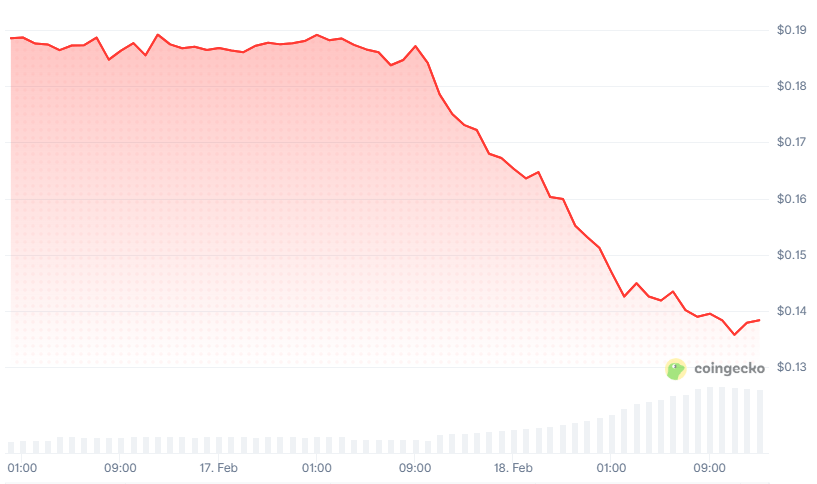
The strategic pivot by Base away from the shared OP Stack represents a fundamental fracture in the unified superchain vision. On February 18, 2026, Base announced it would migrate to a proprietary software stack, effectively decoupling its infrastructure from Optimism’s ecosystem. This move shifts the architecture from a coordinated, shared-sequencer model to an independent operational framework, prioritizing Base’s specific scalability needs over collective efficiency.
The market interpreted this divergence as a significant risk to the superchain thesis. Investors reacted swiftly, with the OP token dropping 7% in immediate aftermath. This decline signals growing uncertainty regarding the long-term economics of the shared sequencer model, which relies on the alignment of major Layer 2 chains to maintain low fees and high throughput. If leading chains like Base opt for independence, the economic moat of the unified superchain may erode.
This fragmentation raises questions about the future of interoperability. While a unified stack offers seamless cross-chain messaging and shared security, it imposes constraints on individual chains’ development roadmaps. Base’s decision suggests that as Layer 2s scale, their unique requirements may outweigh the benefits of staying within a single, standardized stack. The superchain model must now prove that its collective advantages can justify the loss of autonomy for its most prominent members.
Cross-chain liquidity in 2026
Liquidity fragmentation remains the primary friction point for modular scaling. While the "superchain" thesis promises unified depth, the current reality is a hybrid market where native bridge efficiency competes with generic cross-chain interoperability protocols. Understanding the delta between these two models is essential for assessing capital efficiency in 2026.
Superchain-native bridges, such as those built on the OP Stack, leverage a shared sequencer and shared security model. This architecture reduces the latency and cost of internal transfers between chains like Base and Optimism. In contrast, generic cross-chain protocols must rely on external liquidity pools or message-passing bridges that often introduce slippage and higher gas fees due to the lack of a unified state layer.
The following comparison highlights the structural differences in transaction costs, finality, and liquidity depth between superchain-native environments and independent Layer 2s.
| Metric | Superchain (OP Stack) | Independent L2 |
|---|---|---|
| Internal Transfer Cost | Near-zero (shared sequencer) | |
| Internal Transfer Cost | High (bridge fees + gas) | |
| Finality Time | Seconds (shared state) | |
| Finality Time | Minutes to hours (bridge wait) | |
| Liquidity Depth | Unified pool depth | |
| Liquidity Depth | Fragmented across bridges | |
| Security Model | Shared fraud proofs | |
| Security Model | Independent validators |
For investors and developers, the data suggests that capital efficiency is highest within the superchain ecosystem. The unified liquidity pool reduces the "slippage tax" inherent in cross-chain swaps. However, for assets residing on independent L2s like Arbitrum or zkSync, users must still manage the inefficiencies of generic bridging.
As Ethereum continues to handle over $2.82 trillion in stablecoin transaction volume, the pressure on modular scaling solutions to provide seamless liquidity will only increase. The superchain model offers a clear path toward reducing this friction, but its adoption across the broader modular landscape remains the key variable for 2026.
Investment outlook for OP and modular L2s
The financial narrative surrounding the Optimism Collective has shifted from speculative hype to a test of modular infrastructure viability. In 2026, OP is no longer just a governance token; it is a proxy for the success of Ethereum’s rollup-centric roadmap. The thesis is straightforward: if the Superchain becomes the standard for scalable Ethereum execution, OP captures value through its role in coordinating that ecosystem. However, this potential is balanced against significant execution risks and competitive pressure from other Layer 2 solutions.
To understand the investment case, one must look at the broader modular blockchain sector. The "modular" vision separates execution, consensus, and data availability into specialized layers. Optimism pioneered the "Superchain" concept, where multiple rollups share a common sequencer and security model. This shared sequencer reduces costs and improves interoperability, making it easier for applications to move assets and data between different L2s. For investors, this means OP’s value is tied to the network effects of this shared infrastructure, not just individual chain activity.
Market data from late 2025 shows Ethereum handling $2.82 trillion in stablecoin transaction volume, with over $50 billion in DeFi lending. This volume underscores the demand for scalable solutions. However, the OP token’s price action has often lagged behind network growth, reflecting investor skepticism about tokenomics and revenue distribution. The recent introduction of the Bedrock upgrade improved transparency and efficiency, but the market remains cautious about whether OP can capture a sustainable share of the ecosystem’s value.
The primary risk for OP investors is competition. Other modular stacks, such as Arbitrum and Base, are also expanding their ecosystems. While Optimism’s shared sequencer offers unique advantages, it is not a guaranteed moat. Investors must weigh the potential for Superchain standardization against the possibility that modular benefits will be fragmented across multiple competing standards. The outlook for OP in 2026 depends on whether the Optimism Collective can maintain its lead in developer adoption and institutional interest while managing these competitive pressures.
Frequently asked: what to check next
Is Ethereum still a good investment in 2026?
Yes. Ethereum processed over $50 billion in DeFi lending and handled $2.82 trillion in stablecoin transaction volume in October 2025. The network continues to upgrade and currently has the largest developer community in crypto.
How does the superchain model affect ETH value?
The superchain model uses a shared sequencer to route transactions across multiple rollups. This reduces costs and increases throughput, making the underlying ETH asset more useful for settlement and security. As usage scales, demand for ETH to pay for block space and staking increases.
Why is the shared sequencer important?
A shared sequencer acts as a common entry point for transactions from different rollups. Instead of each rollup managing its own sequencing, they share this resource, which lowers operational costs and improves interoperability. This efficiency is central to the modular scaling thesis.
What are the risks of the superchain thesis?
The primary risk is centralization of the sequencer layer. If a single entity controls the shared sequencer, it could censor transactions. Additionally, smart contract vulnerabilities in interconnected rollups could lead to cross-chain exploits. Regulatory scrutiny of stablecoins also poses a threat to transaction volume.
No comments yet. Be the first to share your thoughts!