Defining the superchain thesis
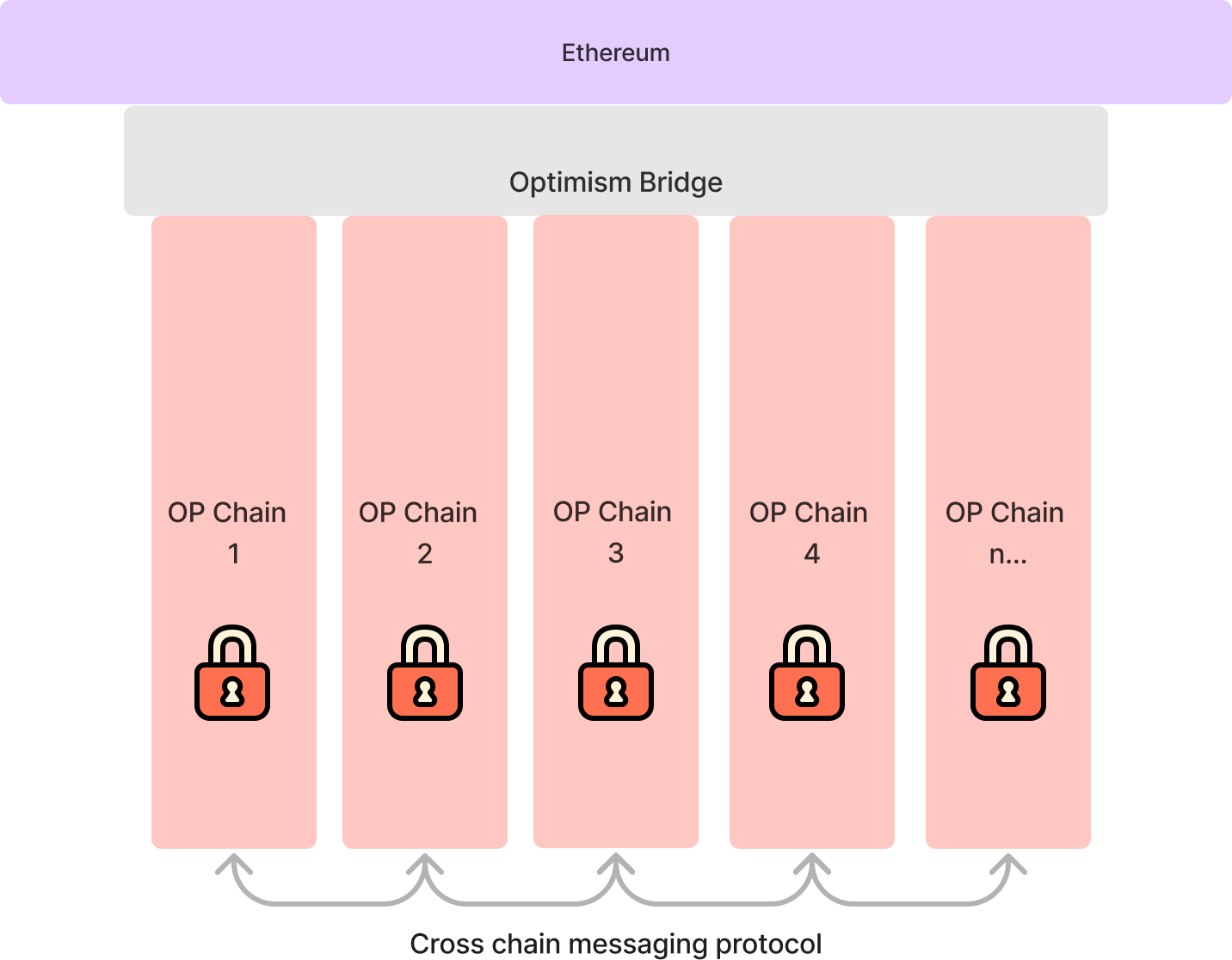
The superchain thesis represents a structural shift in how Ethereum scaling is conceptualized, moving away from isolated Layer 2 silos toward an interconnected network of chains. At its core, the thesis argues that individual rollups should not operate as standalone entities with proprietary bridging and governance models. Instead, they should share a unified infrastructure stack, primarily built on the OP Stack, to create a cohesive ecosystem that feels like a single chain to the end user while maintaining decentralized security on Ethereum.
This definition distinguishes the superchain from generic Layer 2 scaling. Traditional scaling solutions often require users to manually bridge assets between disparate networks, incurring separate gas fees and exposing them to bridge-specific smart contract risks. The superchain model eliminates this friction by introducing a native cross-chain messaging layer. This allows assets and data to move between chains within the superchain instantly and without leaving Ethereum's security anchor. The result is a unified liquidity pool where capital flows freely, reducing the fragmentation that has historically plagued the multi-chain landscape.
The technical foundation for this thesis is the OP Stack, a modular collection of software components that powers chains like Optimism and Base. By standardizing the execution layer and consensus mechanisms, the OP Stack allows different chains to interoperate seamlessly. This shared infrastructure means that upgrades and security patches can be coordinated across the network, ensuring that the entire superchain evolves in lockstep with Ethereum's mainnet. This approach prioritizes structural economic incentives over isolated growth, aiming to create a scalable, secure, and user-friendly environment that leverages Ethereum's decentralization without sacrificing performance.
| Feature | Traditional L2 | Superchain |
|---|---|---|
| Liquidity | Fragmented across chains | Unified and shared |
| Cross-Chain Messaging | Manual bridging required | Native and instant |
| Security Model | Chain-specific risks | Shared Ethereum security |
How the OP Stack Enables Modular Construction
The OP Stack is not a single monolithic chain but a modular collection of software components designed to build Layer 2 blockchains. By decoupling execution, consensus, data availability, and settlement layers, it allows developers to assemble custom rollups using standardized, interoperable parts. This modularity reduces the engineering overhead required to launch a new chain, shifting the focus from infrastructure maintenance to application-specific design.
The architecture follows a clear separation of concerns. The execution layer processes transactions, while the consensus layer handles ordering. Data availability is anchored to Ethereum, and settlement occurs on L1. This structure ensures that new chains inherit Ethereum’s security guarantees without replicating its consensus mechanisms. The result is a network of chains that can communicate via a native cross-chain messaging system, creating a unified ecosystem rather than isolated silos.
Shared Security and Economic Incentives
Shared security is the economic engine of the Superchain. Instead of each new chain raising its own validator set and securing its own block space, they rely on Ethereum’s Layer 1 as a common security anchor. This reduces the cost of trust for new operators, as they do not need to bootstrap a decentralized validator network from scratch. The security model is anchored by the l2oo contract on Ethereum, which verifies state roots submitted by L2 sequencers.
This model creates a positive feedback loop for liquidity and activity. Chains built on the OP Stack benefit from the same security baseline as Optimism itself, making them more attractive to users and developers who prioritize safety. The shared security model also simplifies the user experience, as assets can move across chains with minimal friction, supported by the Superchain’s native messaging protocol. This structural efficiency is a key differentiator in the Layer 2 landscape, offering a scalable path for blockchain expansion.
Liquidity fragmentation and cross-chain bridges
Ethereum’s current Layer 2 ecosystem is defined by fragmentation. While rollups like Arbitrum, Base, and Optimism offer lower fees and higher throughput, they operate as isolated silos. This structure forces users to bridge assets between chains, a process that is technically complex, expensive, and risky. The Superchain thesis, primarily driven by the OP Stack and Optimism’s infrastructure, attempts to resolve this by treating multiple chains as a single, unified network rather than independent entities.
The core economic argument is that liquidity should not be trapped behind proprietary bridges. In a traditional multi-chain setup, liquidity is shallow on each individual chain because it is spread thin. The Superchain model proposes a shared messaging layer and unified liquidity pools. This allows assets to move seamlessly between chains without the need for trust-minimized bridges that rely on separate validator sets or wrapped tokens. By sharing the same settlement layer and communication protocols, the network can aggregate liquidity, resulting in deeper order books and better price discovery across the entire ecosystem.
To understand the structural difference, we can compare the traditional L2 model with the Superchain approach. The table below highlights the divergence in liquidity depth and transaction costs.
| Feature | Traditional L2 Model | Superchain Model | Economic Impact |
|---|---|---|---|
| Liquidity Structure | Fragmented across isolated chains | Aggregated and shared | Deeper liquidity reduces slippage |
| Cross-Chain Transfers | Trust-minimized bridges required | Native messaging protocol | Lower fees and reduced risk |
| User Experience | Complex bridging workflows | Seamless asset movement | Higher adoption and retention |
| Security Model | Independent validator sets | Shared security and upgrades | Reduced attack surface |
This architectural shift reduces the friction that typically hinders user adoption. When liquidity is unified, the cost of moving value decreases significantly. Instead of paying bridge fees and waiting for confirmation periods on separate chains, users interact with a single logical layer. This not only improves efficiency but also strengthens the network effect, as capital flows more freely to where it is most needed.
The Centralization Risk: Base and the Governance Tension
The Superchain thesis relies on a delicate balance between decentralization and economic efficiency. At the center of this tension is Base, Coinbase’s Layer 2 network. While Base has become one of the most active chains in the ecosystem, its governance structure diverges significantly from the decentralized Optimism Collective model. This creates a structural risk: if a major economic player like Base decouples from the shared governance framework, the "shared security" benefit that defines the Superchain may diminish, shifting the architecture toward a loose federation of independent chains.
Base operates under a more centralized governance model compared to other OP Stack chains. While it benefits from the technical compatibility of the OP Stack, it does not participate in the same on-chain governance processes that allow other chains to vote on upgrades and funding. This asymmetry raises questions about the long-term sustainability of the Superchain as a unified economic layer. If Base were to step away from the Optimism governance model, the collective revenue-sharing mechanisms that incentivize collaboration could weaken, potentially fragmenting the ecosystem.
The economic incentives driving Base’s success are undeniable. As of early 2024, Base has consistently ranked among the top Layer 2 networks by daily active users and transaction volume, often surpassing Arbitrum and Optimism in certain metrics. This success is partly due to Coinbase’s massive user base and distribution network. However, this success also highlights a potential vulnerability: the Superchain’s strength is heavily dependent on the continued alignment of its largest participants. If Base’s governance decisions no longer align with the broader Superchain goals, the network’s cohesion could fracture.
The debate over Base’s role underscores a broader challenge for the Superchain thesis: how to maintain a unified economic and security layer while accommodating the diverse needs and governance preferences of its participants. The outcome of this tension will likely determine whether the Superchain evolves into a truly decentralized ecosystem or remains a collection of loosely connected, centrally influenced networks.
Market outlook for OP Stack ecosystems
The viability of the superchain thesis in 2026 hinges on whether shared security and unified liquidity can outweigh the fragmentation risks inherent in multi-OP Stack deployments. As the ecosystem matures, the primary metric for success shifts from raw chain count to the stability of the shared revenue model and the depth of cross-chain composability. Current data suggests that while transaction volume is growing, the economic incentives for independent sequencers to remain within the Optimism Collective’s framework are facing pressure from competitors offering greater autonomy.
Adoption metrics reveal a divergence between technical deployment and economic alignment. Developer activity remains strong, with new OP Stack chains launching regularly, but the concentration of Total Value Locked (TVL) is becoming more polarized. A handful of large chains like Base and Arbitrum (which, while not using OP Stack, competes in the same aggregation space) dominate liquidity, leaving smaller OP Stack chains struggling to achieve critical mass. This fragmentation challenges the thesis that a unified superchain will naturally create a deeper, more liquid market than isolated Layer 2s.
The competitive landscape against other aggregation models, such as Celestia’s modular approach or EigenLayer’s restaking, is intensifying. These alternatives offer different trade-offs in terms of security guarantees and capital efficiency. For the OP Stack to maintain its market position, it must demonstrate that its specific approach to statelessness and fault proofs provides a tangible advantage in cost and speed that other models cannot match. Without clear differentiation, the superchain risks becoming just another set of parallel chains rather than a cohesive economic layer.
Common questions about the superchain model
The superchain thesis relies on shared infrastructure rather than a single monolithic network. Understanding how governance, interoperability, and token standards function within this architecture is essential for evaluating its long-term viability.
These structural choices prioritize composability and security. By standardizing the underlying protocol, the superchain reduces fragmentation and enhances the reliability of cross-chain interactions.
No comments yet. Be the first to share your thoughts!