Defining the superchain thesis
The superchain thesis describes a network of Layer 2 chains built on the OP Stack that share security, governance, and cross-chain messaging. This architecture moves beyond isolated rollups, creating a cohesive ecosystem where individual chains operate as unified components rather than siloed networks. By standardizing the underlying infrastructure, the superchain enables seamless interoperability and collective upgrades across the entire system.
At its core, the superchain functions as a network of networks. It relies on shared standards for consensus and finality, ensuring that transactions and state updates are consistent across all participating chains. This shared security model means that L2 and L3 chains benefit from the robustness of the base layer without needing to implement independent security frameworks. The result is a more efficient and secure environment for decentralized applications.
Cross-chain messaging is a critical component of this thesis. It allows assets and data to flow freely between different L2s, eliminating the friction typically associated with bridging assets across disparate blockchains. This interoperability is essential for creating a unified user experience, where interactions on one chain can seamlessly trigger actions on another. The superchain effectively collapses the distance between chains, making the underlying infrastructure transparent to the end user.
Collective upgrades further distinguish the superchain from traditional multi-chain environments. Instead of each chain undergoing independent and potentially fragmented upgrade cycles, the superchain allows for coordinated changes that benefit the entire network. This approach reduces fragmentation and ensures that improvements in security, performance, or features are deployed consistently across all participating L2s. The superchain thesis thus represents a shift towards a more integrated and efficient Layer 2 landscape.
OP Stack as Shared Infrastructure
The OP Stack serves as the standardized, open-source development framework that powers Optimism and enables the creation of other production-ready Layer 2 blockchains Optimism Docs. It functions as a modular foundation, allowing networks like Base, Ink, and World to share core infrastructure while maintaining distinct operational identities. This architecture reduces the technical barrier to launching compliant L2s, fostering a cohesive ecosystem where interoperability is built into the protocol level rather than added as an afterthought.
By sharing the same underlying codebase, these chains benefit from collective security updates and shared liquidity mechanisms. This cohesion creates a "Superchain" effect, where transactions and assets move more fluidly between networks that would otherwise operate as isolated silos. The shared infrastructure model allows developers to focus on unique application-layer features rather than reinventing fundamental consensus and sequencing layers.
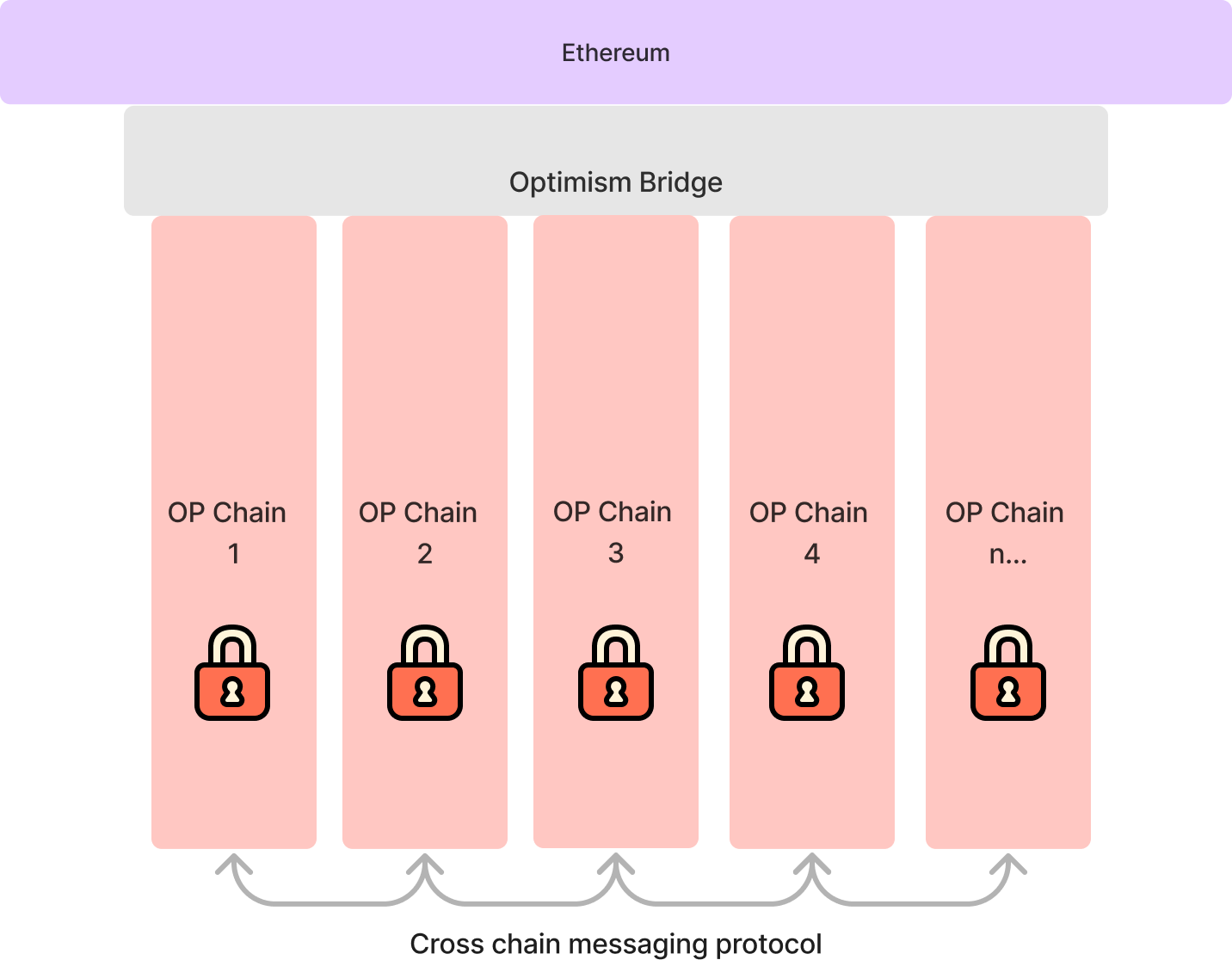
This modular approach supports a diverse range of use cases. Some chains prioritize high-throughput consumer applications, while others focus on institutional-grade compliance or specific verticals like gaming. The OP Stack’s flexibility ensures that while the technical backbone remains consistent, the economic and governance layers can be tailored to each chain’s specific market position. This balance between standardization and customization is central to the Superchain thesis.
Comparing Superchain Participants
The Optimism Superchain operates as a network of Layer 2 and Layer 3 blockchains built on the OP Stack. These chains share security, governance, and cross-chain messaging infrastructure, allowing distinct ecosystems to scale while inheriting Ethereum's base layer security. Understanding the specific roles of key participants helps clarify how value flows through this modular architecture.
The following table compares the primary metrics and use cases of the major superchain members. Data reflects current operational focus and network characteristics.
| Chain | Total Value Locked | Primary Focus | Governance Model |
|---|---|---|---|
| Base | $6.2B | Mass adoption, consumer apps | Coinbase-led |
| Optimism | $4.1B | Ecosystem grants, OP Stack | Optimism Collective |
| Zora | $180M | NFTs, creator economy | Zora DAO |
| Worldcoin | $120M | Identity, privacy | Worldcoin Foundation |
Base, led by Coinbase, prioritizes consumer-facing applications and mass adoption, leveraging its existing user base to drive transaction volume. Optimism serves as the foundational hub for the OP Stack, focusing on ecosystem grants and developer tooling to encourage other chains to build on its infrastructure. Zora has carved out a niche in the creator economy, specifically for NFTs and digital art, while Worldcoin focuses on identity verification and privacy-preserving proofs.
Technical performance varies across these chains due to differing sequencing and data availability strategies. While they share the OP Stack, each chain may optimize for different trade-offs between decentralization, cost, and speed.
Sovereignty Versus Shared Security
The superchain thesis rests on a fundamental trade-off: the convenience of shared infrastructure versus the autonomy of full chain sovereignty. By standardizing the OP Stack and offering shared sequencer services, the ecosystem promises rapid deployment and unified liquidity. However, this centralization of critical path components introduces a specific risk profile that challenges the traditional definition of decentralization.
The Shared Sequencer Fallacy
In the superchain model, chains like Base and Zora often outsource sequencing and proving to a shared provider. While this reduces operational overhead, it effectively transfers control of transaction ordering and data availability to a centralized entity. This arrangement mirrors the convenience of a managed service, but it sacrifices the trustless guarantees that define true blockchain sovereignty.
Operational Autonomy vs. Centralized Risk
Full sovereignty requires a chain to independently validate blocks, manage sequencers, and handle proving. This ensures that no single party can halt the network or manipulate transaction order. The superchain approach, by contrast, prioritizes ease of use and interoperability. Developers gain speed and access to shared security models, but they cede direct control over the network’s most sensitive operational layers.
This trade-off is not merely technical; it is philosophical. A chain that depends on a shared sequencer cannot be considered fully sovereign in the traditional sense. Its ability to enforce censorship resistance or guarantee liveness is derivative, relying on the stability and integrity of the shared infrastructure provider.
| Feature | Sovereign Chain | Superchain Chain |
|---|---|---|
| Sequencer Control | Full | Shared/Third-party |
| Censorship Resistance | High | Medium/Dependent |
| Deployment Speed | Slow | Fast |
| Operational Overhead | High | Low |
The decision between these models depends on the developer’s priority. For applications requiring maximum trust minimization and independent liveness guarantees, full sovereignty remains the only viable path. For projects prioritizing rapid scaling and ease of integration, the superchain’s shared security offers a pragmatic, albeit less autonomous, alternative.
2026 Scaling and Interoperability Outlook
The superchain thesis moves from experimental architecture to production-grade financial infrastructure. By 2026, the focus shifts to Stage 2 upgrades, prioritizing seamless cross-chain messaging and standardized interoperability across the modular Layer-2 ecosystem.
Interoperability is no longer an afterthought but a core requirement. Optimism’s Bedrock upgrade laid the groundwork for atomic state transitions, allowing users to move assets between chains without trusting centralized bridges. This reduces counterparty risk and aligns with the modular scaling model, where specialized chains handle execution while a shared settlement layer ensures security.
Market sentiment reflects this structural shift. Investors are evaluating the ecosystem based on actual throughput and cost efficiency rather than speculative narratives.
No comments yet. Be the first to share your thoughts!