Defining the superchain architecture
The superchain thesis moves Ethereum scaling beyond isolated Layer 2 silos toward a unified network. Instead of distinct chains operating independently, a superchain connects multiple L2s that share a common technical stack and communication layer. This architecture allows for shared security, standardized bridging, and coordinated governance across the ecosystem.
At the core of this model is the OP Stack, a modular collection of software components designed to build Ethereum Layer 2 blockchains. It includes the execution layer for processing transactions, the consensus layer for ordering, and the data availability layer for storing state. By standardizing these components, developers can launch L2s that are natively compatible with one another, reducing fragmentation and improving interoperability.
The superchain is not a single chain but a network of chains sharing bridging, governance, and upgrades. This shared infrastructure enables seamless value transfer between L2s without relying on centralized bridges or complex cross-chain messaging protocols. It represents a structural shift from competing L2s to a coordinated ecosystem where upgrades and security standards are applied uniformly.
This model contrasts sharply with the early Ethereum scaling approach, where each L2 operated as a standalone entity with its own security assumptions and bridge mechanisms. By adopting a common stack, the superchain thesis prioritizes composability and shared trust. This reduces the attack surface for cross-chain vulnerabilities and simplifies the developer experience for building multi-chain applications.
Market performance of superchain tokens
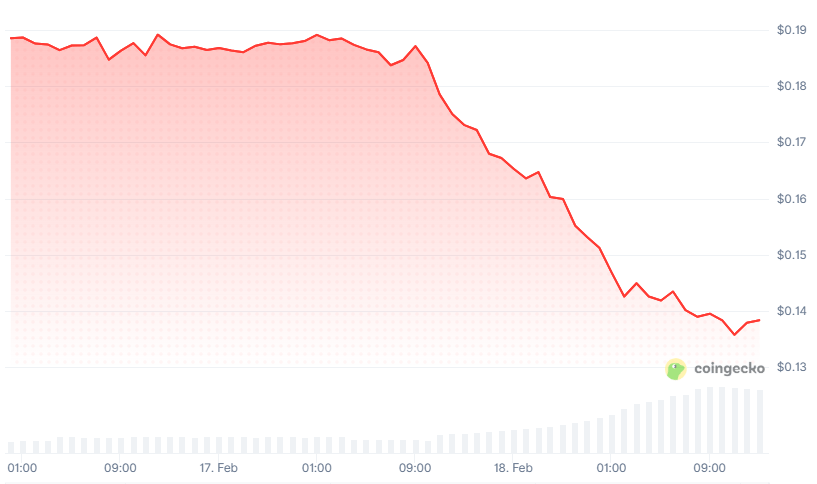
The market is actively repricing the superchain thesis, with volatility in Optimism (OP) serving as a primary barometer for investor sentiment. The token recently experienced a sharp correction, dropping approximately 26% to trade around $0.14. This decline reflects a broader reassessment of the economic model that underpins the superchain narrative, particularly as flagship projects signal strategic independence.
Base’s recent strategic shifts away from its deep integration with Optimism have raised questions about the cohesion of the superchain ecosystem. As Coinbase’s Base moves toward greater autonomy, the market is pricing in the risk that the unified scaling vision may fragment. This divergence highlights the tension between centralized growth and decentralized governance, a core challenge for the superchain model.
The price action in OP token illustrates how quickly sentiment can shift when foundational assumptions are tested. Investors are weighing the potential for scalable, low-cost transactions against the reality of fragmented liquidity and competing priorities among superchain members. This volatility suggests that the superchain thesis is no longer a guaranteed outcome but a contested market narrative.
How cross-chain interoperability works in the superchain
The superchain thesis relies on a unified messaging layer to enable frictionless value transfer between member chains. Rather than relying on traditional wrapped assets or trust-minimized bridges that require separate security assumptions for each pair, the architecture uses a shared protocol to verify state across the network. This mechanism allows assets to move natively, reducing the complexity and attack surface associated with multi-hop liquidity routing.
At the core of this system is the Optimism Superchain Messaging contract, which acts as the central relay for all cross-chain communications. When a user initiates a transfer from Base to OP Mainnet, the source chain locks the asset and emits a message containing the destination chain ID and recipient address. The destination chain verifies this message against the shared state root, ensuring that the transfer is only finalized if the source transaction is confirmed on-chain. This process eliminates the need for optimistic fraud proofs or centralized validators for every individual transfer.
This architecture supports the Standard Token Extension (OFT) standard, which allows tokens to be minted or burned on the destination chain rather than simply locked and unlocked. By integrating minting and burning logic directly into the token contract, the superchain ensures that the total supply remains consistent across all members. This approach simplifies the developer experience, as contracts only need to interact with a single messaging interface rather than managing complex bridge contracts for each chain pair.
The technical implications for market liquidity are significant. By reducing the latency and cost of cross-chain transfers, the superchain enables deeper liquidity pools that span multiple chains simultaneously. This interconnectedness means that price discovery becomes more efficient, as arbitrage opportunities are resolved faster across the network. The result is a more resilient financial infrastructure where capital can flow freely without the friction typically associated with multi-chain ecosystems.
Base’s strategic divergence from Optimism
The Superchain thesis relies on a shared architectural standard where Layer 2s trade some operational independence for network effects and unified liquidity. Base, Coinbase’s flagship Ethereum L2, was designed to be the anchor of this ecosystem. However, recent operational shifts suggest a growing tension between the platform’s success and its loyalty to the Optimism Collective. This divergence is no longer just technical; it is a fundamental question of governance and value distribution.
The market has begun to price in this uncertainty. The OP token, which represents governance rights over the Superchain, has seen significant volatility, with recent drops reflecting investor anxiety about the fragmentation of the ecosystem. As noted by market analysts, the price action in OP is effectively a repricing of the Superchain’s long-term viability. If Base begins to prioritize its own ecosystem incentives over the collective governance model, the economic moat of the Superchain could erode.
| Feature | Optimism Governance | Base Operations |
|---|---|---|
| Governance Control | Community DAO votes | Coinbase operational decisions |
| Revenue Distribution | Community treasury | Coinbase retained |
| Technical Roadmap | Superchain-wide upgrades | Independent platform needs |
This structural misalignment raises critical questions about the longevity of the Superchain model. While Optimism’s governance framework offers a democratic approach to protocol upgrades, Base’s operational independence allows for faster, more decisive execution. The challenge for the Superchain thesis is whether it can retain flagship L2s that are increasingly incentivized to act as sovereign entities rather than cooperative nodes in a shared network.
Shared Security and Revenue Models
The superchain thesis hinges on a fundamental economic shift: individual Layer 2s no longer operate as isolated silos but as integrated nodes within a shared security and revenue framework. This architecture, pioneered by the Optimism Collective, pools validator sets and sequencer responsibilities across multiple chains. For operators, this reduces the capital expenditure required to maintain independent validator sets while providing a unified security guarantee that is harder for attackers to compromise than a standalone L2 with a small hash rate or stake.
Revenue sharing introduces a complex dynamic. When sequencer fees are pooled and redistributed, the incentive structure changes. High-traffic chains may subsidize newer, lower-volume deployments, creating a cross-subsidization model that can stabilize the ecosystem but potentially disincentivize aggressive growth on individual chains. This shared revenue pool acts as a buffer against volatility, ensuring that even chains with fluctuating demand remain economically viable. However, it also means that a failure or security breach in one chain can have immediate financial repercussions for the entire superchain, raising the stakes for governance and risk management.
The economic viability of any single L2 within this framework is now tightly coupled to the health of the broader superchain. Success is no longer just about user acquisition on one chain; it is about contributing to the collective security and revenue pool. This interdependence creates a high-stakes environment where governance decisions directly impact the financial sustainability of all participants, making the superchain model both a powerful scaling solution and a fragile economic construct.
No comments yet. Be the first to share your thoughts!