The 2026 Superchain Model
The superchain thesis has shifted from a theoretical framework to a structural reality in 2026. It is no longer about deploying isolated layer-2 networks that operate in silos. Instead, the model prioritizes a unified architecture where multiple rollups share a common security layer, standardized communication protocols, and interoperable liquidity. This approach directly addresses the fragmentation that plagued early optimism and arbitrum deployments, creating a cohesive ecosystem rather than a collection of competing chains.
At the core of this model is the OP Stack, which serves as the modular base layer for building compliant rollups. By adhering to shared standards, chains can interoperate seamlessly, allowing assets and data to move without the friction of bridging protocols that often introduce security risks. This standardization is not merely a technical convenience; it is a fundamental requirement for achieving the liquidity density that institutional investors and high-volume users demand.
The result is a network effect that strengthens the entire ecosystem. As more chains adopt the superchain standards, the value of the shared security model increases, making each individual chain more robust against attacks. This creates a virtuous cycle where standardization drives adoption, and adoption reinforces the economic security of the base layer. The focus is no longer on individual chain performance but on the collective strength and efficiency of the superchain as a whole.
This structural shift is reflected in market dynamics. Investors are increasingly evaluating projects based on their integration within the superchain ecosystem rather than their standalone metrics. The ability to leverage shared liquidity and security is becoming a primary differentiator for new rollups and applications alike.
OP Stack versus ZK Stack architectures
The superchain thesis in 2026 hinges on a fundamental technical divergence: the choice between the OP Stack’s modular optimism and ZK Stack’s zero-knowledge proof systems. This is not merely a preference for user experience; it is a structural decision about how liquidity settles and how security is guaranteed across fragmented chains. As the ecosystem matures, the distinction between these two paths has become the primary determinant of which L2s can scale effectively without sacrificing decentralization or capital efficiency.
The OP Stack, pioneered by Optimism, relies on optimistic rollups. It assumes transactions are valid unless challenged within a dispute window. This model offers high throughput and lower immediate computational costs but requires a security period (typically 7 days) for finality. In contrast, ZK Stacks use zero-knowledge proofs to generate cryptographic validity proofs for every batch. This provides near-instant finality and stronger security guarantees, as validity is proven mathematically rather than assumed. The trade-off is significant computational overhead for generating these proofs, though advancements in recursive SNARKs are rapidly closing the gap.
Security and Finality Models
Security in the OP Stack is anchored by the Ethereum mainnet’s economic security, backed by a dispute game mechanism. If a sequencer posts invalid state roots, challengers can submit fraud proofs to revert the state. This model is robust but introduces latency. ZK Stacks, however, offer validity proofs that are verified on-chain. This means the L2’s state is as secure as the underlying ZK circuit and the Ethereum verifier. For institutional players and high-value DeFi protocols, this immediate finality is often non-negotiable, reducing counterparty risk and enabling faster capital rotation.
Interoperability and Shared Sequencing
Interoperability is the holy grail of the superchain thesis. The OP Stack achieves this through a shared sequencer model, where multiple L2s share the same ordering layer, reducing latency for cross-chain messages. However, this centralization risk is being addressed by initiatives like Espresso Systems, which plans to introduce decentralized sequencing for the Superchain in 2026. ZK Stacks, such as those powering zkSync or Scroll, often rely on more independent rollup structures. While they offer stronger security, achieving the same level of seamless, low-latency interoperability requires complex cross-chain messaging protocols like CCIP or native ZK bridges, which are still maturing.
2026 Roadmap and Market Shifts
By 2026, the market is bifurcating. Some major projects, like Base, are exploring unified software stacks that diverge from the strict OP Stack definition to optimize for their specific economic models. This shift raises questions about the long-term cohesion of the Optimism Superchain. Meanwhile, ZK Stack proponents are focusing on hardware acceleration for proof generation to make their model viable for high-frequency trading and consumer applications. The winner in 2026 will likely be the architecture that best balances the speed of OP Stack’s interoperability with the security and finality of ZK Stacks.
| Feature | OP Stack (Optimistic) | ZK Stack (Validity) |
|---|---|---|
| Security Model | Fraud Proofs (Dispute Game) | Validity Proofs (ZK Snarks) |
| Finality | ~7 Days (Challenge Period) | Near-Instant (On-Chain Verification) |
| Throughput | High (Shared Sequencing) | Moderate to High (Proof Generation Bottleneck) |
| Interoperability | Native (Superchain Standard) | Complex (Cross-Chain Messaging) |
| 2026 Focus | Decentralized Sequencing (Espresso) | Hardware Acceleration & Recursive Proofs |
Solving liquidity fragmentation
Liquidity fragmentation is the structural weakness that has plagued the Layer 2 ecosystem since its inception. When capital is split across dozens of isolated chains, order books thin out, slippage increases, and the user experience degrades into a series of disjointed bridge transactions. The superchain thesis addresses this by treating multiple rollups not as separate networks, but as shards of a single, unified state. This architectural shift aims to restore the deep liquidity pools that defined Ethereum’s early dominance, ensuring that trading efficiency on an L2 matches that of the mainnet.
The technical mechanism enabling this unity is standardized cross-chain messaging. Rather than relying on trust-minimized bridges that introduce security risks and latency, superchains utilize a shared sequencer and messaging layer to move state updates between chains instantly. This allows for unified order books where liquidity from different rollups can be accessed simultaneously. Traders no longer need to predict which chain will host the most volume; the market aggregates naturally, reducing the friction that previously drove users back to centralized exchanges.
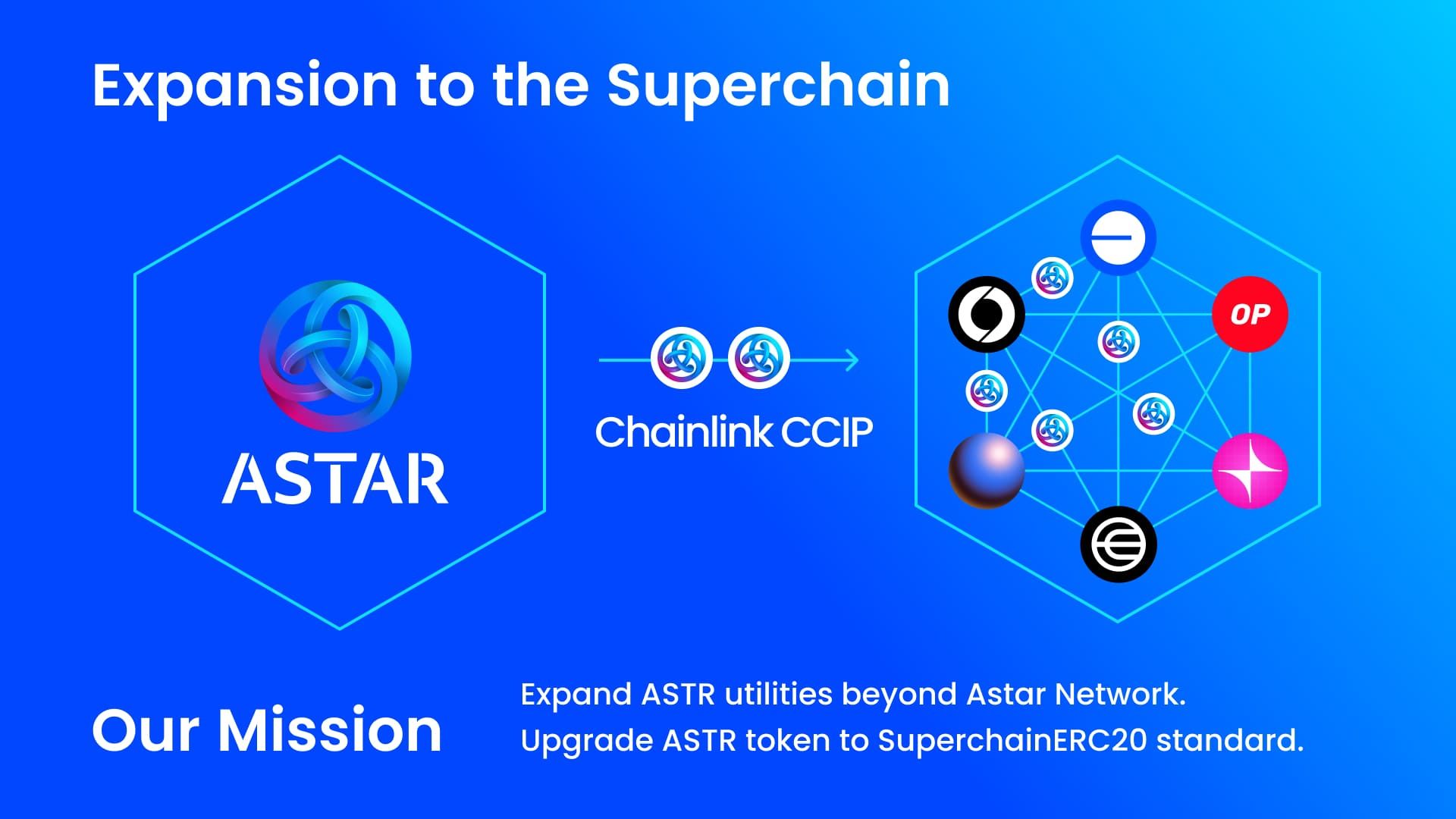
Implementation of these standards is already visible in 2026 deployments. The integration of ASTR on Soneium with Chainlink CCIP and ERC-7802 compatibility demonstrates how assets can move seamlessly across the superchain fabric without leaving their native environment. This interoperability ensures that liquidity remains fluid, adapting to user demand rather than being locked into specific chain silos. The result is a market structure where capital flows to where it is most needed, mirroring the efficiency of traditional financial markets.
Key L2s shaping the 2026 landscape
The superchain thesis is no longer a monolith; it is a collection of distinct economic and technical models competing for liquidity. In 2026, the fragmentation of standards has forced major chains to define their specific roles within the broader ecosystem.
Optimism
Optimism remains the foundational architect of the OP Stack, but its direct control is waning. As other chains fork the stack to pursue independence, Optimism’s value proposition shifts from infrastructure provider to ecosystem hub. Its success now depends on whether the shared sequencing and standards it pioneered can retain enough network effects to justify the overhead for its tenants.
Base
Base represents the most significant divergence from the original superchain model. By moving away from the OP Stack to a unified, in-house software stack, Base has signaled that scale requires custom engineering rather than shared standards. This shift raises questions about the long-term cohesion of the superchain, as Base’s massive liquidity flow now operates on a technically distinct layer.
World Chain
World Chain is positioning itself as the bridge between traditional finance and on-chain settlement. It inherits decentralization timelines from the Optimism Superchain, with plans for shared sequencing via Espresso Systems in 2026. This infrastructure choice allows World Chain to offer institutional-grade finality while maintaining the composability benefits of the broader superchain framework.
Mode
Mode focuses on capital efficiency through its unique "Superchain Mode" architecture. By optimizing the cost of posting data to L1, Mode attracts high-frequency DeFi protocols that require low-latency execution. Its role in 2026 is that of a specialized execution layer, competing for volume by offering cheaper transaction costs than more general-purpose chains.
Blast
Blast differentiates itself with native yield on ETH and stablecoins, a feature that has drawn significant institutional interest. By integrating yield generation directly into the settlement layer, Blast attempts to solve the liquidity fragmentation problem by making idle capital productive. This approach positions Blast as a key player in the evolving narrative of real-world asset integration on L2s.
Risks and Decentralization Challenges
The superchain thesis promises unified liquidity, but the architecture introduces single points of failure that could fracture the ecosystem. The most immediate vulnerability lies in sequencing. While the Optimism Superchain plans to share sequencing via Espresso Systems for 2026, this centralization creates a bottleneck. If the shared sequencer experiences downtime or censorship, every dependent chain halts simultaneously, undermining the resilience that fragmentation was meant to avoid [src-serp-3].
Governance conflicts are equally destabilizing. The model relies on a central foundation to manage the OP Stack and economic security, but this control is increasingly contested. Base’s decision to move away from the OP Stack to a unified software stack signals a growing desire for autonomy among major chains. This shift raises serious questions about the long-term economics of the superchain model, as major players may prioritize their own stack over shared security [src-serp-4].
Without a unified governance framework that balances central efficiency with distributed control, the superchain risks becoming a collection of siloed networks bound by fragile agreements. The tension between shared sequencing benefits and the desire for chain sovereignty will likely define the next phase of Ethereum scaling. Investors must monitor whether these governance fractures lead to a permanent split or a new, more decentralized consensus layer.
Frequently Asked Questions About the Superchain
How does the Superchain fix fragmented liquidity? The Superchain architecture uses a shared sequencer and standardized OP Stack protocols to create a unified liquidity layer. Instead of isolated pools, capital flows freely across derived chains, reducing slippage and improving depth for traders.
What is the difference between OP Stack and ZK Stack? OP Stack relies on optimistic rollups with fraud proofs, prioritizing developer familiarity and rapid iteration. ZK Stack uses zero-knowledge proofs for immediate finality and stronger cryptographic security, though it faces higher computational complexity. Both aim for the same interoperable end state.
Will Superchain chains share a single token? No. Each chain maintains its own native token for gas fees. However, the Superchain enables seamless bridging, allowing assets to move without traditional wrap-and-unwrap friction, effectively creating a unified economic layer across the ecosystem.
How does this impact the price of OP? Increased utility and transaction volume across the Superchain network drive demand for the OP token, which governs the ecosystem. Technical charts often show correlation with network activity metrics rather than isolated speculative trading.
No comments yet. Be the first to share your thoughts!