What the Superchain Thesis Means for 2026
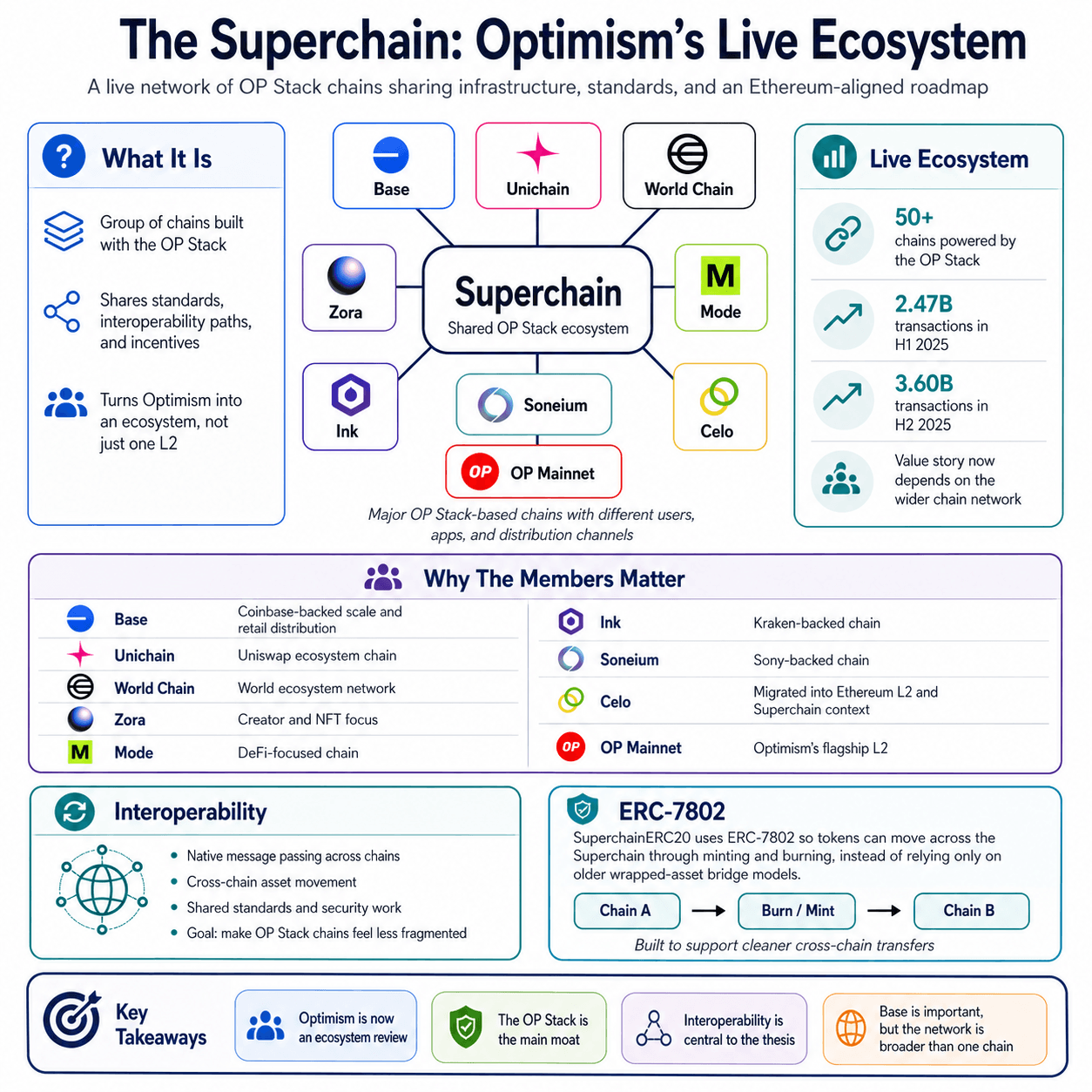
The "superchain" concept has shifted from a theoretical roadmap to the dominant architecture for Ethereum scaling. Rather than treating Layer 2s as isolated islands, the superchain thesis envisions a network of L2s sharing a common language and security model. In 2026, this approach is winning because it solves the fragmentation problem that has long plagued the ecosystem.
At the core of this shift is the OP Stack, the open-source software developed by Optimism. It allows different chains to launch with built-in interoperability. Instead of building custom bridges and complex messaging layers, developers can spin up a chain that speaks the same dialect as Optimism, Base, or other OP Stack chains. This reduces friction for users, who no longer need to navigate a maze of bridges to move assets between networks.
This modular approach offers a clear tradeoff. While it doesn't inherit Ethereum's full decentralization for every single transaction, it provides a standardized environment for innovation. For the reader, this means more consistent user experiences and lower costs. The thesis is no longer just about scaling; it's about creating a cohesive web where individual chains act as specialized modules within a larger, unified system.
Superchain thesis 2026 choices that change the plan
The 2026 superchain thesis hinges on a specific set of engineering and economic tradeoffs. While modular layer 2s promise scalability through shared sequencer infrastructure and standardized rollup stacks, they introduce new dependencies that developers and investors must evaluate carefully. The narrative has shifted from pure decentralization ideals to practical concerns about data availability costs, cross-chain interoperability, and the centralization risks inherent in shared security models.
Evaluating the superchain ecosystem requires looking beyond the marketing of "Ethereum scaling" and examining the concrete mechanics of how these chains interact. The primary tradeoff is between efficiency and sovereignty. By adopting shared components like the OP Stack or similar modular frameworks, chains gain faster time-to-market and lower operational overhead. However, this comes at the cost of reduced control over core protocol upgrades and potential exposure to systemic failures if the shared infrastructure experiences downtime or security breaches.
Shared Infrastructure vs. Chain Sovereignty
The most significant tradeoff in the superchain model is the balance between operational efficiency and protocol sovereignty. Chains built on shared stacks like the OP Stack benefit from standardized tooling, shared liquidity, and seamless user experiences across ecosystems. This interoperability reduces friction for users moving between chains but creates a dependency on the core team maintaining the shared protocol upgrades. If the foundational layer faces delays or security issues, all dependent chains are affected, creating a single point of failure that contradicts the distributed nature of blockchain technology.
Data Availability and Cost Structures
Data availability remains a critical bottleneck for modular layer 2s. While rollups compress transaction data, they still must post proof data to Ethereum mainnet, incurring costs that scale with usage. The 2026 thesis assumes that danksharding and other data availability solutions will reduce these costs significantly, but until then, operators must choose between higher fees for users or accepting the risk of data unavailability during network congestion. This tradeoff directly impacts the viability of high-frequency applications like gaming or real-time trading on these chains.
Security Models and Trust Assumptions
Security in the superchain model often relies on shared sequencers or centralized validation mechanisms in the early stages. While this improves throughput, it introduces trust assumptions that differ from Ethereum's proof-of-stake decentralization. Users and developers must evaluate whether the security guarantees of the superchain are sufficient for their use case, particularly for high-value transactions. The tradeoff here is between speed and the level of decentralization, with many chains opting for faster finality at the cost of relying on a smaller set of validators.
| Factor | Efficiency Gain | Primary Risk | Best For |
|---|---|---|---|
| Shared Sequencers | High throughput, low latency | Centralization, single point of failure | High-frequency trading, gaming |
| Standardized Stacks | Fast deployment, interoperability | Upgrade dependency, ecosystem lock-in | New projects, cross-chain apps |
| Shared Data Availability | Lower gas fees, scalable | Network congestion, data unavailability | Consumer apps, high-volume transactions |
| Independent Validators | Slower, higher costs | Fragmented liquidity, poor UX | High-value, low-frequency transactions |
These tradeoffs define the competitive landscape for modular layer 2s in 2026. Projects that can balance efficiency with robust security models and transparent governance will likely capture the most value. Investors and developers should focus on chains that are actively addressing these tradeoffs through upgrades like danksharding adoption or decentralized sequencer networks, rather than those relying solely on centralized advantages for short-term gains.
How to evaluate modular Layer 2s for your stack
Choosing a modular Layer 2 is less about picking the fastest chain and more about assessing which infrastructure aligns with your specific risk tolerance and capital efficiency goals. The Superchain thesis argues that sharing the OP Stack creates a unified liquidity and security layer, but not all implementations are identical. You need a framework to separate marketing narratives from technical reality.
Use this step-by-step checklist to audit potential chains before committing resources.
Start by checking the specific version of the OP Stack the chain runs. Older forks may lack critical security patches or gas optimization features introduced in recent releases. Look for public governance forums or GitHub repositories that show active development. A chain that hasn’t upgraded its base layer in six months or more carries higher technical debt risk than those with monthly or quarterly release cycles.
Most early Superchains rely on a single sequencer operated by the foundation. This creates a central point of failure. Determine if the chain has a clear roadmap to permissionless sequencing. If the sequencer goes offline, can transactions still be submitted? Chains with transparent downtime records and clear fallback mechanisms are safer bets than those that claim decentralization without a tested alternative path.
Speed means nothing if your funds are stuck in a bridge for days. Evaluate the time it takes for a transaction to reach finality on L1. More importantly, assess the bridge security. Does the bridge use a trusted multisig or a more secure, decentralized verification method? Bridges with large TVL but simple governance structures are frequent targets for exploits. Prioritize chains that have undergone independent security audits of their bridge contracts.
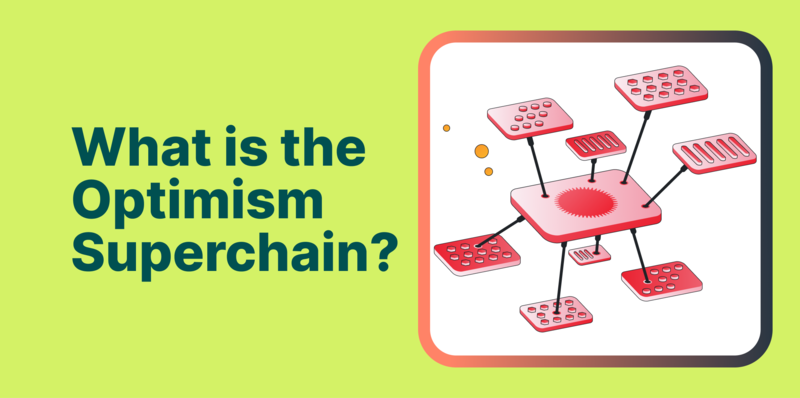
The promise of the Superchain is shared liquidity, but in practice, liquidity is often fragmented across individual chains. Use a block explorer to compare total value locked (TVL) against active daily users. A chain with high TVL but low activity may be suffering from stale liquidity. Look for chains where liquidity is actively moving between L2s, indicating healthy cross-chain interoperability rather than isolated silos.
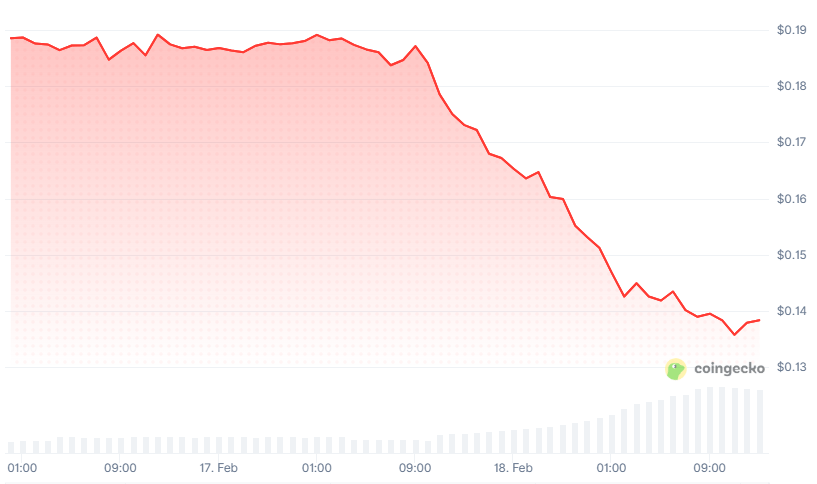
Gas fees on modular chains can spike during high network congestion. Compare the average cost of a simple swap or transfer across different times of day. Some chains offer predictable fee markets, while others fluctuate wildly. If you are building an application that requires low-latency, low-cost transactions, choose a chain with a proven track record of stable gas prices during peak usage periods.
Avoid Weak Options in the Modular Layer 2 Space
The modular Layer 2 narrative is shifting, but not all "superchain" projects deliver on the promise. As Ethereum scaling evolves in 2026, several contenders offer misleading claims about interoperability and security. Understanding the tradeoffs is critical to avoiding weak options that fail to provide genuine utility or scalability.
Many projects market themselves as modular solutions but rely on centralized sequencers or lack robust finality guarantees. These weak options often promise seamless cross-chain communication but deliver fragmented liquidity. Before committing resources, verify the underlying architecture: does it truly offer composability, or is it just a siloed chain with a fancy name?
Focus on projects with transparent governance and proven track records. Look for those that integrate seamlessly with Ethereum’s existing ecosystem rather than creating isolated walled gardens. The strongest modular Layer 2s prioritize security and decentralization over speed alone. By scrutinizing these fundamentals, you can sidestep the noise and identify the infrastructure that will actually drive Ethereum’s next phase of growth.
Superchain thesis 2026: what to check next
The modular scaling narrative is shifting from experimental rollups to a unified ecosystem. As 2026 approaches, several practical questions dominate developer and investor discussions.
Is the Superchain thesis dead or just evolving?
The thesis is evolving, not dying. While early optimism focused on a single monolithic chain, the 2026 reality favors a network of interoperable OP Stack chains. Projects like World Chain are now adopting shared sequencing via Espresso Systems, proving that modularity remains the dominant scaling vector for Ethereum.
How does shared sequencing change L2 security?
Shared sequencing introduces a new trust model. Instead of relying solely on sequencer decentralization, chains can outsource ordering to specialized networks. This reduces the risk of sequencer censorship and centralization, offering a more robust security layer for newer L2s launching in the 2026 cycle.
Are newer L2s like World Chain or Blast viable?
Newer L2s are viable if they leverage existing Superchain infrastructure. Rather than building from scratch, they inherit proven security and interoperability standards. This accelerates deployment and reduces technical debt, allowing teams to focus on application-specific features rather than base-layer consensus.
What role does Optimism play in 2026?
Optimism serves as the foundational layer for this modular ecosystem. Its OP Stack is the standard for building new chains, and its governance model is adapting to support a multi-chain future. The 2026 implementation phase will likely solidify Optimism’s position as the primary coordinator of Ethereum’s scaling narrative.
No comments yet. Be the first to share your thoughts!