Defining the superchain thesis
The superchain thesis represents a structural shift in Ethereum scaling, moving from isolated Layer 2 (L2) networks toward a modular, coordinated ecosystem. Rather than treating each L2 as an independent silo, the thesis proposes a unified architecture where multiple chains share critical infrastructure. This approach leverages the OP Stack—a modular, open-source software framework—to standardize how these networks operate, communicate, and settle.
At its core, the superchain model introduces shared sequencing and unified liquidity. In traditional L2 deployments, each chain manages its own sequencer and maintains separate liquidity pools, creating fragmentation. The superchain thesis addresses this by pooling liquidity across all connected L2s. This means that assets moved between chains within the superchain are nearly instantaneous and cost-free, as they do not need to interact with the main Ethereum network (L1) for every transfer. The shared sequencer ensures that transactions are processed in a consistent order, reducing latency and improving the user experience.
This architecture is not limited to a single company or protocol. It is an abstraction layer that coordinates multiple chains, allowing them to function as a single, cohesive unit while maintaining their individual governance and tokenomics. By standardizing the underlying technology, the superchain thesis reduces the complexity and cost of launching new L2s, encouraging innovation without sacrificing security or interoperability.
OP Stack architecture and standardization
The OP Stack serves as the modular, open-source protocol for building blockchain networks, forming the technical backbone of the Optimism Superchain. Rather than treating each Layer 2 chain as an isolated silo, the OP Stack enables developers to spin up new chains that share a common set of rules, security assumptions, and communication protocols. This standardization reduces development friction significantly; instead of rebuilding core infrastructure from scratch, teams can fork and customize existing components while maintaining compatibility with the broader ecosystem.
Interoperability is achieved through the Superchain Registry, which lists all chains built on the OP Stack. When a new chain is registered, it inherits the ability to communicate with existing chains via a standardized messaging protocol. This allows assets and data to move across the superchain with minimal latency and cost, creating a unified liquidity layer that feels like a single network to users, even though it is composed of many distinct chains. The architecture relies on a shared sequencer infrastructure in early iterations, with a roadmap toward decentralized sequencer sets to enhance resilience.
The OP Stack decouples the execution, consensus, and data availability layers. Developers can swap out specific modules, such as changing the data availability provider or adjusting the sequencer logic, without disrupting the entire system. This modularity allows for rapid innovation and tailored configurations for different use cases.
A core innovation is the Superchain Messaging system, which enables direct, trust-minimized communication between chains. Contracts on one OP Stack chain can call functions on another, allowing for atomic operations across the superchain. This eliminates the need for complex bridge mechanisms typically required for cross-chain transfers.
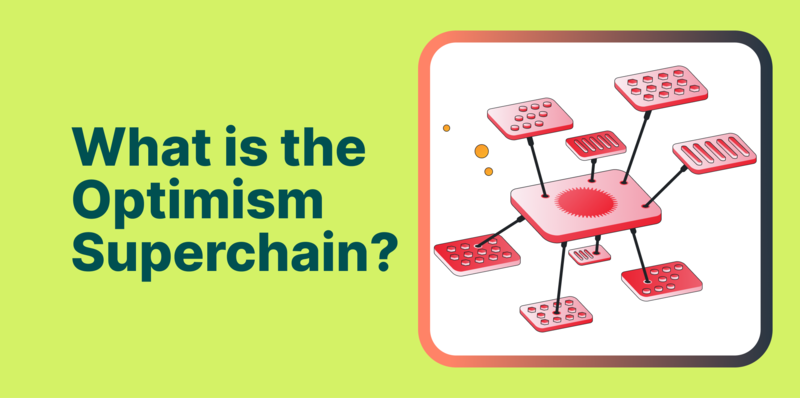
While individual chains can manage their own tokenomics and governance, they benefit from the collective security of the Ethereum mainnet. The OP Stack integrates with Ethereum’s proof-of-stake consensus, ensuring that all chains in the superchain settle to the same L1 security layer, reducing fragmentation and attack surface.
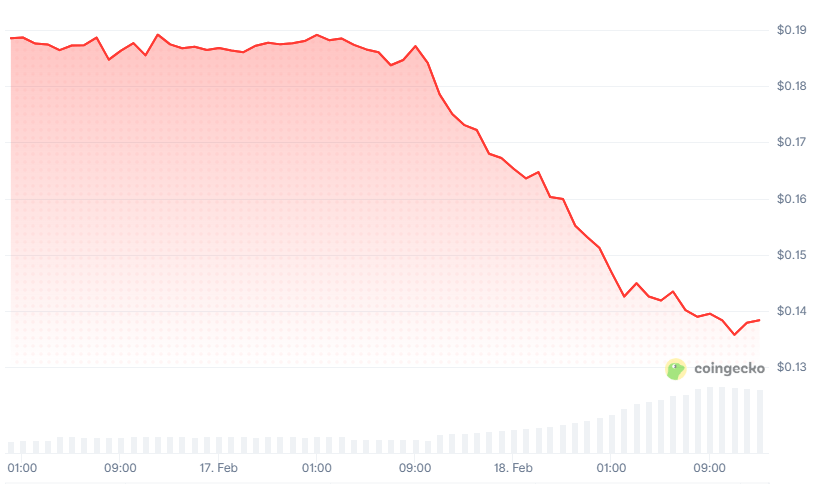
The impact of this architectural approach is visible in market sentiment and developer activity. As more chains adopt the OP Stack, the network effect strengthens, making Ethereum a more scalable platform for decentralized applications. The following chart illustrates the broader market context for Ethereum, where increased L2 adoption is correlated with sustained network value.
This standardization does not eliminate the need for careful governance and economic design. Each chain still requires robust tokenomics and community oversight to ensure long-term viability. However, by removing the technical barriers to entry, the OP Stack allows teams to focus on building user experiences and economic models rather than wrestling with foundational blockchain infrastructure.
ZK rollups and the modular future
Optimistic rollups have dominated the initial scaling narrative, but zero-knowledge (ZK) rollups are redefining the security and speed parameters of the superchain thesis. While optimistic rollups rely on a challenge period to verify transactions, ZK rollups use cryptographic proofs to validate state transitions instantly. This distinction is critical for a modular architecture aiming for high-throughput, low-latency finality.
The primary advantage of ZK rollups lies in their validity proofs. Instead of waiting days for withdrawals to finalize—a common bottleneck in optimistic systems—ZK rollups provide near-instant finality. This capability aligns with the superchain goal of creating a unified network of chains that share security and liquidity without sacrificing user experience. As the OP Stack evolves, integrating ZK technology represents a shift from "optimistic" verification to "cryptographic" certainty.
To understand the architectural divergence, we can compare the core operational metrics of OP Stack (Optimistic) and ZK Stack (ZK Rollup) implementations. The following comparison highlights the trade-offs in latency, security models, and developer experience that define the current modular landscape.
| Feature | OP Stack (Optimistic) | ZK Stack (ZK Rollup) |
|---|---|---|
| Finality Time | 7-day withdrawal period | Near-instant (minutes) |
| Security Model | Economic (fraud proofs) | Cryptographic (validity proofs) |
| Data Availability | L1 Blob/Data | L1 Blob/Data + Proofs |
| Developer Complexity | Lower (EVM-native) | Higher (proof generation) |
| State Root Updates | Periodic batch | Per-proof update |
The modular future of Ethereum relies on this duality. Optimistic rollups offer a lower barrier to entry for developers due to EVM equivalence, while ZK rollups provide the cryptographic guarantees necessary for institutional-grade speed and security. The superchain thesis does not mandate one over the other; rather, it envisions a heterogeneous network where chains can choose their verification method based on their specific throughput and latency requirements. This flexibility is what allows the ecosystem to scale horizontally without compromising on the foundational security of Ethereum.
Market Impact and Ecosystem Growth
The superchain thesis shifts the focus from isolated chain expansion to shared liquidity and standardized infrastructure. By leveraging the OP Stack and zero-knowledge (ZK) proofs, the ecosystem aims to resolve the fragmentation that has historically diluted value across Layer 2 networks. This structural shift is designed to create a unified economic layer where capital efficiency matters more than individual chain volume.
Liquidity Fragmentation vs. Pooling
Current Layer 2 deployments often operate in silos, forcing users to bridge assets and navigate disparate interfaces. This fragmentation increases transaction costs and reduces the depth of order books. The superchain model addresses this by standardizing the execution environment, allowing liquidity to flow freely between chains without complex bridging protocols. This pooling effect mimics the efficiency of a single large exchange rather than a collection of small, isolated markets.
TVL Trends and Capital Allocation
Total Value Locked (TVL) in the superchain ecosystem has shown resilience, driven by the cumulative strength of its constituent chains. Rather than competing for the same capital, chains within the superchain framework often serve complementary roles, from high-throughput consumer applications to secure settlement layers. This division of labor allows the ecosystem to attract institutional capital that requires both scalability and security guarantees.
The integration of ZK technology further enhances this trend by enabling asynchronous finality and reduced computational costs for rollups. As these technical improvements mature, they are expected to lower the barrier for new DeFi protocols to launch, potentially accelerating TVL growth in 2026. The market impact will likely be measured not just by aggregate TVL, but by the velocity of capital across the superchain network.
Infrastructure as a Financial Lever
The OP Stack provides a modular base that reduces the cost of launching and maintaining a chain. This lowers the entry barrier for new projects, fostering a more diverse ecosystem of applications. As more chains adopt this standard, the network effects compound, making the superchain a more attractive venue for developers and investors alike.
This infrastructure-first approach transforms the superchain from a mere scaling solution into a foundational financial layer. By prioritizing shared security and standardized protocols, the ecosystem positions itself to capture a larger share of Ethereum's total economic activity, reducing reliance on external bridges and enhancing overall system robustness.
The Centralization Trade-off in the Superchain
The architectural promise of the OP Stack relies on a critical assumption: that sequencer services can remain decentralized without sacrificing the efficiency gains that define the Superchain thesis. Currently, most Layer 2 networks operate with a single sequencer managed by their respective foundation or core team. This setup offers high throughput and low latency but introduces a single point of failure. If that sequencer goes offline, transactions stall. If it is compromised, it could censor transactions or reorder them to the detriment of users.
This centralization is the primary friction point for critics who argue that the Superchain merely replicates the vulnerabilities of centralized exchanges on-chain. The risk is not theoretical. A malicious or coerced sequencer can effectively rewrite the state of the chain for a short window before the fraud proof window closes. While the eventual decentralization of the sequencer role is a stated goal for many OP Stack projects, the current reality is a trade-off between speed and sovereignty.
To mitigate these risks, the Superchain ecosystem is exploring decentralized sequencer networks and alternative validity proofs. However, the transition is complex. Decentralizing sequencing often introduces latency and complexity that can degrade the user experience—the very metric the Superchain aims to improve. The challenge lies in maintaining the "super" aspect of the chain without surrendering the decentralization that makes Ethereum secure.
No comments yet. Be the first to share your thoughts!