Defining the superchain thesis
The superchain thesis reframes Layer 2 scaling not as a collection of isolated silos, but as a unified modular architecture. At its core, it proposes that multiple L2 chains can share a common security and communication layer, moving beyond the fragmentation that has historically plagued the Ethereum ecosystem. This approach leverages the OP Stack to create a network where chains are not just compatible, but fundamentally interconnected.
This modular design allows individual chains to specialize in execution while relying on a shared set of components for consensus, data availability, and cross-chain messaging. Instead of each chain reinventing the wheel for basic infrastructure, developers can build on a standardized foundation. This reduces development overhead and ensures that security guarantees are consistent across the network.
The result is a more cohesive ecosystem where liquidity and user experience flow seamlessly between chains. By treating the L2 landscape as a single, coordinated system rather than a fragmented market, the superchain thesis aims to solve the usability and liquidity fragmentation problems that have limited the adoption of modular scaling solutions.
OP token market performance
The OP token serves as the primary barometer for the Superchain thesis. When the modular scaling narrative gains traction, the token typically reflects broader investor confidence in the Optimism Collective and its ecosystem partners. Conversely, market repricing events often signal shifting dynamics between the core protocol and its flagship builders.
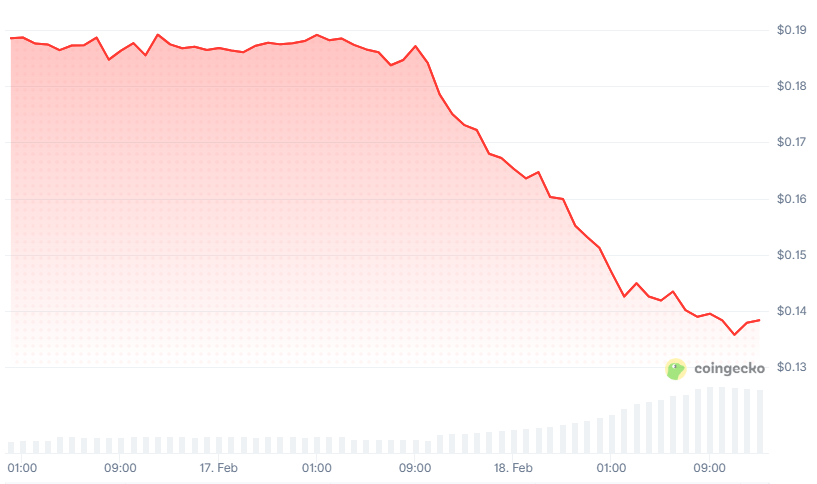
Recent market movements have highlighted the sensitivity of the OP token to ecosystem developments. Analysts note that significant price drops, such as the ~26% crash observed when Base shifted away from Optimism, represent the market repricing the entire Superchain thesis. This volatility underscores the high-stakes nature of modular scaling investments, where token value is closely tied to the strategic alignment of major L2s.
To track these fluctuations in real time, live provider-backed widgets offer the most accurate view of current valuation. Static price snapshots quickly become obsolete, making dynamic tools essential for understanding the token's trajectory.
For deeper technical analysis, observing the price action against USD reveals trend direction and potential support levels. The following chart illustrates the recent volatility and trading volume, providing context for the market's reaction to Superchain news.
Base and the shift in loyalty
The superchain thesis relies on a simple premise: shared infrastructure lowers costs and increases liquidity for everyone. But loyalty is expensive, and Base is testing whether that cost is worth paying. As the flagship layer-2 built on the OP Stack, Coinbase’s Base has grown into a massive ecosystem in its own right. This growth has created a divergence in incentives that challenges the unified model Optimism originally envisioned.
The market is already pricing in this friction. The recent ~26% crash in OP token value reflects investor anxiety about whether Base will remain a cooperative member of the superchain or act as a competing force. If Base’s primary loyalty shifts toward Coinbase’s broader corporate goals rather than the collective health of the Optimism ecosystem, the value accrual model for other OP Stack chains could weaken significantly.
This isn’t just about token prices; it’s about governance. Base operates with a high degree of autonomy, making decisions that prioritize its own user acquisition and fee revenue over the shared treasury or cross-chain interoperability plans that benefit the wider group. When the largest player in the network starts moving independently, the “superchain” label becomes more of a marketing term than a structural reality.
The next 12 months will be critical. As cross-chain interoperability features go live, the question is whether Base will fully integrate into these shared protocols or continue to build walled gardens. If revenue sharing models are adjusted to favor Base’s independent growth, the unified superchain model may fracture into a collection of loosely connected, competing chains.
| Feature | Optimism Native L2s | Base |
|---|---|---|
| Governance Alignment | High - Collective OP Stack governance | Low - Independent corporate direction |
| Revenue Sharing | Shared treasury and ecosystem funds | Retained for Coinbase ecosystem growth |
| Interoperability | Full integration with Superchain messaging | Selective - Prioritizes internal efficiency |
How the Superchain Moves Assets
The superchain thesis relies on a unified communication layer to replace the fragmented, high-risk bridges of the past. Instead of relying on separate, isolated bridges for every token transfer, the OP Stack provides a shared messaging protocol. This architecture allows multiple Layer 2 chains to speak to each other directly, treating asset movement as a native network function rather than a complex cryptographic workaround.
At the core of this system is the Superchain Messaging system. It acts as a standardized pipeline for cross-chain data and value. When a user initiates a transfer from Base to Optimism, the protocol verifies the transaction on the source chain and delivers a message to the destination chain. This eliminates the need for third-party custodians or complex lock-and-mint schemes that often become targets for exploits.
This shared infrastructure significantly reduces technical debt. Developers no longer need to build and audit custom bridge contracts for every new chain they deploy. Instead, they leverage the existing, battle-tested messaging layer. This consistency ensures that security standards remain uniform across the entire superchain ecosystem, making asset movement faster and more reliable for end users.
Risks to the modular scaling model
The superchain thesis relies on a delicate balance of shared security and economic alignment. If flagship chains like Base decouple from the OP Stack governance or revenue model, the economic incentives holding the superchain together may collapse. This centralization concern is not just theoretical; it is a structural vulnerability that could fracture the network.
Revenue distribution disputes are the next immediate threat. As chains grow more profitable, the argument for sharing sequencer revenue with the Optimism Collective weakens. If major L2s decide to keep their yield, the shared security bond becomes less attractive, turning the superchain from a cohesive ecosystem into a loose collection of independent entities.
The "anti-superchain" argument highlights fragmentation as a silent killer. Cooper Kunz of Aztec Labs argues that forcing homogeneity through the OP Stack stifles innovation. When every chain looks the same, they compete on the same metrics rather than offering unique value. This lack of differentiation leads to a fragmented user experience, where liquidity is diluted across dozens of similar chains instead of concentrated in a few powerful ones.
The superchain thesis will be tested in the next 12 months as cross-chain interoperability goes live. If the technical and economic friction proves too high, the modular scaling model may revert to isolated silos, losing the network effects it promised.
Frequently asked questions about superchains
What is the superchain thesis?
The superchain thesis proposes a network of Layer 2 blockchains that share a common infrastructure, bridging, and governance layer. Built on the OP Stack, this model allows multiple chains to operate as a unified ecosystem rather than isolated silos, aiming to solve the fragmented user experience of a multichain world.
What is the role of the OP token?
The OP token serves as the governance instrument for the Optimism Collective. It allows holders to vote on proposals that influence the direction of the network, including parameter changes and grant allocations. Its utility is tied directly to the collective governance of the superchain ecosystem.
Is the superchain thesis still viable?
Market volatility has tested the thesis, with significant price drops in OP raising questions about long-term viability. However, the underlying technology remains in active development. The future of the superchain depends on whether major builders continue to deploy on OP Stack-based chains despite short-term market repricing.
Can existing L1s become superchain L2s?
A core ambition of the superchain model is to integrate existing Layer 1s as L2s within the ecosystem. While currently focused on new OP Stack deployments, the modular nature of the stack suggests that established chains could eventually bridge into the superchain to leverage shared liquidity and security.
No comments yet. Be the first to share your thoughts!