Defining the superchain thesis 2026
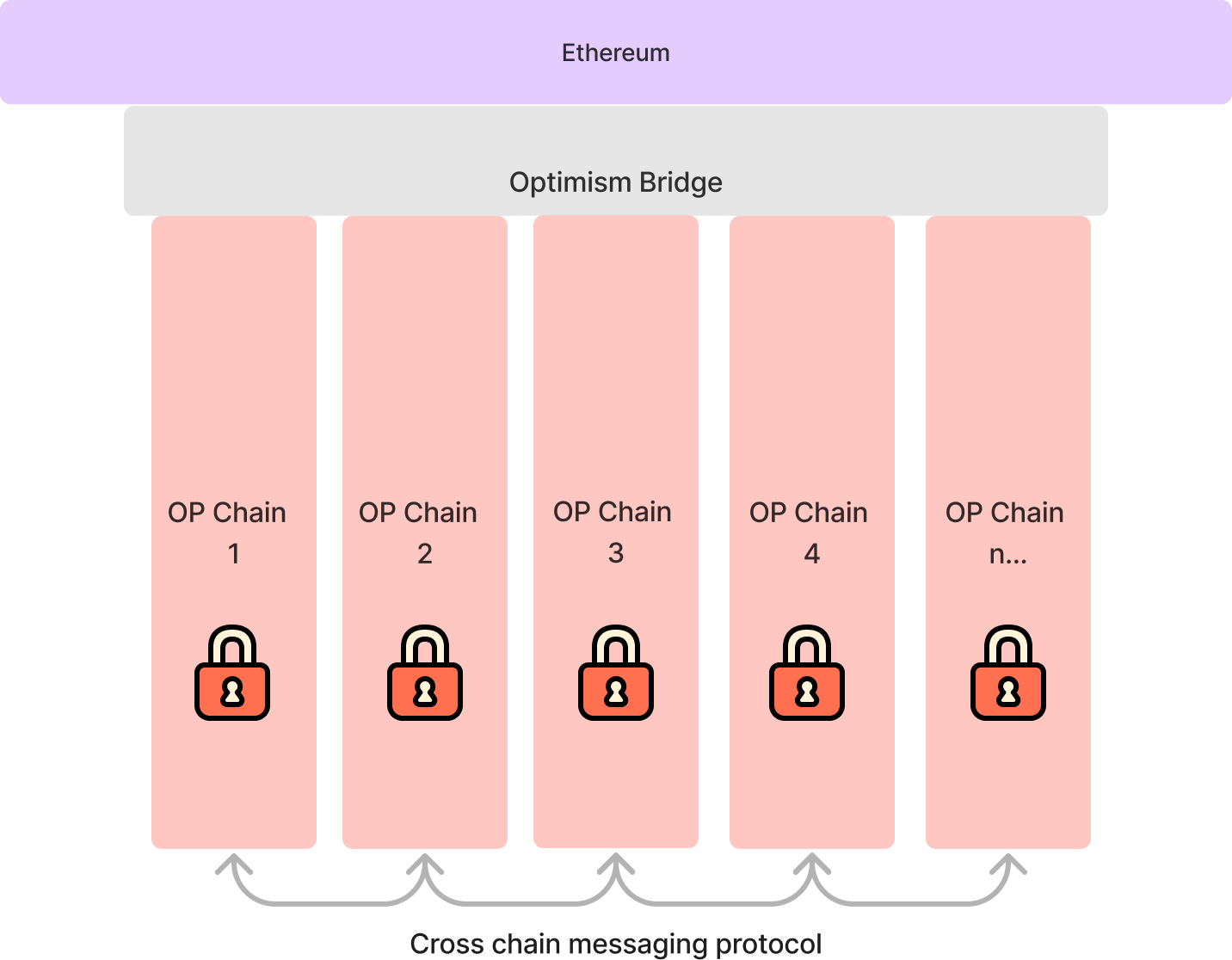
The superchain thesis represents a structural pivot in blockchain architecture, moving beyond the isolated deployment of individual Layer 2 networks. Instead of treating chains as siloed entities, the OP Stack standardizes the modular components required to build them. This standardization allows multiple blockchains to share a common security model and communication layer, effectively creating a unified ecosystem rather than a fragmented collection of protocols.
At the core of this shift is the concept of shared sequencing and interoperability. By adhering to a standardized stack, chains can communicate directly without relying on complex, error-prone bridges. This reduces friction for liquidity providers and users, who no longer need to navigate disparate interfaces or manage cross-chain risks manually. The goal is to make the underlying complexity invisible, allowing applications to scale across multiple chains while maintaining a cohesive user experience.
Market sentiment around this thesis is reflected in the performance of the OP token, which serves as a barometer for investor confidence in the OP Stack's viability. The chart above illustrates recent trading activity, highlighting the volatility inherent in speculative narratives versus fundamental adoption. As the ecosystem matures, the focus shifts from theoretical potential to measurable usage metrics, such as total value locked and daily active users across the superchain network.
The 2026 landscape will likely be defined by how well these standardized chains can attract developers and liquidity. Success depends not just on technical feasibility, but on creating a compelling economic case for builders to deploy on the superchain rather than competing standalone L2s. If the thesis holds, the result will be a more efficient capital allocation system, where liquidity flows freely between chains based on application utility rather than network isolation.
Shared sequencing and liquidity
The Superchain thesis hinges on solving the fragmentation that currently plagues the multi-chain landscape. Without a unified settlement layer, liquidity remains siloed, forcing users to bridge assets across disparate networks and exposing them to bridge risk and high gas fees. The proposed solution involves a shared sequencing layer, primarily driven by partnerships with Espresso Systems, to create a cohesive ecosystem where chains operate as a single logical unit rather than isolated islands.
Shared sequencing aims to standardize how transactions are ordered and settled across OP Stack chains. By decoupling sequencing from execution, the Superchain can offer faster finality and lower costs while maintaining the security guarantees of Ethereum L1. This architecture allows new chains to launch with immediate access to the liquidity of existing chains, reducing the cold-start problem that has historically hindered L2 adoption.
Official documentation and support materials for newer L2s like World Chain indicate that they inherit decentralization timelines and sequencing mechanisms from the Optimism Superchain. This integration is critical for achieving the "one-click" user experience that the Superchain promises. When users interact with an app, they should not need to worry about which specific chain they are on; the underlying infrastructure handles the routing and settlement transparently.
Cross-chain liquidity fragmentation
The Superchain thesis relies on the premise that OP Stack chains function as a single, unified liquidity layer rather than isolated silos. In practice, capital remains fragmented across Optimism, Base, and emerging rollups. This dispersion creates a structural bottleneck: while the underlying technology allows for standardized messaging, it does not automatically align economic incentives or user behavior. Liquidity depth is unevenly distributed, with major hubs absorbing the majority of trading volume while smaller chains struggle with shallow order books and high slippage.
The primary hurdle is not technical interoperability, but the economic disconnect between chain operators and users. Base’s recent strategic shift away from the pure OP Stack toward a unified software stack highlights the growing tension between centralized efficiency and decentralized standardization. When a dominant player like Base alters its infrastructure alignment, it signals that the economic benefits of a shared stack are not yet sufficient to justify the complexity for all participants. This fragmentation forces developers to build redundant liquidity bridges and users to navigate complex cross-chain workflows, diluting the network effects that the Superchain was designed to amplify.
To understand the current state of this fragmentation, we can compare the liquidity profiles of the leading OP Stack ecosystems. The data reveals a stark divide in total value locked (TVL) and transaction volume, underscoring the difficulty of achieving true liquidity sharing.
| Chain | Est. TVL (USD) | Avg. Daily Volume (USD) | Interoperability Maturity |
|---|---|---|---|
| Optimism | $1.8B | $120M | High |
| Base | $2.1B | $180M | Medium |
| Zora | $45M | $5M | Low |
| Mode | $120M | $15M | Medium |
The chart below illustrates the price volatility of the native token associated with the Superchain narrative. While price action reflects market sentiment, it does not capture the underlying liquidity depth or the friction costs users face when moving assets between chains.
Base's strategic divergence from OP Stack
Use this section to make the Superchain Thesis decision easier to compare in real life, not just on paper. Start with the reader's actual constraint, then separate must-have requirements from details that are merely nice to have. A practical choice should survive normal use, maintenance, timing, and budget. If a recommendation only works in an ideal situation, call that out plainly and give the reader a fallback path.
The simplest way to use this section is to write down the must-have criteria first, then compare each option against those criteria before weighing nice-to-have features.
Market Outlook for Modular Blockchain Adoption
The superchain thesis faces a critical test as the modular blockchain narrative matures. Optimism’s strategy relies on whether OP Stack chains can successfully share liquidity and standards. Buying into this ecosystem is effectively a bet on the standardization of Ethereum’s modular vision, rather than just a single chain’s performance.
Investors should watch how this adoption compares to competing scaling narratives. While prediction markets remain cautious about extreme price targets, Ethereum’s fundamentals remain strong. The network processed over $50 billion in DeFi lending and handled $2.82 trillion in stablecoin transactions in October 2025. This volume underscores the demand for the infrastructure that superchains aim to provide.
The key metric for 2026 is not just token price, but the actual interop capabilities of the OP Stack. If chains can share liquidity without friction, the thesis holds. If fragmentation persists, the modular vision may struggle to capture the market share promised by its architects.
Frequently asked questions about superchains
Will Ethereum reach $10,000 in 2026?
Prediction market traders remain cautious about extreme bullish scenarios. Current data suggests most capital is betting Ethereum finishes the year between $3,000 and $3,500 rather than reaching the $10,000 territory. This conservative outlook reflects the broader market's focus on sustainable utility over speculative mania.
Is Ethereum still a good investment in 2026?
Yes. Ethereum processed over $50 billion in DeFi lending and handled $2.82 trillion in stablecoin transactions in October 2025. The network continues to upgrade and currently has the largest developer community in crypto. These metrics indicate robust underlying demand for block space and security.
Can OP Stack chains share liquidity effectively?
The Superchain thesis relies on OP Stack chains sharing standards to create a unified liquidity layer. While the technical infrastructure is being built, full liquidity fragmentation remains a risk. Success depends on whether these chains can maintain seamless interoperability without sacrificing individual chain sovereignty.
No comments yet. Be the first to share your thoughts!