The Superchain Thesis 2026
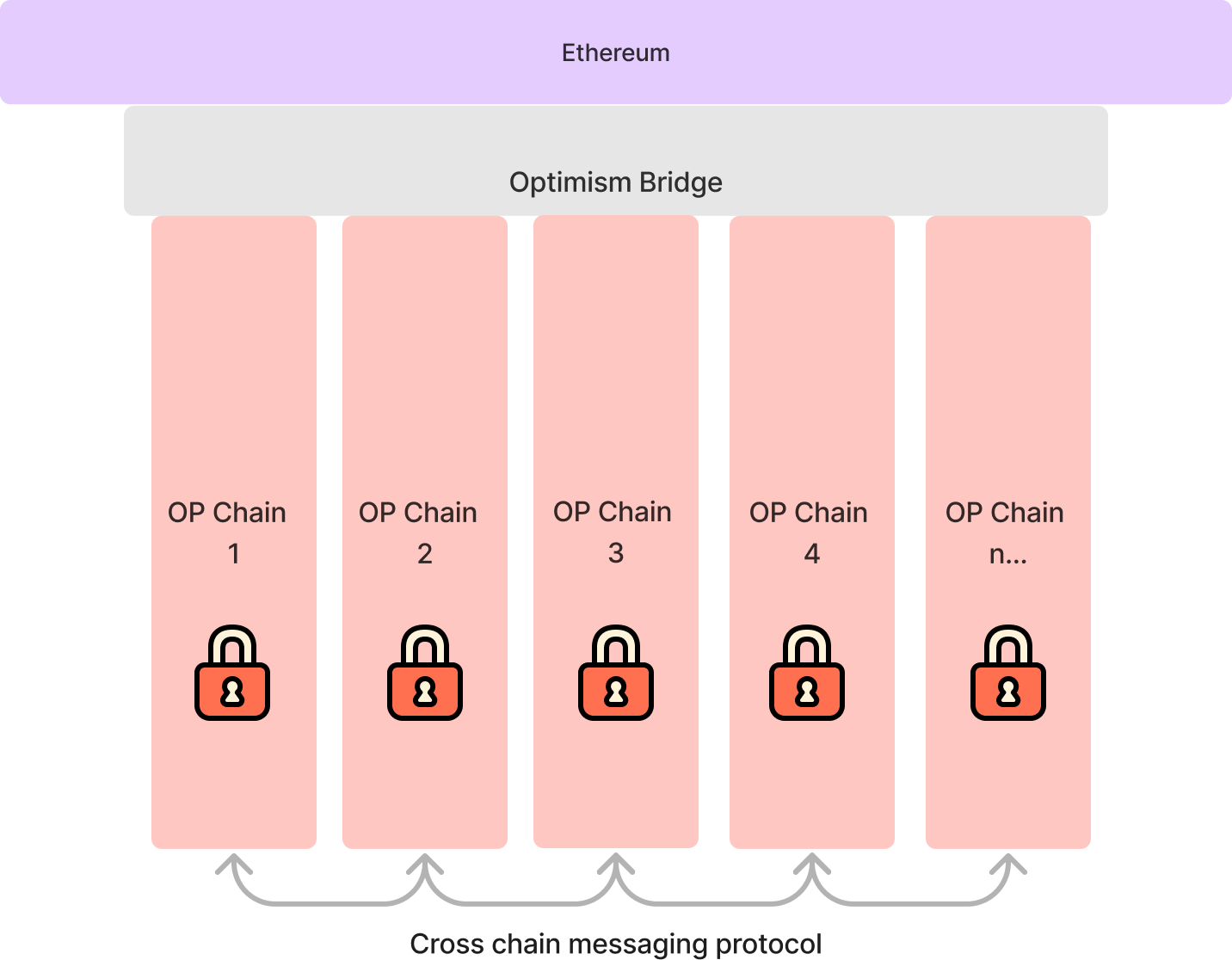
The Superchain Thesis 2026 marks a shift from isolated Layer 2s to a unified ecosystem built on shared infrastructure. At its core, this model uses the OP Stack to connect multiple chains, allowing them to share security and messaging standards. Instead of each network operating in a silo, they function as interconnected parts of a larger whole, similar to how different cities share a national power grid.
This architecture relies on shared sequencer infrastructure and cross-chain messaging. As of April 2026, the Superchain has expanded from a single chain to a dozen production networks, including Base and World Chain. By standardizing the underlying technology, developers can deploy apps that move seamlessly across these chains without friction or complex bridging.
The result is a modular approach to scaling Ethereum. Rather than competing for limited block space, these chains collaborate through a common set of rules. This reduces fragmentation and strengthens the overall security of the network, making the Superchain a foundational element of Ethereum's scaling strategy.
The OP Stack enables modular architecture
The OP Stack is the open-source engine that powers the Superchain. Rather than building each layer-2 blockchain from scratch, developers use this shared codebase to spin up new networks. This approach mirrors how smartphone operating systems work: many distinct apps run on the same underlying infrastructure, sharing core services while maintaining their own user interfaces and data.
This modularity separates execution from settlement. Chains built on the OP Stack handle transactions and smart contract execution independently, but they can choose to settle their final state on Ethereum mainnet. This design allows new chains to launch quickly without reinventing the security model of Ethereum. As of April 2026, the Superchain has expanded from a single chain to over a dozen production networks, including Base and World Chain, demonstrating the scalability of this shared approach.
The primary benefit is interoperability. Because these chains share a common execution layer, they can communicate more easily than isolated blockchains. Operators can deploy updates to the core protocol that benefit all connected chains simultaneously. This creates a more cohesive ecosystem for developers and users alike.

TechnicalChart symbol="ETHUSD" chartStyle="candle" interval="1D" indicators="["volume"]" />
Sequencer Competition and Fragmentation
The unified vision of the Superchain is facing its most significant test yet as sequencers diverge from the original OP Stack blueprint. What began as a shared infrastructure for Ethereum Layer 2 scaling is evolving into a fragmented landscape where strategic priorities clash. The competition is no longer just about throughput; it is about governance, tokenomics, and the fundamental purpose of each chain.
Base’s departure from the core Optimism governance framework in early 2026 marked a turning point. By doubling down on tokenized markets and stablecoin payments, Base signaled a willingness to prioritize specific verticals over broad ecosystem neutrality. This strategic divergence challenges the notion that all Superchain members are bound by a single, cohesive roadmap.
To understand the stakes, we must compare the core pillars of the major players. The following table highlights the structural differences between Base, OP Mainnet, and emerging chains like World Chain.
| Chain | Governance Model | Token Utility | Strategic Focus |
|---|---|---|---|
| OP Mainnet | RetroPGF & Governance Token | Buyback & Burn | Ecosystem Neutrality |
| Base | Coinbase-led / Independent | N/A (No native token) | Stablecoins & Tokenization |
| World Chain | Worldcoin DAO | WLD Staking | Identity & Social |
This fragmentation introduces real risks to the Superchain thesis. If sequencers operate with conflicting incentives, cross-chain interoperability could suffer. Users may face higher friction when moving assets between chains that no longer share the same security or economic assumptions. The future of Ethereum scaling may depend on whether these chains can collaborate despite their divergent paths.
Layer 2 Interoperability Challenges
The Superchain thesis promises a unified experience where Ethereum L2s like Base, OP Mainnet, and World Chain operate as a single ecosystem. Yet, beneath the surface, the technical and economic hurdles of Layer 2 interoperability remain significant. Achieving seamless cross-chain messaging and resolving liquidity fragmentation requires more than just shared infrastructure; it demands a fundamental rethinking of how value moves between isolated state machines.
Cross-chain messaging is the backbone of this vision, but it introduces complex security assumptions. While the OP Stack standardizes the underlying technology, bridging assets between different L2s often relies on trusted relayers or optimistic verification windows. These mechanisms can create latency or introduce points of failure that contradict the decentralized ethos of Ethereum. Until finality is truly synchronized across all chains, users face the risk of bridging delays or unexpected transaction failures during high network congestion.
Liquidity fragmentation poses an even greater economic challenge. As the Superchain expands to a dozen production chains, capital becomes scattered across multiple pools. This fragmentation drives up trading costs and reduces market efficiency, undermining the user experience the Superchain aims to deliver. Without deep liquidity integration, each L2 essentially operates as a silo, forcing users to bridge assets repeatedly to access the best prices. Solving this requires sophisticated liquidity aggregation protocols that can route trades across the Superchain without exposing users to bridge risks.
Market outlook for Ethereum L2s
The market outlook for Ethereum L2s in 2026 hinges on the success of the Superchain thesis and the broader crypto sentiment. As Optimism powers the OP Stack, the OP token's performance serves as a barometer for investor confidence in modular scaling solutions. The sector is shifting from experimental growth to utility-driven valuation, where actual transaction volume and governance participation matter more than speculative hype.
Market predictions for crypto in 2026 suggest a cautious but potentially lucrative environment. According to prediction markets like Polymarket, Bitcoin has only a 17% chance of reclaiming the $100,000 level in 2026, while it carries a 35% chance of falling below $40,000. This uncertainty creates a high-stakes landscape for L2 investments, where assets like OP must demonstrate tangible value through features like the Cannon fault proofs and RetroPGF governance to maintain relevance.
Common Questions on Superchain Scaling
The modular L2 landscape is shifting fast. As the Superchain expands, users and developers often ask how these chains interact and what the broader market looks like in 2026.
How does the OP Stack work?
The OP Stack is the open-source software that powers Optimism and other chains in the Superchain ecosystem. As of April 2026, it supports over a dozen production chains, including Base and World Chain, allowing them to share security and interoperability standards while maintaining independent governance [src-serp-5]. This modular approach lets developers launch chains without rebuilding core infrastructure from scratch.
What are the predictions for crypto in 2026?
Market sentiment for 2026 remains cautious. Prediction markets like Polymarket assign Bitcoin only a 17% chance of reclaiming the $100,000 level, while there is a 35% probability it falls below $40,000 [src-serp-1]. This volatility underscores why scaling solutions like the Superchain Thesis focus on utility and cost reduction rather than price speculation.
Is Ethereum L2 scaling viable long-term?
Yes, but it depends on user experience. The Superchain Thesis argues that linking L2s together creates a unified experience that feels like a single network. This approach minimizes fragmentation and makes cross-chain interactions seamless for end users, driving adoption beyond early adopters.
What are the main risks of the Superchain model?
The primary risk is centralization of sequencing. If a single entity controls the sequencer for multiple L2s, it could censor transactions or create bottlenecks. The community is actively working on decentralized sequencer solutions to mitigate this risk and ensure true decentralization across the Superchain.
No comments yet. Be the first to share your thoughts!