Temporary blockspace is rapidly becoming the backbone of high-performance blockchain applications. Ephemeral Rollups, pioneered by MagicBlock, are redefining how developers approach scalability, latency, and cost in Web3 environments. These specialized rollups offer a solution to the persistent challenge of scaling real-time, high-frequency applications like on-chain games and flash auctions without sacrificing composability or security.
What Sets Ephemeral Rollups Apart?
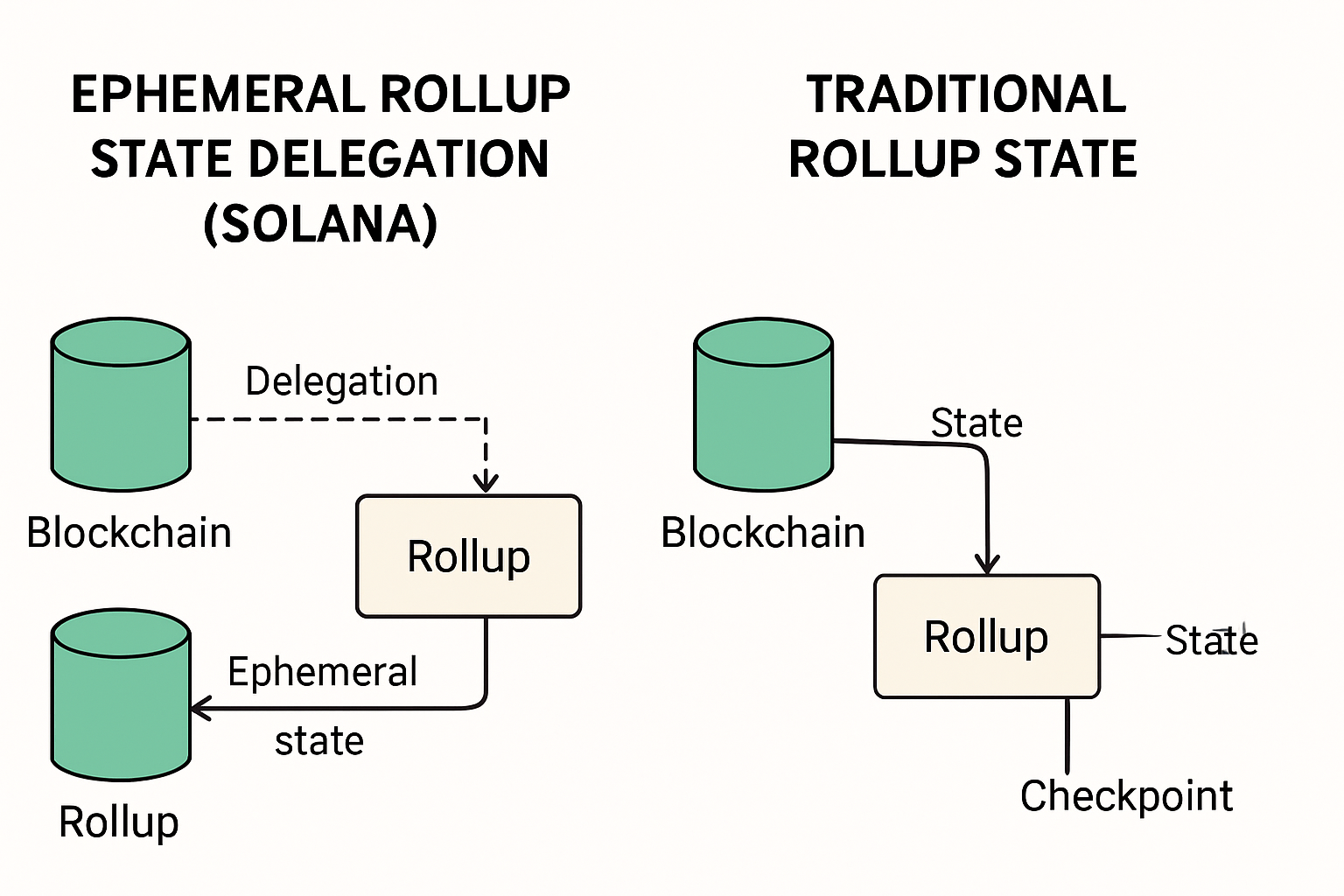
Unlike traditional rollup technology that creates persistent sidechains or Layer-2s, Ephemeral Rollups are spun up on-demand as temporary, high-performance execution environments. They leverage Solana’s Virtual Machine (SVM), allowing smart contracts to remain anchored to Solana’s mainnet while state transitions and transactions are processed off-chain with near-instant finality.
Key Differences: Ephemeral vs. Traditional Rollups
- Execution Environment: Ephemeral rollups provide temporary, high-performance execution environments tailored for specific applications like gaming and flash auctions, while traditional rollups maintain persistent, long-lived chains for general-purpose use.
- Latency & Throughput: Ephemeral rollups achieve ultra-low latency (≈10ms) and millions of transactions per second through on-demand scaling, whereas traditional rollups typically have higher latency and lower throughput due to consensus and batching overhead.
- Transaction Fees: Ephemeral rollups enable gasless transactions within their session, making microtransactions feasible. Traditional rollups still require users to pay transaction fees, though often lower than mainnet costs.
- State Management: Ephemeral rollups temporarily delegate and lock specific state accounts (PDAs) for isolated processing, with transparent read access on Solana mainnet. Traditional rollups maintain their own state, requiring bridging for interoperability.
- Security & Finality: Ephemeral rollups rely on a fraud-proof system to challenge and revert invalid state changes before committing back to Solana. Traditional rollups use optimistic or zk-proofs for security, often with longer withdrawal or challenge periods.
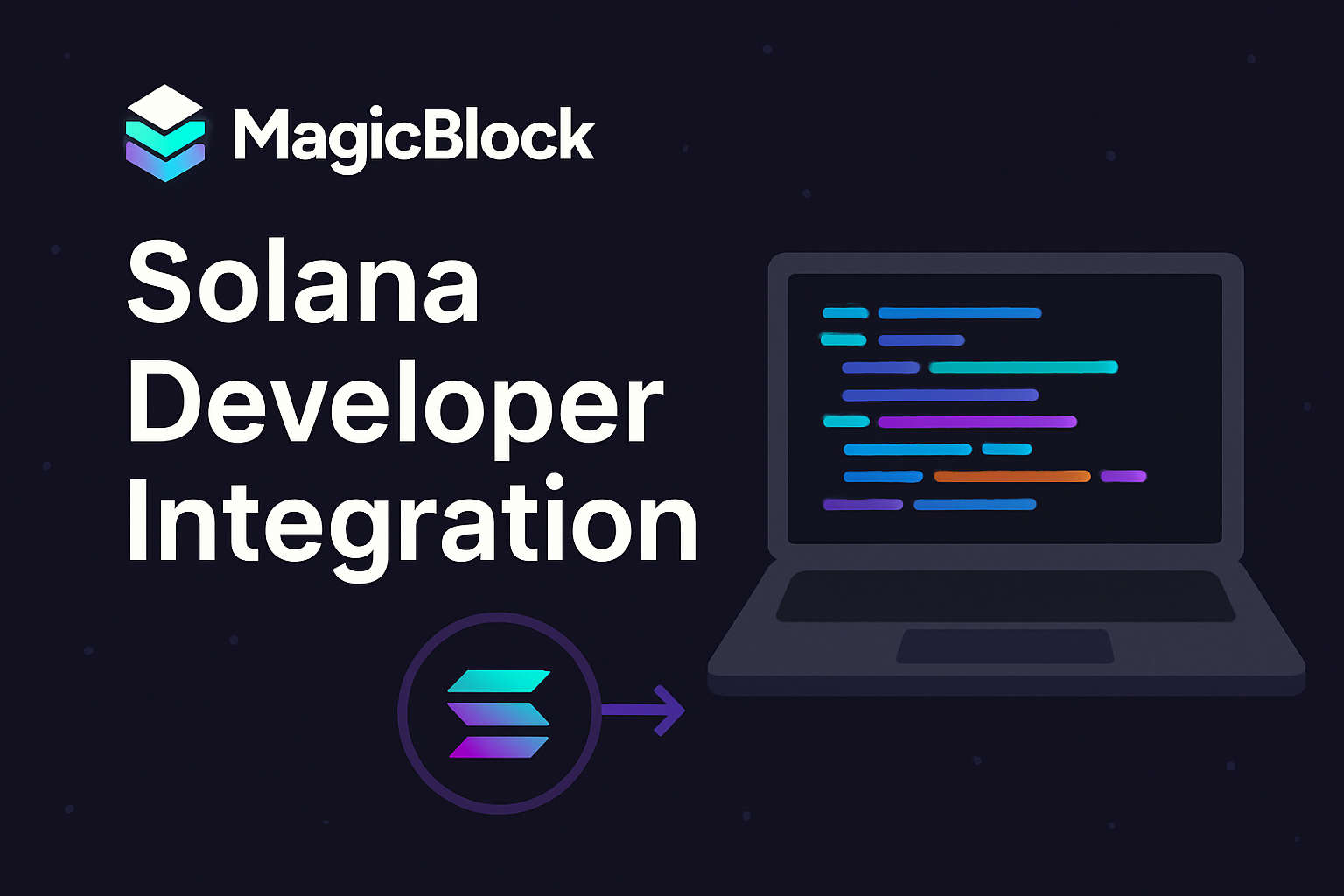
- Developer Experience: Ephemeral rollups are natively compatible with Solana tooling (Anchor, Rust, C), allowing seamless integration. Traditional rollups often require adapting to new frameworks or tooling stacks.
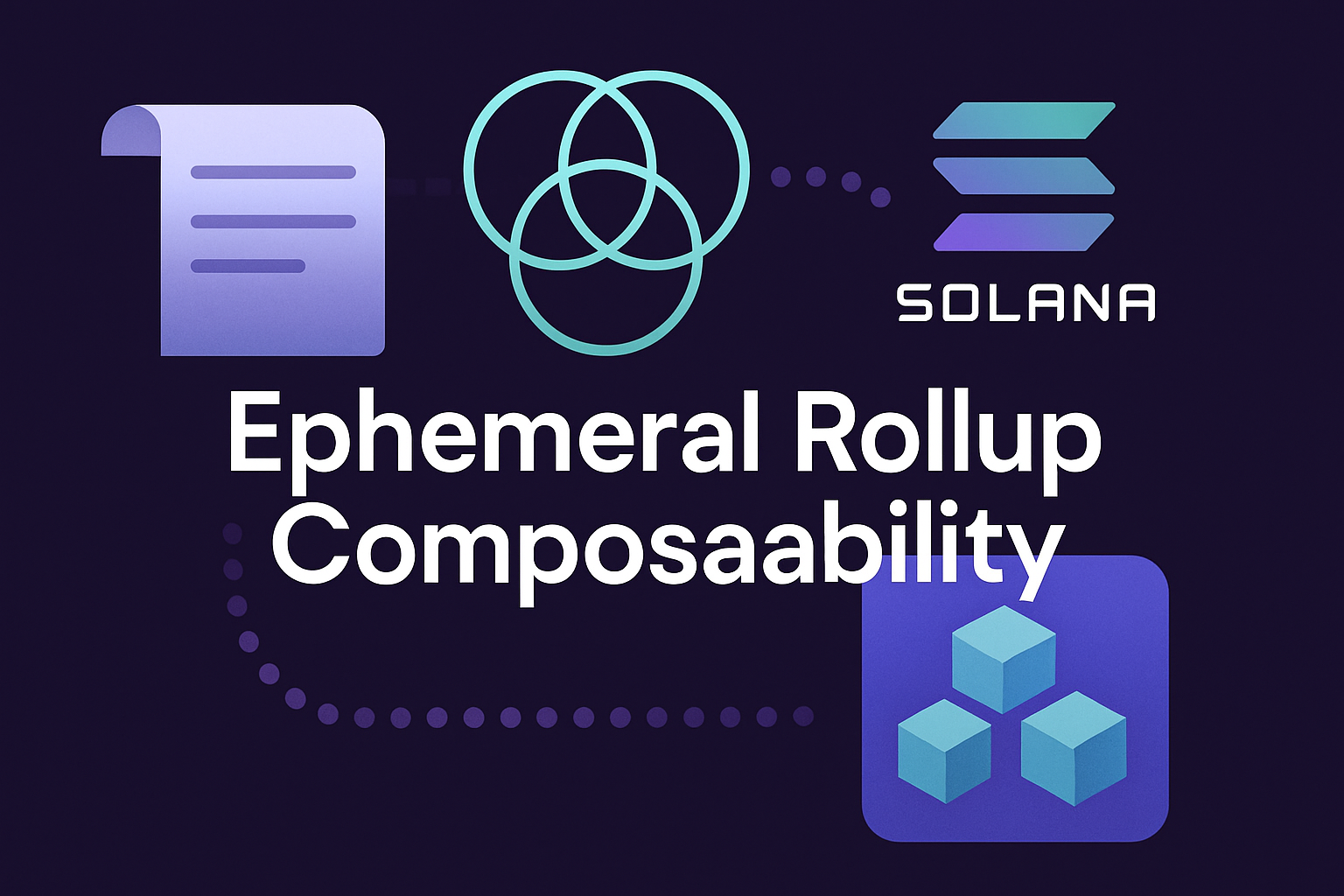
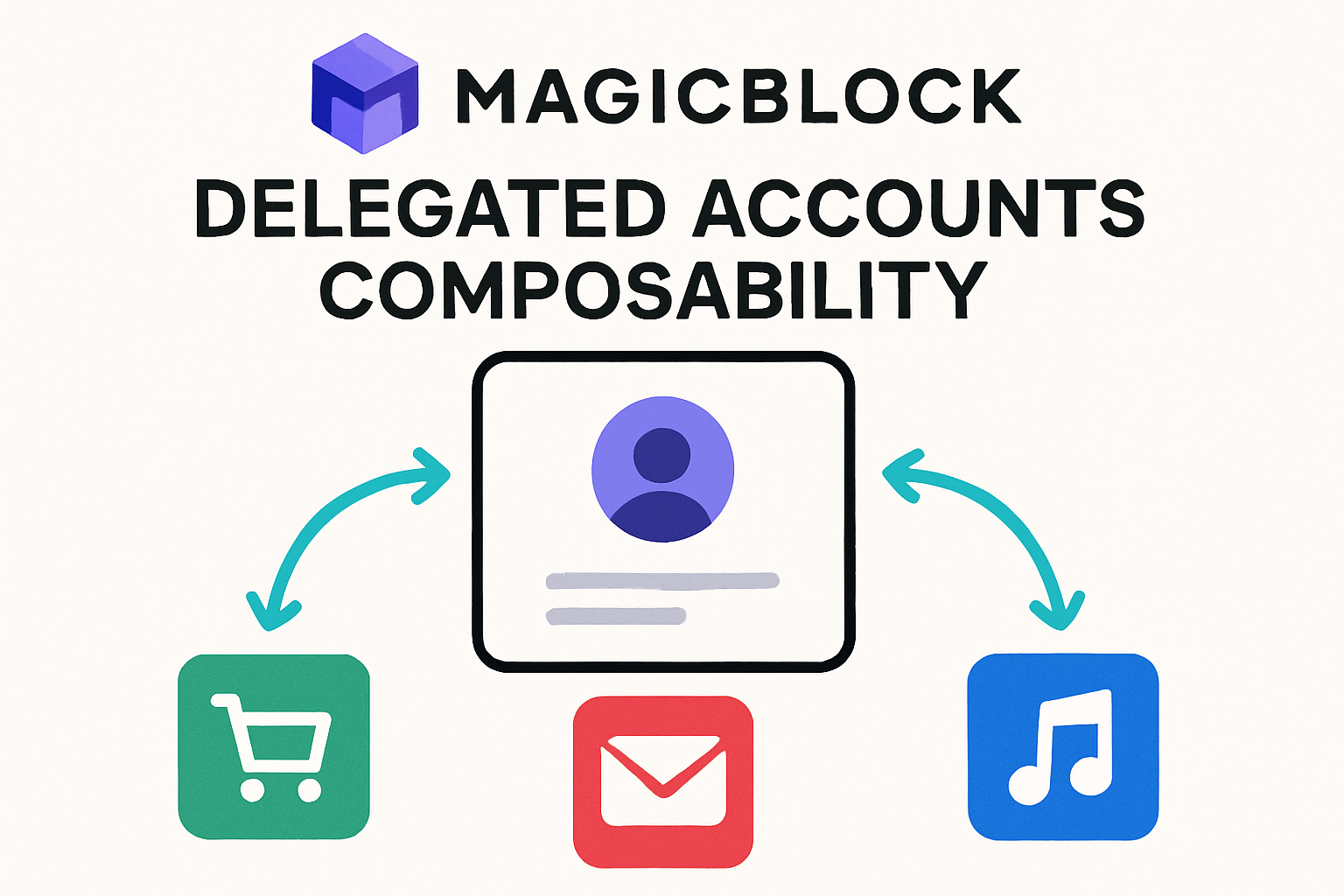
- Composability: Ephemeral rollups maintain composability by allowing mainnet transactions to read delegated account state in real time. Traditional rollups typically require cross-chain communication for composability.
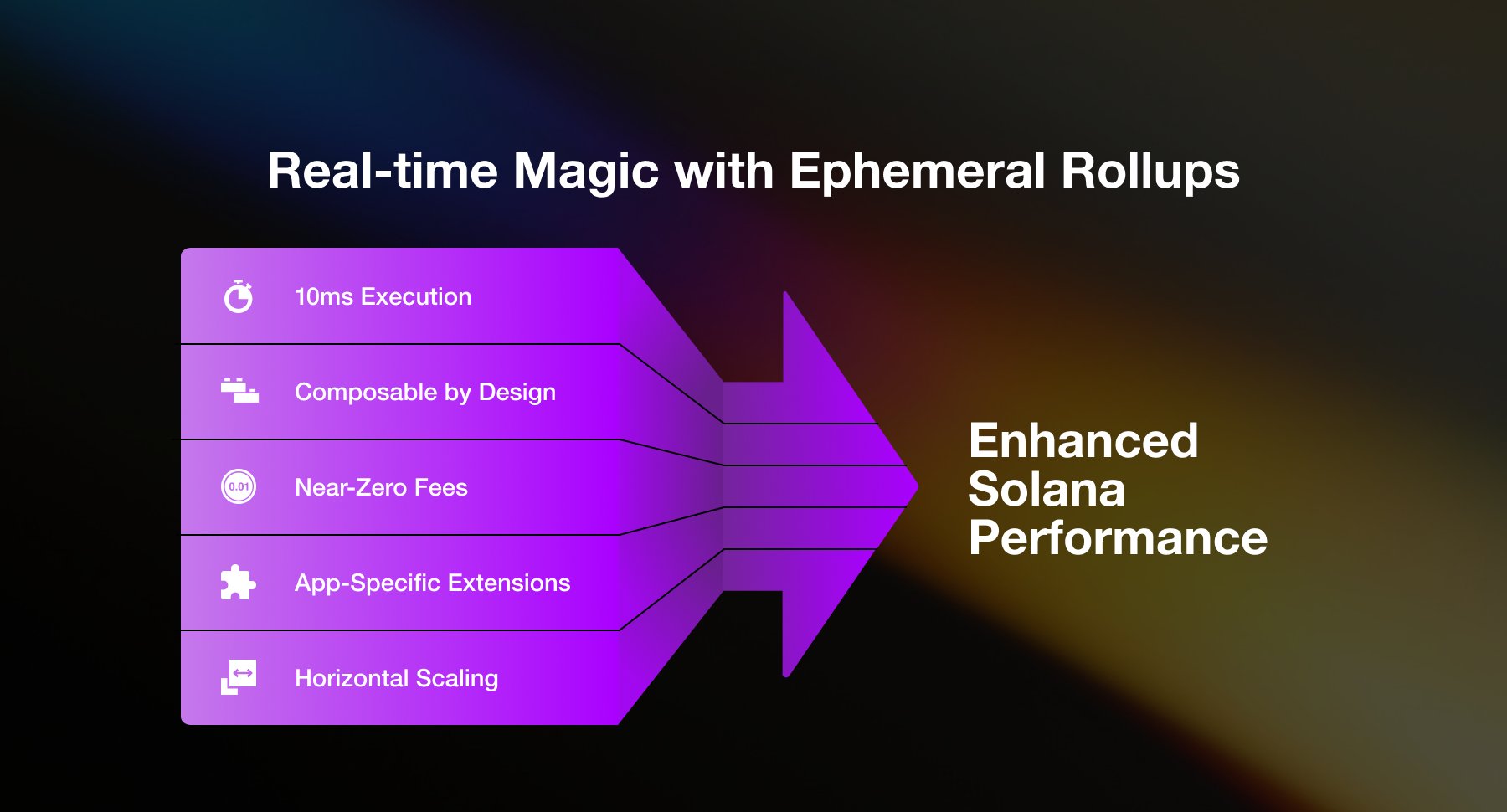
The core innovation lies in their operational model:
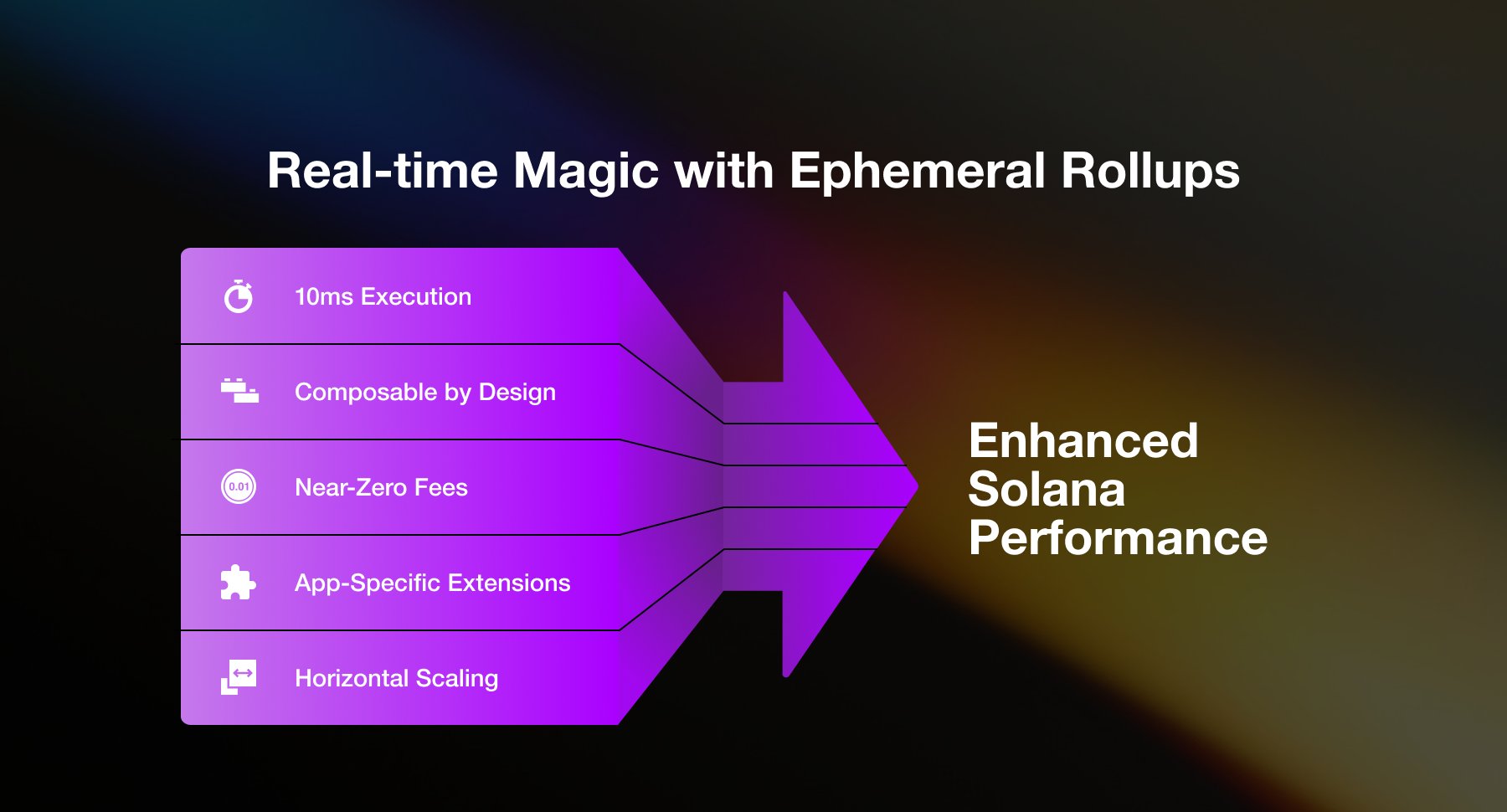
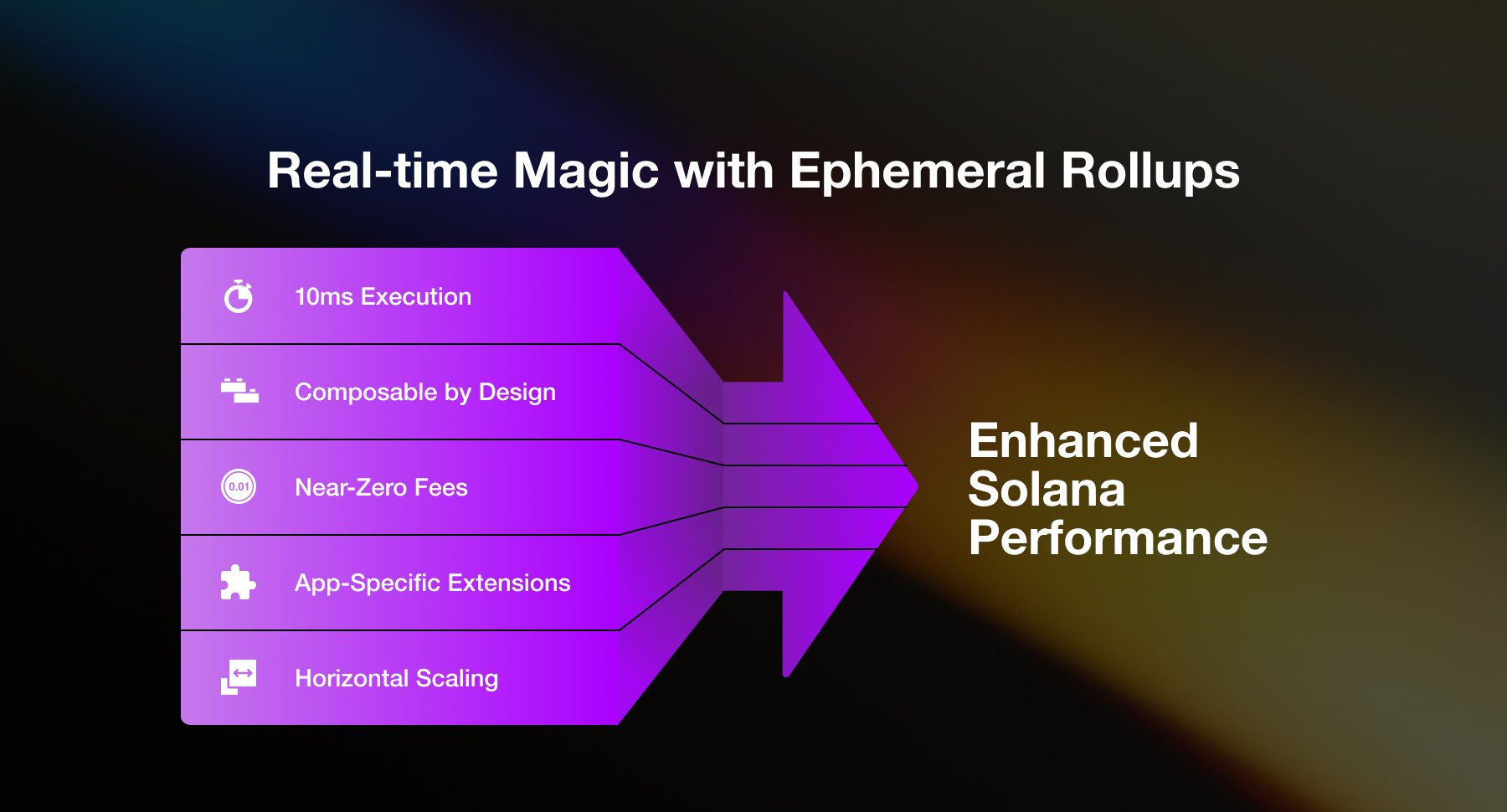
- Ultra-low latency: Achieves state transitions in ~10 milliseconds, enabling real-time game mechanics and auction settlements.
- Gasless transactions: Users interact with dApps without incurring transaction fees during the ephemeral session.
- On-demand scalability: Multiple ephemeral rollups can run in parallel, supporting millions of transactions per second for peak loads.
- Seamless composability: Delegated accounts remain readable on Solana, preserving interoperability with mainnet dApps.
- Developer-friendly: Full compatibility with Rust, C, and Anchor frameworks for rapid integration.
How MagicBlock’s Ephemeral Rollups Work
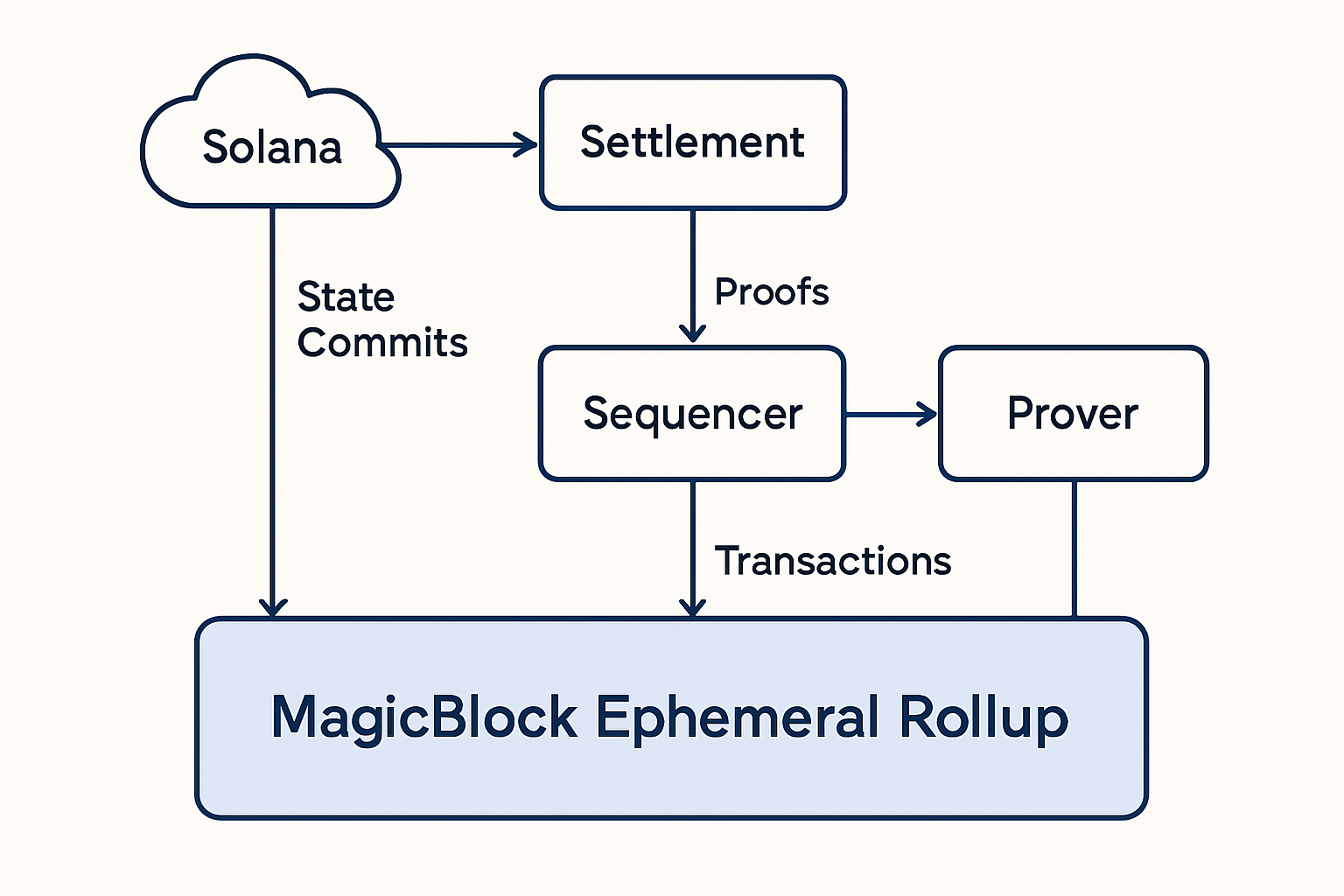
The operational flow starts with state delegation, where Program Derived Addresses (PDAs) are temporarily locked to MagicBlock’s Delegation Program. This allows specific accounts to be managed within the ephemeral environment. An off-chain, non-voting SVM validator processes transactions at blazing speed, bypassing consensus overhead but retaining fraud-proof mechanisms. The sequencer, entrusted with managing the session, can be challenged if it violates constraints, ensuring trust minimization and security.
Critically, even while accounts are locked, their state is accessible for reading on Solana’s mainnet. This design preserves the composability that is often lost in siloed Layer-2 solutions, making ephemeral rollups uniquely suited for applications requiring both isolation and interoperability.
Applications: From On-Chain Gaming to Flash Auctions
The biggest beneficiaries of ephemeral rollups are high-concurrency, real-time dApps. In gaming, platforms like Zeebit leverage MagicBlock to deliver provably fair, fully on-chain games with a user experience rivaling Web2, zero gas fees, instant feedback, and transparent outcomes. For DeFi, flash auctions and high-frequency trading platforms such as Flash Trade utilize ephemeral rollups to execute trades with minimal latency and no per-transaction cost, unlocking new possibilities for decentralized markets.
This approach is already attracting significant capital and attention. In April 2025, MagicBlock closed a $7.5 million seed round led by Lightspeed Faction, underlining the market’s appetite for scalable, real-time blockchain infrastructure.
Why Temporary Blockspace Matters for the Superchain Vision
The rise of ephemeral rollups aligns with the broader Superchain and OP Stack vision, modular, interoperable networks that scale horizontally without fragmenting liquidity or developer mindshare. By enabling elastic, app-specific execution environments that plug directly into the mainnet, MagicBlock is demonstrating a new paradigm for blockchain scalability.
If you’re building or investing in on-chain games, DeFi protocols, or any application demanding real-time responsiveness, understanding ephemeral rollups is now table stakes. For a technical deep dive on how these temporary blockchains are powering the next wave of Web3 innovation, see this guide.
Looking ahead, the composability and efficiency of ephemeral rollups are poised to become foundational for the next generation of decentralized apps. By integrating with the OP Stack and Superchain frameworks, MagicBlock’s approach allows developers to tap into a shared security model while customizing execution for the most demanding workloads. This means games, auctions, and real-time dApps can scale elastically, spinning up temporary blockspace as needed without long-term overhead or fragmented state.
Technical Considerations and Developer Experience
For builders, the frictionless integration with existing Solana tooling is a game changer. Developers can write contracts in Rust, C, or Anchor and instantly deploy them into ephemeral rollups, leveraging familiar workflows with dramatically improved performance. The fraud-proof system ensures that even in a high-speed, off-chain environment, state transitions remain verifiable and secure before being committed back to mainnet.
Key technical highlights include:
Top Technical Benefits of MagicBlock Ephemeral Rollups
- Ultra-Low Latency Execution: Achieve state transitions in as little as 10 milliseconds, enabling real-time responsiveness for on-chain games and flash auctions.
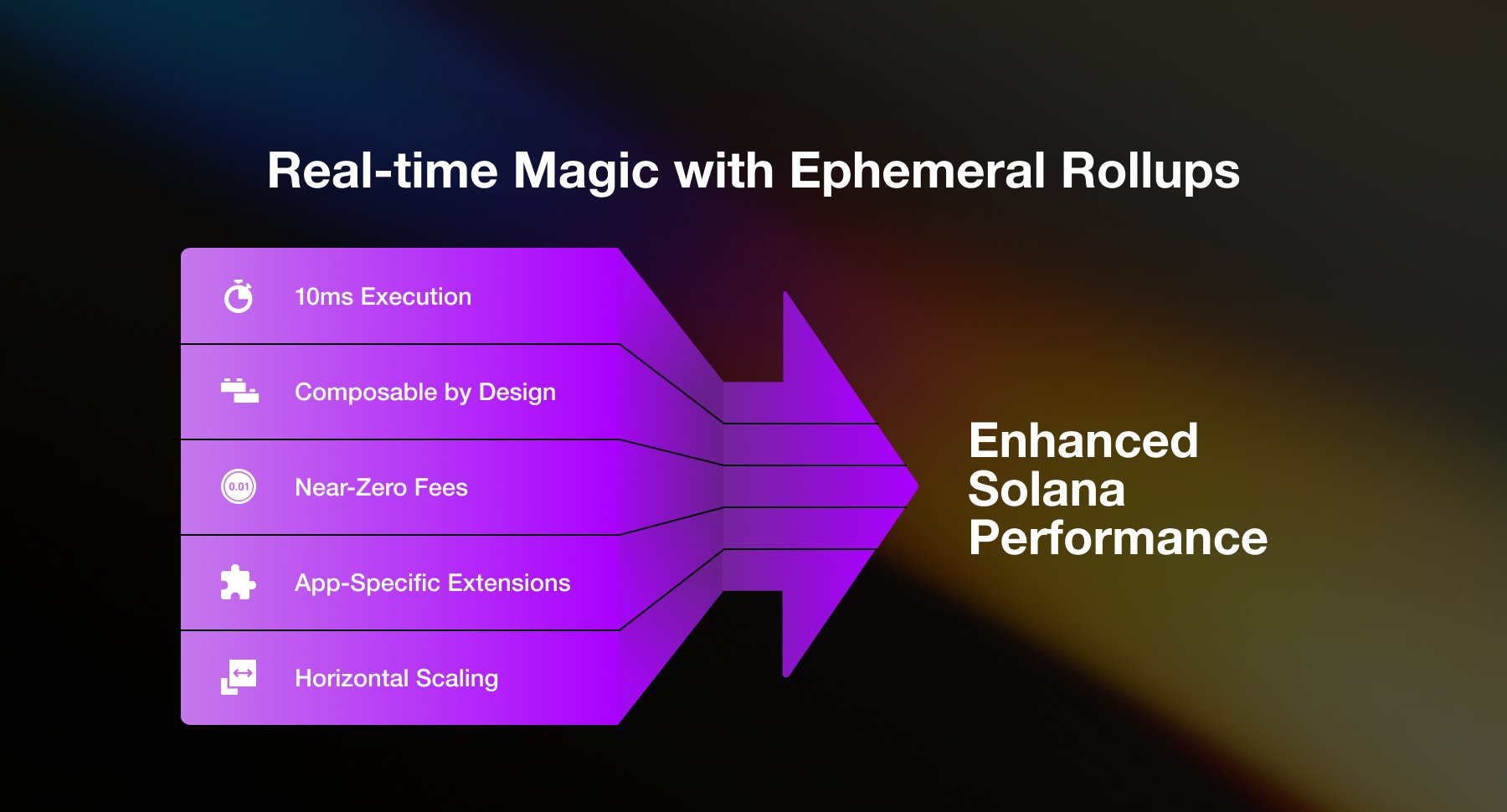
- Gasless Transactions: Eliminate transaction fees during rollup sessions, making frequent microtransactions feasible and cost-effective for high-frequency applications.
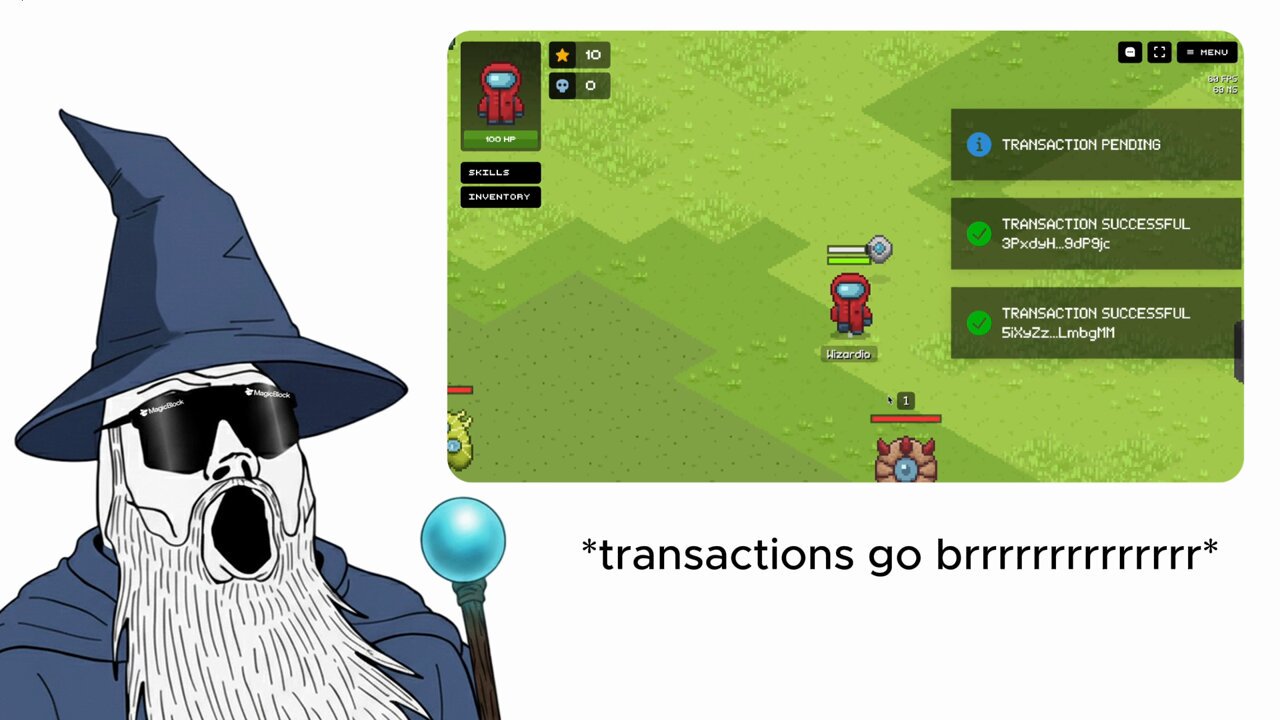
- Horizontal Scalability: Dynamically scale to support millions of transactions per second via on-demand rollups, ensuring seamless performance for high-concurrency workloads.
- Seamless Solana Integration: Maintain compatibility with existing Solana tooling (Anchor, Rust, C) and composability, simplifying developer onboarding and integration.
- Transparent State Access and Composability: Delegated accounts remain readable on Solana mainnet, preserving interoperability and enabling parallel read access even during rollup execution.
- Automated Task Scheduling: Built-in ticking mechanism allows for automated, scheduled task execution within rollups, enhancing operational efficiency for complex applications.
- Fraud-Proof Security Model: Sequencer actions can be challenged and reverted via a fraud-proof system before state is committed, ensuring robust security guarantees.
MagicBlock’s ticking mechanism also enables automated, scheduled tasks within rollups, ideal for time-based gaming logic or auction countdowns. The transparent state access ensures that mainnet dApps can always read from delegated accounts, preserving interoperability and reducing the risk of liquidity silos.
Implications for Blockchain Scalability and the Superchain Ecosystem
The impact of ephemeral rollups extends far beyond Solana. As the Superchain vision matures, the ability to deploy temporary, high-throughput execution environments becomes a critical scaling lever. Rather than fragmenting liquidity across bespoke Layer-2s or appchains, ephemeral rollups offer a way to elastically provision blockspace while keeping the core state unified and composable. This model could be adapted across other OP Stack-based ecosystems, furthering the modular, horizontally-scaled future of blockchain.
For a comprehensive analysis of how ephemeral rollups are reshaping on-chain gaming and real-time dApps, explore this detailed breakdown.
Challenges and the Road Ahead
Despite their promise, ephemeral rollups introduce new complexities. Sequencer trust assumptions, fraud-proof design, and operational monitoring all require careful engineering. The challenge will be to standardize these ephemeral environments across chains, ensuring robust security guarantees without sacrificing speed. However, MagicBlock’s early traction and developer adoption signal that these hurdles are surmountable, especially as demand for real-time, zero-gas applications continues to surge.
Ultimately, ephemeral rollups represent a step change in blockchain scalability. By merging the speed of off-chain processing with the security and composability of mainnet, MagicBlock is setting the stage for a new era of decentralized experiences. As more projects adopt this model, expect temporary blockspace to become as essential to Web3 as smart contracts or bridges.




No comments yet. Be the first to share your thoughts!