The superchain thesis 2026 defined
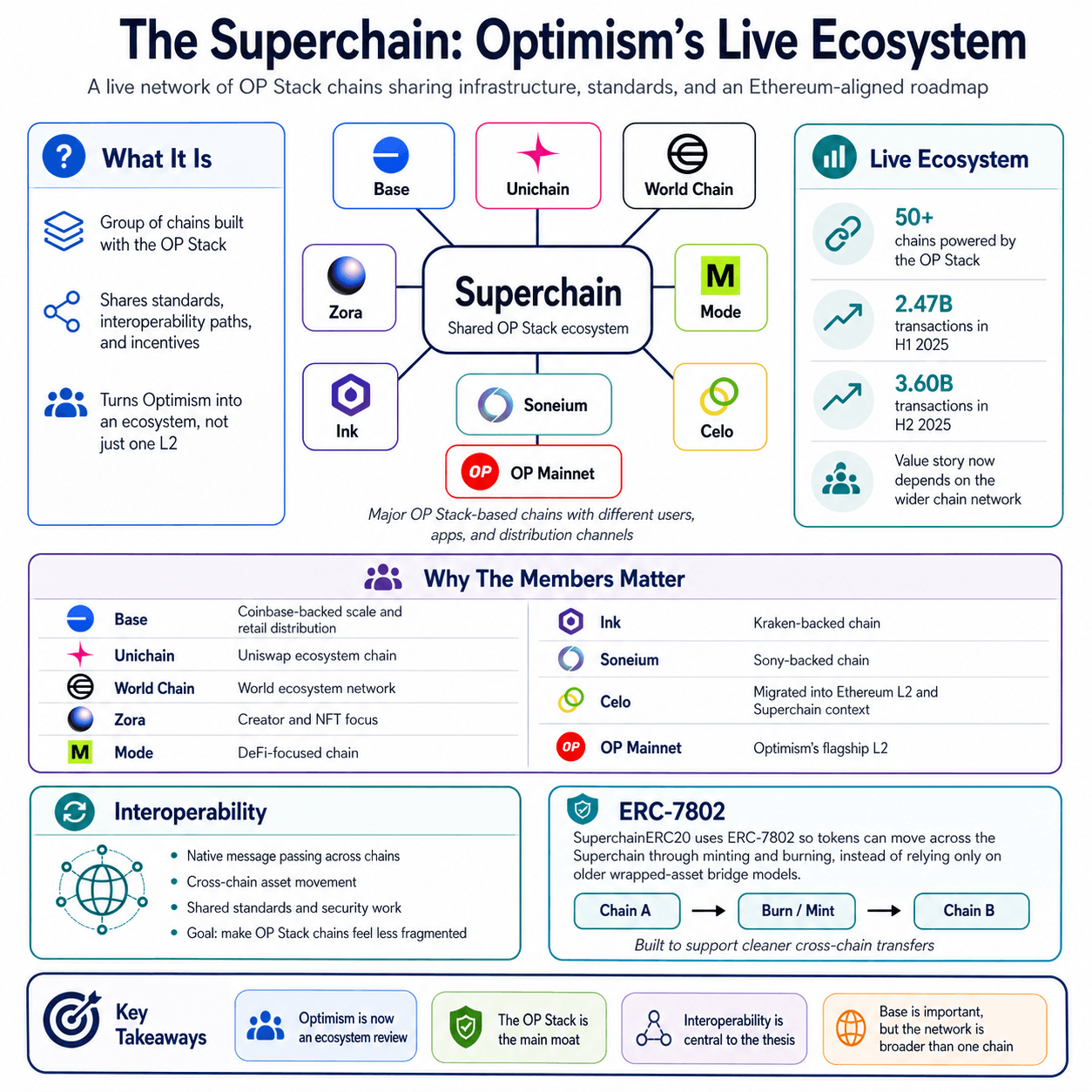
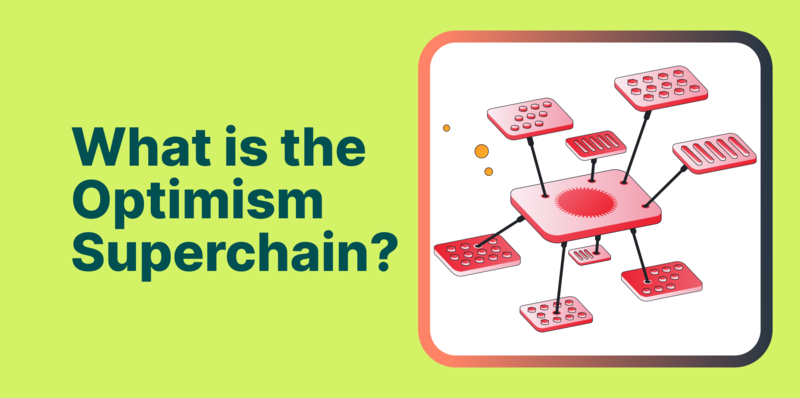
The narrative around Ethereum scaling has shifted from a fragmented landscape of isolated Layer 2s to a unified ecosystem. This transition, often referred to as the superchain thesis, posits that 2026 marks the point where interoperability becomes the primary driver of value rather than raw throughput alone. The foundation for this shift is the OP Stack, an open-source development framework that allows multiple chains to share security, liquidity, and user experience.
Rather than competing for dominance, these chains form a network effect. As more projects adopt the same underlying technology, the cost of building and the ease of cross-chain interaction decrease significantly. This structural change benefits the entire Ethereum layer by creating a cohesive environment where value can flow freely between specialized applications. It moves the industry away from siloed ecosystems toward a more integrated financial infrastructure.
The momentum behind this model is already visible in current market data. According to recent observations by industry analysts, the Optimism ecosystem now includes 25 distinct projects capturing approximately 22% of the total scaling market share. This concentration of activity suggests that the superchain model is not just a theoretical concept but a dominant structural trend in the current market cycle.
How OP Stack standardization drives liquidity
The OP Stack provides a shared technical foundation that allows Optimism and other Layer 2 networks to operate as a cohesive ecosystem rather than isolated silos. By adhering to common protocols, these chains enable seamless asset movement and shared security models, which directly reduces friction for developers and users. This interoperability is the structural mechanism that attracts institutional capital, as it creates a unified market rather than fragmented liquidity pools.
When developers build on the OP Stack, they benefit from a standardized environment that simplifies deployment and maintenance. This uniformity lowers the barrier to entry, encouraging more projects to launch on Superchain-compatible chains. As a result, liquidity becomes more concentrated and accessible, improving market efficiency and reducing the costs associated with cross-chain transactions. The result is a more robust ecosystem where value flows freely between chains.
This technical standardization has tangible effects on market dynamics. Chains built on the OP Stack often see increased trading volumes and user engagement due to the ease of asset transfers. The shared security model further enhances trust, as users can rely on the underlying Ethereum security rather than trusting individual chain validators. This trust is critical for attracting high-value transactions and long-term investors who prioritize stability and interoperability.
The impact of the OP Stack is evident in the growing adoption of Superchain-compatible chains. As more networks join the ecosystem, the network effects compound, creating a virtuous cycle of innovation and liquidity. This trend suggests that the OP Stack is not just a technical tool but a strategic asset in the broader Ethereum scaling narrative. Investors and developers alike are watching this development closely, as it could redefine how Layer 2 solutions interact and compete.
Shared sequencing and decentralization
The 2026 roadmap marks a structural pivot for the Superchain, moving from independent sequencers to a shared sequencing model. This infrastructure milestone, led by partnerships with Espresso Systems, addresses the primary bottleneck of fragmented liquidity and high latency that currently hinders mass adoption.
By decoupling sequencing from execution, the Superchain aims to lower transaction costs and improve finality times across all connected Layer 2 networks. This shared infrastructure allows rollups to focus on execution and data availability without managing their own sequencer nodes, creating a more unified and efficient ecosystem.
Current OP Stack rollups operate with independent sequencers. This setup creates silos, leading to fragmented liquidity and inconsistent user experiences across different chains.
Espresso Systems provides a decentralized sequencing network. This shared layer standardizes order flow, reducing latency and ensuring fairer transaction ordering across the Superchain.
The shift lowers operational costs for rollup operators and improves finality for users. This structural change is critical for supporting high-throughput applications and mass-market use cases.
This transition is not merely an optimization but a foundational requirement for the Superchain thesis. As noted in 2026 infrastructure plans, new rollups like World Chain are already inheriting these decentralization timelines, signaling a industry-wide shift toward shared infrastructure.
The move toward shared sequencing reduces the operational burden on individual projects, allowing them to scale more efficiently. This centralization of sequencing infrastructure, paradoxically, enhances the overall decentralization of the network by removing single points of failure associated with independent sequencers.
Comparing the leading superchain ecosystems
The OP Stack has evolved from a theoretical framework into a multi-protocol landscape. As of early 2026, the ecosystem is dominated by a few key players, with Optimism retaining its role as the foundational anchor while newer entrants like Base, Mode, and Blast carve out specific niches. Understanding their structural differences is essential for assessing where liquidity and developer activity are concentrating.
Optimism remains the primary reference point for the superchain thesis. According to data cited by Stacy Muur, the Optimism Collective now supports 25 distinct projects and commands approximately 22% of the overall Ethereum scaling market share [src-serp-1]. This dominance is not just about volume; it is about the governance and economic models that tie these chains together. The "Superchain” label is no longer just marketing—it represents a tangible distribution of Ethereum Layer 2 activity.
Newer chains are differentiating themselves through specialized features and decentralization roadmaps. Mode and Blast, for instance, are leveraging the same underlying OP Stack technology but applying different economic incentives to attract users. Mode focuses on modular data availability and user acquisition strategies, while Blast emphasizes native yield for stETH and ETH to drive TVL. Meanwhile, World Chain is exploring shared sequencing with Espresso Systems to further decentralize the infrastructure, a move that could redefine how these chains interact with the base layer [src-serp-5].
To visualize the competitive landscape, the following table compares the key metrics and strategic focus of these major superchain participants.
| Chain | TVL Position | Strategic Focus | Est. Share |
|---|---|---|---|
| Optimism | Top 3 | Governance & Ecosystem Growth | ~22% |
| Base | Top 3 | Mass Adoption & Coinbase Integration | High (Growing) |
| Mode | Mid-tier | Modular Data & UX Innovation | Emerging |
| Blast | Mid-tier | Native Yield & Liquidity Mining | Emerging |
Regulatory scrutiny and smart contract risks
The Superchain thesis relies on a tightly coupled ecosystem where security is only as strong as its weakest link. This architectural choice creates a specific vulnerability: if one chain suffers a critical smart contract exploit, the shared infrastructure can expose the entire network to contagion. Unlike isolated Layer 2s, the Superchain’s interoperability means that a breach in one segment can ripple across the ecosystem, undermining trust in the shared sequencer and bridge mechanisms.
Regulatory bodies are increasingly focused on the centralization inherent in current sequencing models. The Optimism Collective’s governance framework attempts to decentralize control, but the reliance on a small number of centralized sequencers remains a primary target for scrutiny. Regulators may view these nodes as centralized points of failure, potentially classifying them as critical financial infrastructure subject to stricter oversight. This regulatory pressure could force costly architectural changes or limit the ability of chains to operate across jurisdictions.
The tension between speed and decentralization defines the current risk landscape. While the Superchain offers superior scalability, it does so by trading some degree of sovereignty for efficiency. Investors must weigh the potential for rapid adoption against the structural risks of centralized bottlenecks and the evolving regulatory environment. The long-term viability of the thesis depends on how effectively the ecosystem can navigate these headwinds without sacrificing its core interoperability benefits.
No comments yet. Be the first to share your thoughts!