The superchain thesis 2026 defined
The superchain thesis 2026 argues that Ethereum L2s are no longer competing islands but parts of a single, unified liquidity layer driven by shared OP Stack standards. This shift marks a departure from the fragmented landscape of 2023, where Layer 2 networks operated as isolated silos with incompatible bridges and disjointed user experiences.
At its core, the thesis relies on the OP Stack—a modular, open-source software framework that allows different chains to interoperate seamlessly. By adopting this shared infrastructure, networks like Base, Optimism, and others can communicate directly, reducing the friction that previously hindered cross-chain liquidity. This standardization transforms individual L2s from standalone products into nodes within a broader, cohesive network.
The economic implication is significant: liquidity that was once trapped within specific ecosystems can now flow freely across the superchain. This integration enhances capital efficiency and reduces fragmentation, making the entire Ethereum scaling ecosystem more robust. As these chains converge, the distinction between "L1" and "L2" becomes less about isolation and more about specialized roles within a unified architecture.
How the OP Stack Drives Convergence
The OP Stack is the open-source protocol that allows distinct blockchains to operate as a unified network. By sharing a common codebase, chains like Base, Optimism, and Mode can interoperate with minimal friction. This shared architecture transforms isolated Layer 2s into a cohesive Superchain, where security and messaging standards are inherited rather than rebuilt.

Chains built on the OP Stack use standardized sequencing logic. This allows for predictable transaction ordering and reduces the complexity of bridging assets between networks. When multiple chains follow the same technical rules, cross-chain communication becomes a routine data exchange rather than a complex cryptographic puzzle.
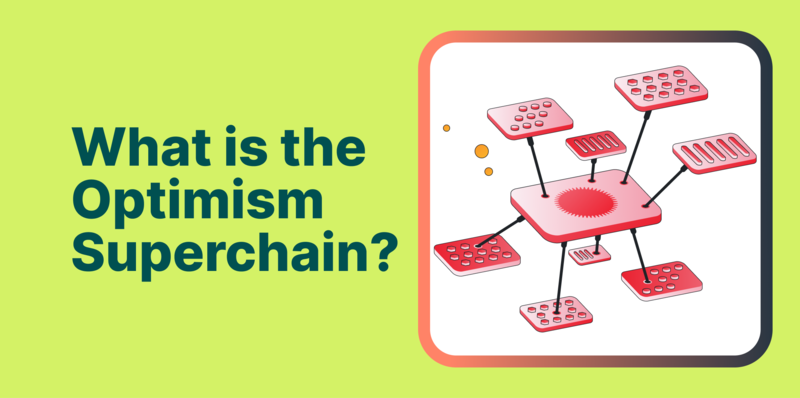
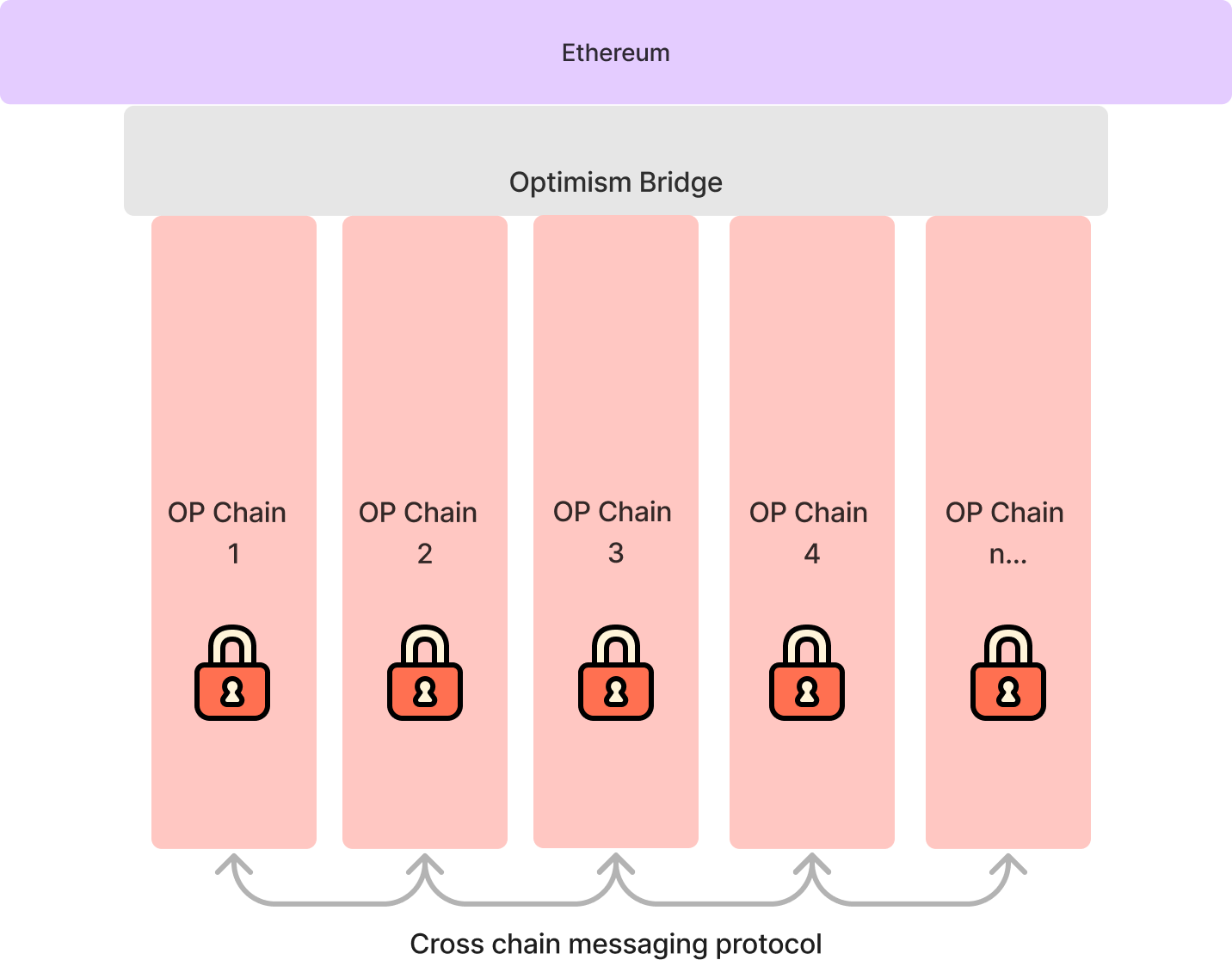
Instead of each chain managing its own validator set, the Superchain model allows for shared security pools. This means that the economic stake securing one chain can help protect others in the network. It creates a web of mutual reliance that raises the cost of attack across the entire ecosystem.
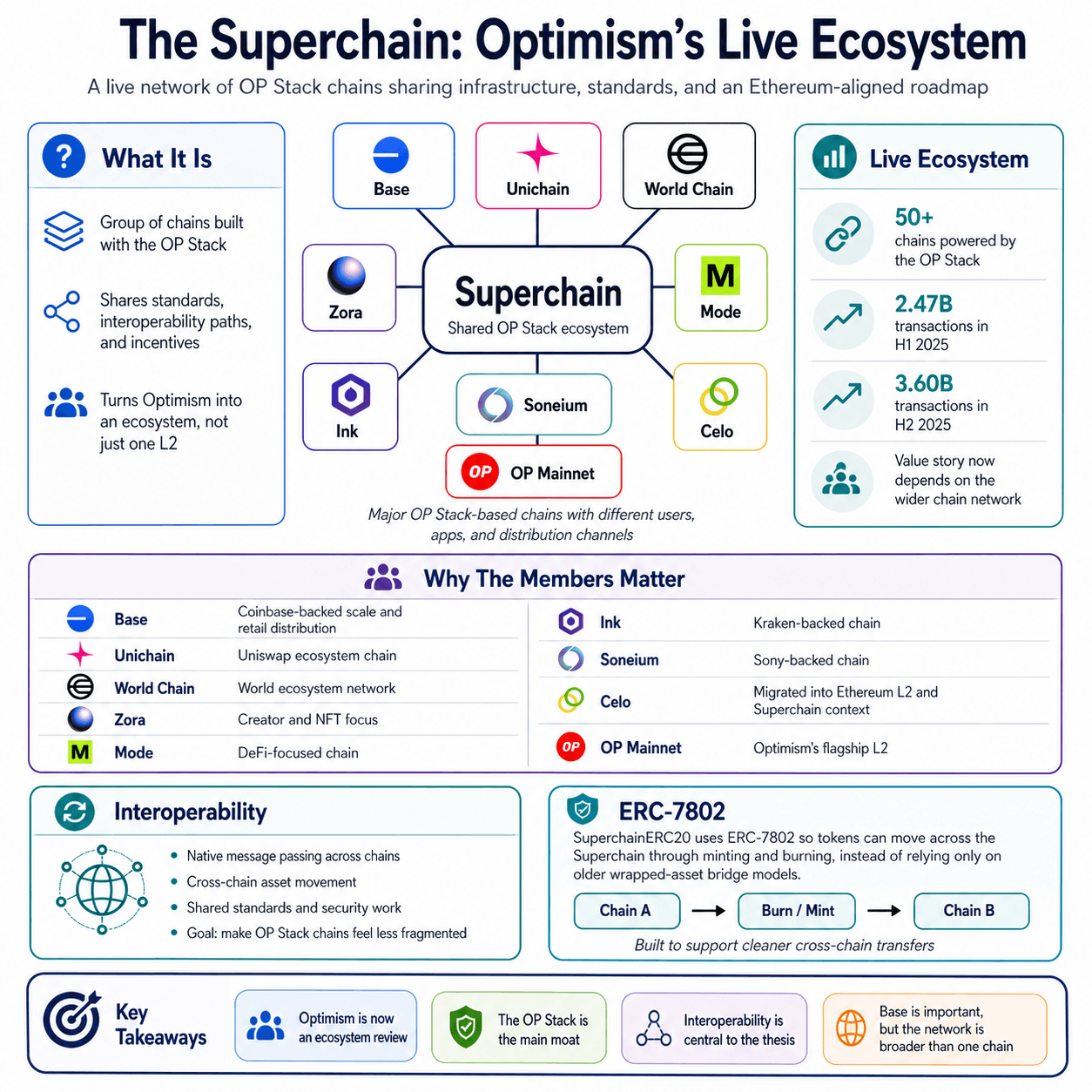
The OP Stack includes a built-in messaging layer that lets contracts on different chains talk to each other. This standardization ensures that an action on Base can instantly trigger a response on Optimism. Developers can build applications that span multiple chains without writing custom bridges for every connection.
This convergence is visible in the market performance of the underlying governance token. As the Superchain thesis gains traction, the value of the OP token reflects the growing utility of the stack. The following chart shows the recent price action of OP/USD, highlighting how market sentiment tracks the adoption of these shared standards.
The technical mechanism is simple but powerful: by making the stack open-source, Optimism invites others to build on its foundation. This creates a network effect where the value of each new chain increases the value of the entire Superchain. The result is a scalable Ethereum ecosystem that does not sacrifice security for speed.
Unified Liquidity and Cross-L2 Transfers
The primary friction in the current Ethereum ecosystem is fragmentation. Users moving assets between Layer 2 networks like Arbitrum, Optimism, and Base must navigate a complex web of bridges, waiting periods, and varying gas costs. The Superchain thesis addresses this by treating these networks as a single logical entity rather than isolated silos. For developers and users, this means liquidity is no longer trapped behind technical boundaries but flows freely across the stack.
From Fragmented Bridges to Unified Pools
In a traditional multi-chain setup, liquidity is split. A user wanting to swap ETH for USDC on a different L2 must first bridge ETH to that chain, often incurring high fees and delay. Under the Superchain model, shared sequencers and standardized messaging protocols allow for instant, native-like transfers. This reduces the "friction tax" that currently drains user capital and experience.
The following comparison illustrates the structural difference between the current fragmented state and the proposed Superchain unified model:
| Feature | Isolated L2s | Superchain Unified |
|---|---|---|
| Asset Transfer Time | 20-60 minutes (bridge confirmation) | < 1 minute (native messaging) |
| Liquidity Depth | Fragmented across 5+ chains | Aggregated into single pool |
| User Gas Fees | High (bridge + L2 gas) | Low (single L2 gas) |
| Developer Abstraction | Custom bridge integration required | Standardized ERC-7683 messaging |
Market Impact and Real-World Performance
The shift toward unified liquidity directly impacts market efficiency. When liquidity is aggregated, slippage decreases, and trading volumes increase. This is particularly visible in high-frequency trading and DeFi protocols that rely on deep order books. The following chart shows the recent performance of the leading Superchain-native token, OP, which serves as a proxy for the ecosystem's health and adoption trends.
While the technical infrastructure is still maturing, the direction is clear. Projects like World Chain are already adopting shared sequencing timelines from the Optimism Superchain, signaling that the industry is moving toward this unified standard. This convergence promises a future where the underlying chain is invisible to the user, with liquidity and security provided as a seamless utility.
Governance and shared sequencing risks
The Superchain thesis promises a unified experience, but it introduces a single point of failure that threatens the entire ecosystem. At the heart of this risk is shared sequencing, a mechanism designed to synchronize transactions across Optimism, Base, and other members. Instead of each Layer 2 processing blocks in isolation, a shared sequencer orders transactions globally. This reduces finality times and prevents cross-chain front-running, but it also concentrates power. If the sequencer goes down or acts maliciously, every connected chain halts.
Espresso Systems is the primary provider for this shared sequencing infrastructure. While their technology offers significant efficiency gains, the reliance on a single vendor creates a centralization tension. The network’s resilience now depends on Espresso’s operational stability and governance decisions. As newer L2s like World Chain inherit these timelines, the attack surface expands. A failure in the shared layer is no longer an isolated incident; it becomes a systemic crisis.
Governance tensions further complicate the picture. Superchain members have differing priorities, from fee structures to protocol upgrades. Aligning these interests requires robust multi-sig controls and transparent voting mechanisms. Without clear, decentralized governance, the Superchain risks becoming a de facto oligarchy controlled by a few large operators. The next 12 months will test whether this coordination can hold under pressure.
The market is already pricing in these uncertainties. Traders are watching the volatility of Superchain-related assets as a barometer for confidence in the shared architecture. Any disruption in the sequencing layer could trigger a sell-off across the entire L2 ecosystem.
How Superchain Convergence Impacts OP Token Value
The market’s valuation of Optimism hinges on whether the Superchain vision translates into measurable network activity. As 2026 unfolds, the token’s trajectory will likely follow the adoption of the OP Stack across multiple chains. Successful convergence means shared security and interoperability, which historically drives demand for the underlying governance asset. If the ecosystem expands without fragmenting liquidity, OP benefits from increased utility within a unified economic layer.
Current market dynamics suggest investors are pricing in this potential future state. The token’s performance often correlates with announcements regarding chain integrations and protocol upgrades. When developers deploy new L2s using the Superchain standard, it signals confidence in the architecture. This confidence can reduce sell pressure from early adopters while attracting long-term holders who view the Superchain as a durable infrastructure play rather than a speculative asset.
Live market data reflects this sensitivity to ecosystem growth. Below, the price widget tracks OP’s current valuation, while the technical chart illustrates recent volatility patterns. Traders should monitor these metrics alongside fundamental developments, such as total value locked (TVL) migration and active developer counts. A sustained increase in these indicators typically precedes significant price appreciation, as the token captures value from a broader, more interconnected network.
No comments yet. Be the first to share your thoughts!