Defining the Superchain Thesis 2026
The superchain thesis 2026 marks a shift from isolated Layer 2 networks to a unified ecosystem built on shared infrastructure. Rather than treating each rollup as a standalone silo, this architectural model connects multiple chains through a common stack, allowing them to share security, liquidity, and user experience. The goal is to make the underlying complexity invisible to the end user while significantly improving scalability for developers.
At the core of this shift is the OP Stack, an open-source modular framework initially developed by Optimism. While it began as the foundation for the Optimism network, the stack has evolved into a public good that other projects can adopt. By using the same underlying technology, different chains can interoperate seamlessly. This means assets and messages can move between networks without the friction typically associated with cross-chain bridges, reducing security risks and improving transaction speed.
This approach redefines modular scaling. Instead of each chain reinventing its own consensus and data availability mechanisms, they rely on shared components provided by the base layer. This standardization lowers the barrier to entry for new projects and ensures that users experience a consistent interface across different applications. The superchain thesis is no longer just an Optimism concept; it represents a broader industry move toward interoperable, modular blockchain infrastructure.
How Shared Security Reduces Redundancy
The core of the superchain thesis 2026 is the elimination of redundant security. Traditional Layer 2s often operate in silos, each requiring its own set of validators to secure the chain. This model is expensive and fragmented. Shared security changes this by allowing multiple chains to borrow trust from a common source, typically the base layer or a shared sequencer set.
Borrowing from the Base Layer
In this model, the Layer 2 does not need its own independent validator set to guarantee safety. Instead, it relies on the economic security of the underlying blockchain. When users transact on the L2, they trust that the base layer will eventually settle the state and resolve any disputes. This is similar to how a subsidiary relies on the brand reputation and capital reserves of its parent company. The L2 focuses on throughput and user experience, while the base layer handles the heavy lifting of finality.
The Shared Sequencer Advantage
Beyond just settling data, security is also maintained through shared sequencing. In a superchain architecture, a common set of operators orders transactions across multiple L2s. This prevents front-running and ensures a consistent state across the network. Because there is no need to coordinate security between independent, competing validator sets, the overall risk profile of the network decreases. The OP Stack facilitates this by providing a standardized way for chains to connect to this shared security layer.
Why This Matters for Scalability
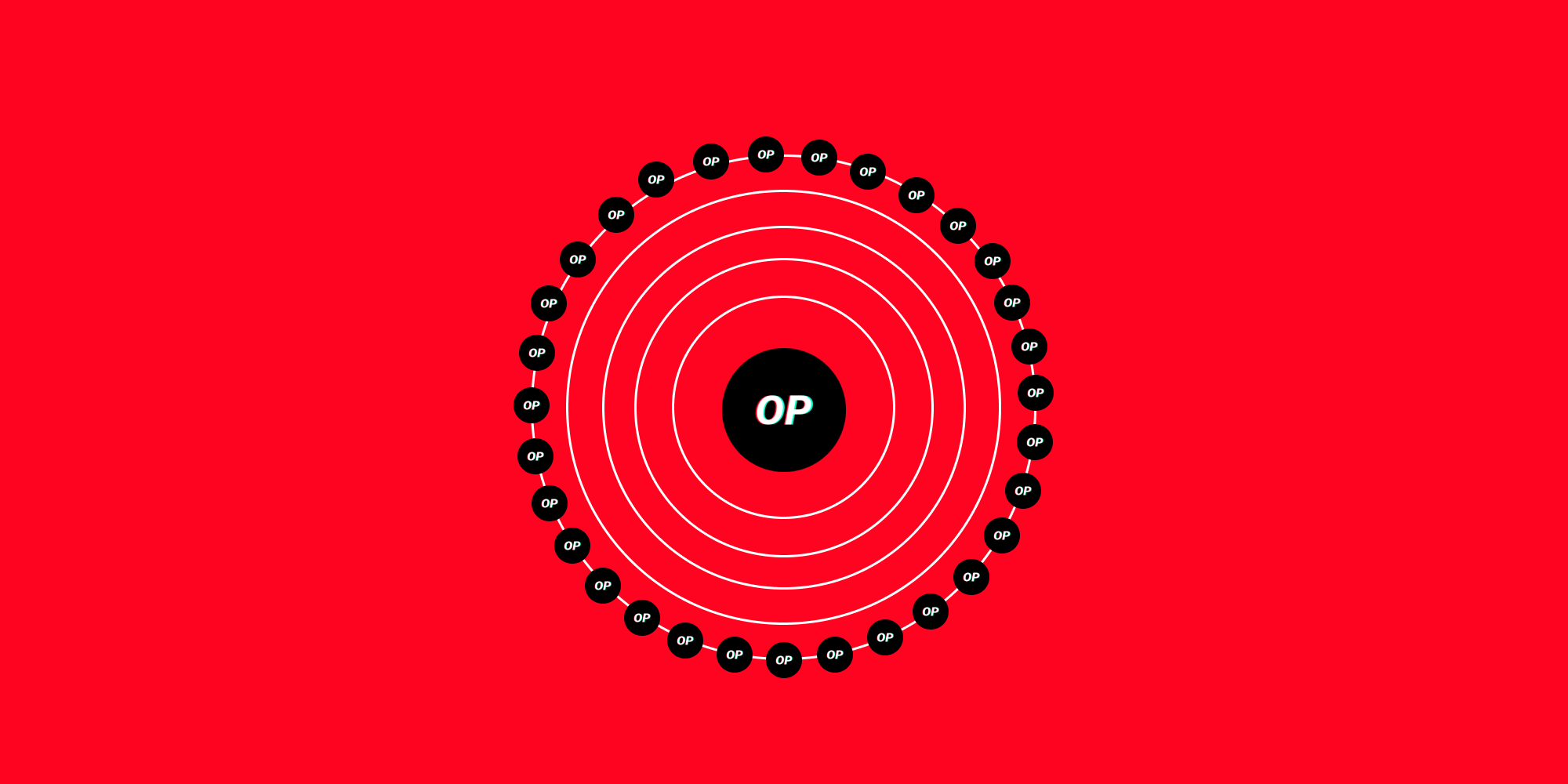
This approach solves a critical bottleneck: security scaling. As more chains are added, they do not need to bring their own security budget. They simply join the existing network. This lowers the barrier to entry for new projects and reduces the overall cost of securing the ecosystem. The result is a more cohesive network where individual chains can scale without compromising on safety. This shared infrastructure is what makes the superchain thesis viable at scale.
Native interoperability and cross-chain UX
The traditional Layer 2 experience has long been defined by friction. Users accustomed to moving assets between chains must navigate a complex web of external bridges, wrap tokens, and wait for slow finality periods. This fragmentation creates a high barrier to entry, forcing users to trust third-party liquidity pools and manage multiple gas tokens across disconnected networks. The superchain thesis addresses this directly by embedding interoperability into the protocol layer itself.
With the introduction of native messaging protocols, cross-chain interactions now resemble single-chain actions. Instead of relying on external bridges, chains built on the OP Stack communicate through a shared, standardized messaging layer. This allows smart contracts on one chain to trigger actions on another without leaving the ecosystem. The result is a unified experience where liquidity and data flow freely, removing the need for manual bridging steps.
This architectural shift significantly reduces the attack surface for cross-chain exploits. By keeping transactions within the shared security model of the superchain, users avoid the risks associated with external bridge contracts. As the network expands, with over 34 OP Chains processing billions of transactions, this native connectivity ensures that new chains can launch with immediate access to existing liquidity and user bases. The superchain thesis of 2026 is not just about scaling individual chains, but about creating a cohesive ecosystem where interoperability is a feature, not an afterthought.
Modular Scaling in Practice
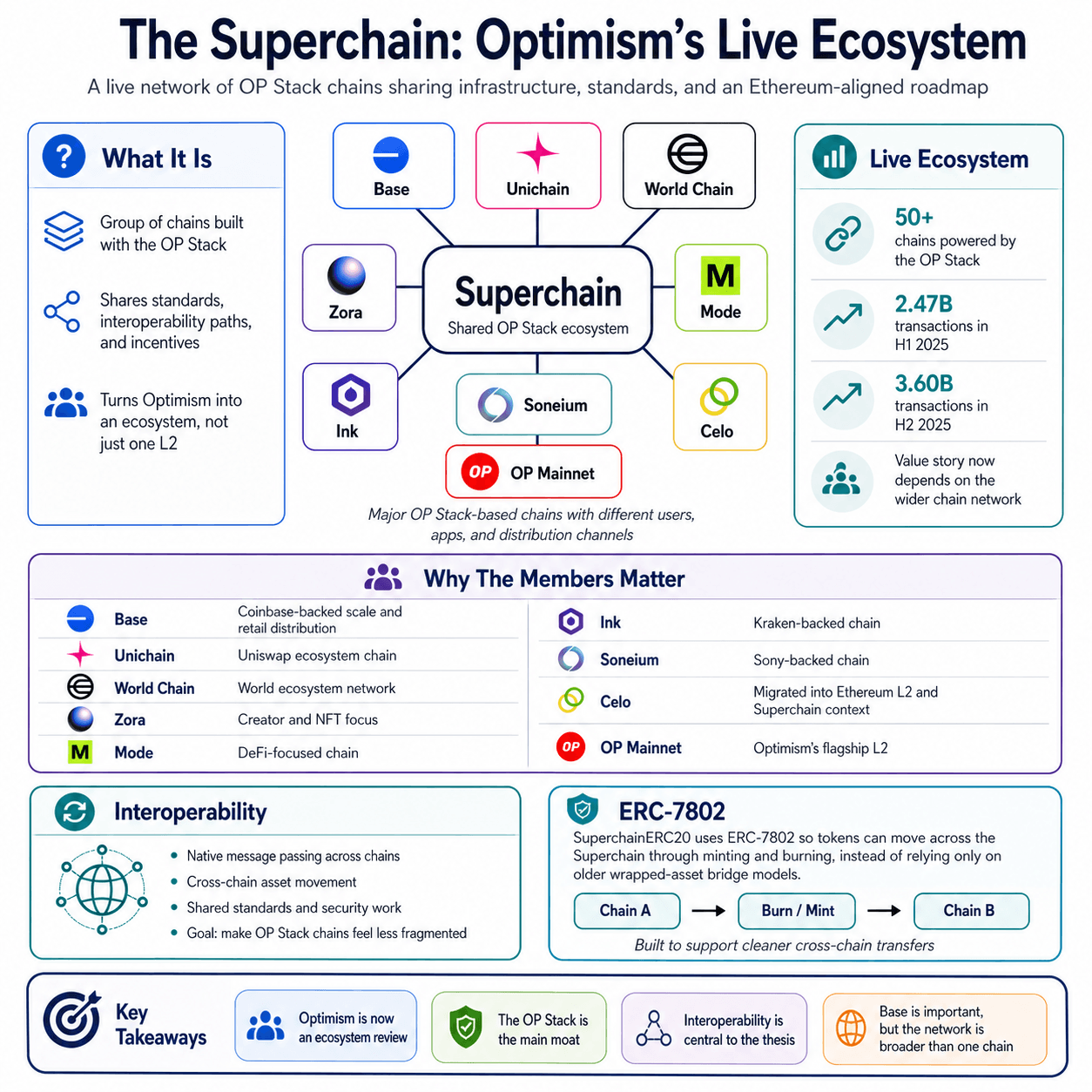
The superchain thesis 2026 moves beyond theoretical scalability to demonstrate how shared infrastructure enables horizontal scaling. Instead of forcing every transaction through a single bottleneck, this model treats individual chains as modular components within a larger network. Each chain handles specific workloads while relying on shared security and communication layers to maintain integrity.
This architecture allows developers to spin up specialized chains without reinventing foundational security protocols. By sharing resources like data availability and cross-chain messaging, these modular units can scale independently. The result is a network that grows capacity linearly as new modules join, rather than hitting the hard limits of a single monolithic blockchain.
Real-world adoption already reflects this shift. The Optimism Superchain, for instance, reached 34 OP Chains in H2 2025, processing 3.6 billion transactions during that period alone. This 44% increase from the previous half-year highlights how modular design supports rapid expansion without compromising performance. As the ecosystem matures, this approach will likely define how Layer 2 solutions handle global-scale demand.
Key projects shaping the 2026 landscape
The superchain thesis is no longer just an idea from Optimism; it is a structural reality. As of late 2025, the Optimism Superchain itself has expanded to 34 OP Chains, processing 3.6 billion transactions in the second half of the year alone. This growth represents a 44% increase from the previous half, signaling that shared infrastructure is becoming the default for high-throughput networks.
Beyond the core OP Stack, other major players are adopting similar shared security and sequencing models. Base, built on the OP Stack, has become one of the most active networks, leveraging the same sequencer infrastructure to maintain low fees and high speed. Meanwhile, projects like Zora and Mode are using the superchain architecture to create specialized environments for NFTs and financial applications, respectively, without sacrificing the interoperability benefits of the shared layer.
This shift is redefining what "competition" means in Layer 2. Instead of isolated chains fighting for liquidity, these projects form a cohesive ecosystem. They share blockspace, security, and sometimes even sequencers. This collaboration allows new chains to launch faster and with greater reliability, as they inherit the robustness of the underlying superchain protocol rather than building from scratch.
Frequently asked questions about superchains
What is the superchain thesis?
The superchain thesis proposes that multiple Layer 2 networks should share a common technical foundation and security model rather than operating in isolation. By using the OP Stack, these chains form a unified ecosystem where interoperability is built-in. This approach aims to solve fragmentation, allowing users to transact across different L2s without relying on complex bridge mechanics.
How does a superchain differ from traditional Layer 2s?
Traditional Layer 2s often function as standalone islands with their own unique rollup configurations and bridge requirements. In a superchain, individual chains are treated as "rollups of rollups." They inherit security and messaging protocols from a shared sequencer and verifier set. This creates a cohesive network where liquidity and data can flow more freely between participating chains.
Is the superchain model safe for users?
Safety in a superchain relies on the underlying Ethereum mainnet security and the shared sequencer infrastructure. Because these chains are deeply integrated, they reduce the attack surface associated with third-party bridges, which are frequent targets for exploits. However, users must still verify that the specific L2 they are using maintains robust governance and follows the standard OP Stack security guidelines.
No comments yet. Be the first to share your thoughts!