

Picture a vast network of interconnected highways, each lane a rollup processing transactions at lightning speed, all feeding into Ethereum’s main artery. This is the OP Superchain, a multi-rollup ecosystem built on the OP Stack, designed for seamless scalability. Yet, as Optimism’s OP token holds steady at $0.1059 with a 24-hour gain of and $0.003920 ( and 0.0384%), the hidden friction points in rollup verification challenges in OP Superchain multi-rollup networks threaten to clog this vision. Centralized sequencers, cross-chain miscommunications, and state drifts demand methodical scrutiny to unlock true interoperability.
At its core, optimistic rollups like those in the Superchain post transaction batches to Ethereum Layer 1 (L1), assuming validity unless challenged. This fraud-proof mechanism relies on a seven-day challenge window, allowing anyone to dispute invalid states by replaying batches. But scaling to dozens of rollups amplifies verification complexity, turning what works for a single chain into a symphony of synchronized proofs.
Sequencer Centralization: The Single Point of Bottleneck
Envision a single air traffic controller directing flights across multiple airports. That’s the sequencer in most OP Superchain rollups – a centralized entity ordering transactions, proposing batches, and deriving the state root. While efficient, this setup invites rollup verification challenges Optimism faces head-on: censorship risks, MEV extraction, and outage vulnerabilities.
Current efforts push toward decentralized sequencers and shared sequencing. The Optimism Foundation’s off-chain checks, like unique Chain ID enforcement and security monitoring, provide initial guardrails. Yet, in a multi-rollup world, verifying sequencer outputs across chains requires Fault Proof Programs (FPPs) that replay L2 state transitions from L1 inputs. Without them, a rogue sequencer could reorder transactions maliciously, undetected until a challenger emerges.
Methodically breaking it down: sequencers publish Merkle roots of batches on L1. Challengers bisect the disputed period, narrowing to invalid steps via interactive games. Visualizing this as a binary tree of state commitments reveals the depth – deeper trees mean longer disputes, straining L1 gas and delaying finality.
Cross-Rollup Communication: Bridging Isolated Islands
Now scale this to inter-rollup traffic. Cross-rollup communication demands verifying messages between chains without trusted bridges, which often harbor exploits. Traditional methods rely on off-chain relayers; the Superchain counters with native intents and cryptographic cross-rollup proofs.
ZK proofs shine here, enabling direct state verification sans intermediaries. Imagine Rollup A attesting to a state change, compressed via proof recursion, then validated on Rollup B. This multi-rollup scalability OP Stack solution fragments less liquidity, as unified verification layers liquidity pools across chains. Challenges persist: proof generation latency and calldata costs on L1. Optimism’s partnerships, like with Succinct, integrate ZK systems for faster finality, but deployment across diverse OP Chains tests standardization.
Visualize the flow: User intent on Chain X batches to L1, cross-attested via ZK to Chain Y’s verifier contract. Any mismatch triggers a challenge, ensuring atomic swaps or messaging. Yet, without shared sequencers, timing attacks loom, where one chain’s batch lags another’s verification window.
State Consistency: Guarding Against Fraudulent Drifts
Consistency across rollups forms the bedrock. Each must derive identical state roots from shared L1 inputs, preventing false deposits or withdrawals. In the Superchain, Blockspace Charters enforce compliance off-chain, but on-chain fraud proofs are paramount.
Consider Vitalik’s rollup guide: contracts track state root histories and batch hashes. Disputes replay computations, but multi-rollup divergence – say, differing EIP-4844 blob interpretations – risks desynchronization. Tools like Blockscout’s Flashblocks offer transparency into rollup activity, letting users audit derivations visually.
Addressing this demands rigorous requirements engineering, as seen in Zircuit’s OP Stack build. Fault proofs must scale to multi-sequencer models, distributing ordering to curb centralization. Here, Ethereum superchain verification issues intersect with optimistic proofs’ evolution toward ZK hybrids, promising sub-second finality without seven-day waits.
Optimism (OP) Price Prediction 2027-2032
Forecasts based on OP Superchain adoption, resolution of rollup verification challenges, and broader L2 scalability advancements amid market cycles
| Year | Minimum Price | Average Price | Maximum Price |
|---|---|---|---|
| 2027 | $0.35 | $0.65 | $1.15 |
| 2028 | $0.55 | $1.05 | $1.95 |
| 2029 | $0.85 | $1.55 | $2.85 |
| 2030 | $1.25 | $2.05 | $3.75 |
| 2031 | $1.65 | $2.65 | $4.85 |
| 2032 | $2.25 | $3.55 | $6.25 |
Price Prediction Summary
Optimism (OP) is expected to experience steady growth from its 2026 average of ~$0.50, driven by Superchain interoperability and verification improvements, reaching an average of $3.55 by 2032. Min/max ranges account for bearish market corrections (30-50% drawdowns) and bullish surges (100-200% gains) tied to adoption cycles, with 2030 aligning near $2.00 average amid Ethereum L2 dominance.
Key Factors Affecting Optimism Price
- Resolution of sequencer centralization via decentralized/shared sequencing
- Integration of ZK proofs for enhanced security and faster finality (e.g., Succinct partnership)
- Improved cross-rollup communication and state consistency to boost interoperability
- Superchain standardization reducing liquidity fragmentation and improving UX
- Ethereum market cycles, with potential 2028-2029 bull run amplifying L2 adoption
- Regulatory clarity favoring scalable L2 solutions over L1 congestion
- Competition from Arbitrum/ZK rollups, balanced by OP Stack’s public good ecosystem and network effects
Disclaimer: Cryptocurrency price predictions are speculative and based on current market analysis.
Actual prices may vary significantly due to market volatility, regulatory changes, and other factors.
Always do your own research before making investment decisions.
These verification pillars – sequencers, cross-comms, state sync – interlock tightly. As OP trades at $0.1059, market eyes solutions like multi-prover networks to fortify the stack against scaling pains.
Fragmentation hits hardest in liquidity pools scattered across rollups, diluting efficiency and user trust. Picture funds locked in silos, each requiring separate verifications for transfers. The Superchain tackles this through standardized bridges and shared security models, but Optimism rollup complexity solutions hinge on unified verification layers that propagate proofs ecosystem-wide.
Interoperability: Unifying Liquidity Without the Splinters
Multi-rollup networks breed liquidity fragmentation as users hop chains, facing repeated verification hurdles. Cross-rollup intents, batched and verified collectively, promise relief. Methodically, this works by anchoring shared commitments on L1, where all rollups attest to a common intent resolver. Verification flows from batch submission to proof aggregation, ensuring atomicity without per-chain disputes.
Challenges mount with differing upgrade cadences; one rollup’s patch might skew state interpretations. Superchain Charters impose off-chain compliance, monitoring metrics like dispute rates and Chain ID uniqueness. Yet, on-chain enforcement via FPPs remains key, replaying transitions to catch drifts. Visualizing liquidity as rivers merging into Ethereum’s ocean underscores the need: fragmented streams evaporate value through fees and delays.
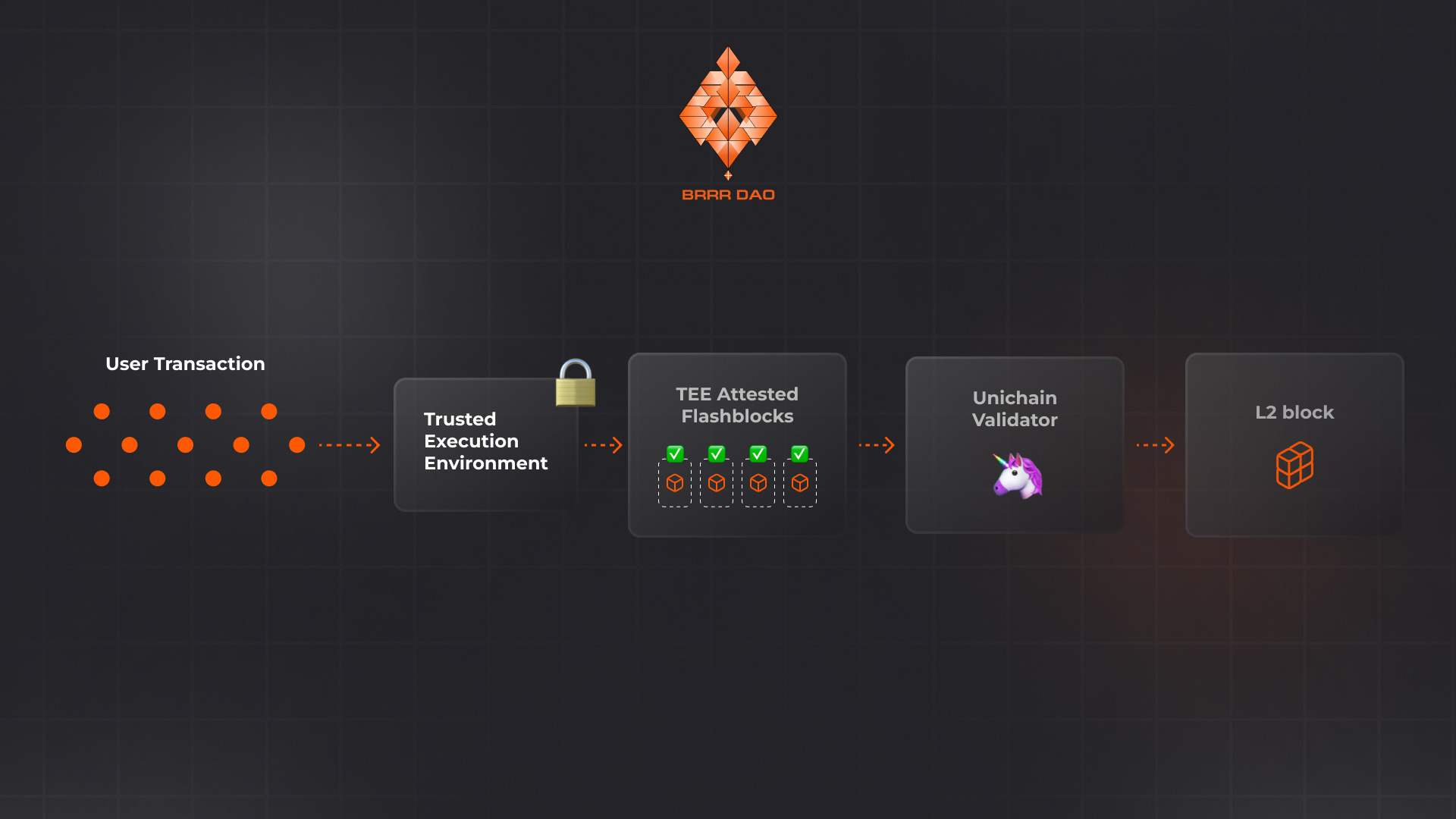
Decentralized sequencers amplify this, distributing ordering via auctions or committees. Transitioning from single to multi-sequencer setups, as rollups evolve, demands robust verification to prevent timing manipulations. Tools like Blockscout expose these dynamics, with Flashblocks revealing batch timings and EIP-4844 blob integrations for cheaper data availability.
ZK Proofs: The Finality Accelerator
Optimistic rollups’ seven-day challenge periods, while secure, cramp real-time use cases. Enter zero-knowledge proofs, compressing verifications into succinct attestations. Optimism’s Fault Proof Program evolves toward ZK hybrids, partnering with Succinct for Superchain-wide deployment. This shift addresses rollup verification challenges Optimism inherits from single-chain limits, enabling instant finality across multiples.
Break it down step by step: L2 computes state transitions, generates ZK proof against L1 inputs, posts to Ethereum. Verifiers check proof validity in constant time, no replays needed. In multi-rollup setups, recursive aggregation bundles proofs from dozens of chains, slashing calldata costs. Challenges include prover decentralization and hardware demands, but OP Stack’s modularity – as proven in Zircuit’s build – absorbs these.
ZK adoption fortifies against fraud, syncing states without disputes. Rollup-as-a-Service models gain traction, letting apps spin custom chains with baked-in verifiers. Yet, requirements engineering persists: balancing custom logic with Superchain standards avoids verification silos.
As OP lingers at $0.1059, up $0.003920 in 24 hours, investor scrutiny sharpens on these fixes. Multi-prover networks and shared sequencers loom as game-changers, distributing verification load. Ethereum’s superchain vision materializes through methodical proofs, turning potential chokepoints into throughput engines.
Enforcement via charters evolves too, blending off-chain oversight with on-chain oracles for real-time compliance. Visual audits via explorers demystify batch hashes and state roots, empowering users to verify independently. In this maturing ecosystem, OP Superchain rollup verification transforms from hurdle to hallmark, scaling Ethereum’s promise one synchronized proof at a time.
About the Author